

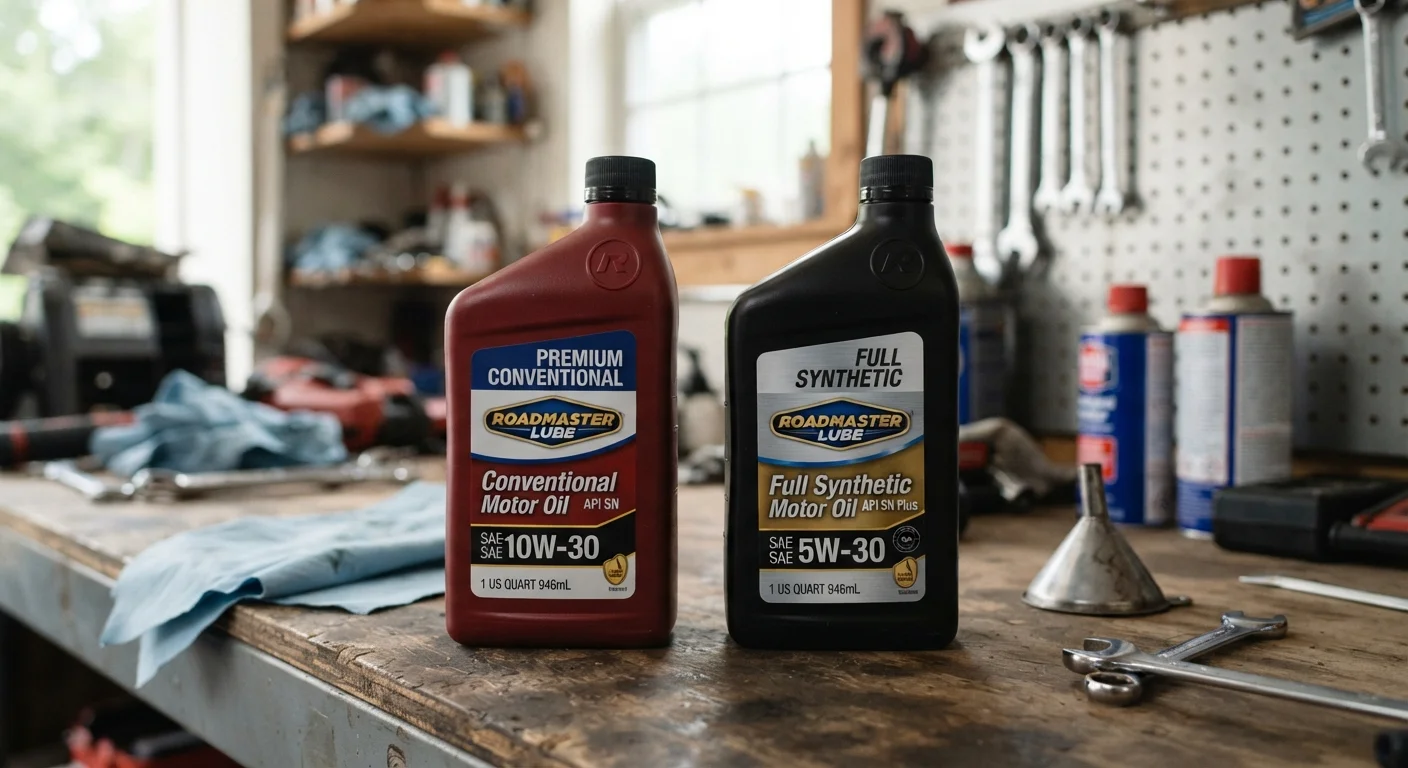
Key Takeaways
- Synthetic oil is chemically engineered for more consistent molecule size, giving it better performance across temperature extremes.
- Conventional oil is refined from crude petroleum and generally costs less per quart, but typically needs more frequent changes.
- Your owner's manual — not marketing claims — is the most reliable guide to which oil type your engine requires.
- Many modern vehicles, especially those with turbocharged engines, are factory-specified for full synthetic oil.
- Switching from conventional to synthetic in a high-mileage engine should be done with care; consult a mechanic first.
Option A
Synthetic Motor Oil
The engineered, high-performance formulation.
Best for: Drivers with newer vehicles, turbocharged engines, extreme climates, or longer intervals between oil changes.
Option B
Conventional Motor Oil
The time-tested, petroleum-based standard.
Best for: Owners of older vehicles with straightforward engines and predictable, moderate driving conditions.
If you drive a newer vehicle or one with a turbocharged engine
Synthetic Motor Oil
Most turbocharged and late-model engines are engineered to run on full synthetic, and using conventional oil may leave the engine under-protected under heat and load.
If you drive an older, naturally aspirated vehicle with moderate mileage
Conventional Motor Oil
Many older engines were designed around conventional oil tolerances. It performs adequately for straightforward driving and is often less expensive per change.
If you drive in extreme hot or cold climates
Synthetic Motor Oil
Synthetic oil maintains stable viscosity across a wider temperature range, offering better cold-start protection and less thinning in intense heat.
If you rarely exceed the recommended change interval and want lower upfront cost
Conventional Motor Oil
For drivers who change oil on schedule and don't push their engines hard, conventional oil can do the job reliably at a lower per-visit cost.
What Makes These Oils Different
Motor oil does two core jobs: it lubricates moving metal parts to reduce friction and helps carry heat away from the engine. Both synthetic and conventional oils accomplish this, but the way they're made — and how they perform under stress — differs considerably.
Conventional motor oil starts as crude petroleum that's refined and blended with additives. The refining process removes many impurities, but the resulting molecules are still irregular in size and shape. That inconsistency means conventional oil can break down faster under sustained heat or cold.
Synthetic motor oil is either built from scratch using chemical processes (full synthetic) or heavily refined and blended with synthetic compounds (synthetic blend). The molecules are more uniform, which translates to better stability across a wider range of temperatures and operating conditions. For a deeper look at how these differences play out in real engine protection, see what synthetic and conventional oil differences mean for your engine.
| Criterion | Synthetic Motor Oil | Conventional Motor Oil |
|---|---|---|
| Base source | Chemically engineered compounds | Refined crude petroleum |
| Typical change interval | 7,500–10,000+ miles (varies by vehicle) | 3,000–5,000 miles (varies by vehicle) |
| Cost per quart | Higher upfront cost | Lower upfront cost |
| Temperature performance | Stable across wide temperature range | More variable in extreme heat or cold |
| Turbocharged engine suitability | Generally required or preferred | Often not recommended |
| Older engine compatibility | Use with caution at high mileage | Well-suited to many older engines |
Change Intervals, Cost, and the 3,000-Mile Myth
One of the most persistent misunderstandings in car ownership is the idea that all vehicles need an oil change every 3,000 miles. That figure was appropriate decades ago for conventional oil in older engines, but most modern vehicles with synthetic oil can go significantly longer — often 7,500 to 10,000 miles or more, depending on the manufacturer's specification. Outdated maintenance beliefs like this one can genuinely cost drivers money.
Synthetic oil typically costs more per quart than conventional, but its longer service life often makes the per-mile cost comparable — or even lower. The math depends on your vehicle, your driving pattern, and local service pricing.
7,500–10,000 mi
Typical synthetic oil change interval
Many vehicle manufacturers specify extended drain intervals for full synthetic oil; always confirm in your owner's manual.
~2–3×
Cost difference per quart, synthetic vs conventional
Synthetic oil generally costs significantly more per quart, though longer intervals can offset the difference over time.
For a full breakdown of what manufacturer intervals actually mean and how to read them, understanding oil change intervals is a practical next step.
How to Decide What Your Engine Actually Needs
The single most reliable source is your owner's manual. Manufacturers specify oil type and viscosity grade (such as 5W-30 or 0W-20) based on how the engine was engineered. If your manual calls for full synthetic, using conventional oil to save money could void your warranty and leave critical components under-protected.
Your Owner's Manual Is the Authority
No general recommendation — including this article — overrides what the vehicle manufacturer specifies. Oil type and viscosity are engineered decisions, not just preferences. If your manual says full synthetic 0W-20, that's what the engine is designed around. Using a different type without understanding the implications isn't a cost-saving measure — it may reduce protection or affect your warranty coverage.
A few practical factors to weigh:
- Engine age and type: Turbocharged engines generate significantly more heat than naturally aspirated ones and almost universally require synthetic oil. Many older, simpler engines were designed with conventional oil in mind.
- High-mileage vehicles: Vehicles with more than 75,000 miles may benefit from a high-mileage formula — a variant of either type that includes additives intended to condition aging seals. If your vehicle has been running conventional oil for years, switching to full synthetic at high mileage warrants a conversation with a qualified mechanic, as worn seals may respond differently.
- Driving conditions: Frequent short trips, towing, stop-and-go traffic, or extreme temperatures all place more stress on oil. Synthetic holds up better under these conditions.
If you're considering changing your own oil, it's worth knowing which maintenance tasks are genuinely safe for home mechanics and which are better left to a professional — our guide to DIY vs mechanic tasks can help you decide.