

Key Takeaways
- Soreness after exercise is not a reliable measure of workout effectiveness.
- Spot-reducing fat in specific body areas is not physiologically possible.
- Consistent moderate activity — even without a gym — delivers meaningful health benefits.
- Strength training does not cause women to develop bulky muscle mass.
- Short workouts done regularly outperform infrequent lengthy sessions for most beginners.
Why Fitness Myths Are So Stubborn
Fitness misinformation spreads partly because it contains just enough surface logic to feel true. "No pain, no gain" sounds disciplined. "You need to sweat to burn fat" sounds scientific. But when these ideas are tested, many collapse — and in the meantime, they discourage millions of beginners from starting at all.
The myths below are among the most pervasive. Each one has kept real people on the sidelines, either by setting unrealistic expectations or by convincing them that fitness requires conditions they can't meet. The evidence tells a different story — and a far more encouraging one.
If you've also struggled to keep a routine going once you've started, this guide on why workout routines fall apart covers the structural mistakes that derail most new habits.
Myth
If you're not sore the next day, your workout didn't work.
Fact
Delayed onset muscle soreness (DOMS) reflects tissue adaptation, not exercise quality. Well-trained muscles cause less soreness even during effective workouts.
Soreness occurs when muscle fibers experience stress they're not yet adapted to — which is why beginners feel it frequently and experienced exercisers feel it less. Over time, your muscles become more efficient at recovering, meaning reduced soreness is actually a sign of progress, not insufficient effort. Using soreness as your primary feedback mechanism can lead to overtraining and injury while telling you very little about whether your session was genuinely productive.
Myth
You can target fat loss in specific areas by exercising those muscles.
Fact
Spot reduction of fat is not supported by exercise science. Fat loss occurs throughout the body based on overall energy balance, not localized muscle activity.
Doing hundreds of crunches will strengthen abdominal muscles but will not preferentially burn the fat layer above them. The body draws on fat stores systemically — influenced by genetics, hormones, and total energy expenditure — rather than pulling from the nearest depot to the working muscle. Compound movements that engage large muscle groups and support overall caloric expenditure are generally more efficient for body composition goals than isolation exercises aimed at one area.
Myth
Lifting weights will make women look bulky.
Fact
Building large muscle mass requires specific hormonal conditions, very high training volumes, and often years of structured effort. Most women will not bulk up from standard resistance training.
Testosterone plays a significant role in the rate and extent of muscle hypertrophy (growth). Because women typically have substantially lower testosterone levels than men, the physiological pathway to large, visibly bulky muscle is far more limited without additional factors. What resistance training reliably does for most women is improve muscular tone, bone density, metabolic health, and functional strength — outcomes that are broadly well-supported in the research literature.
Myth
You need at least 45–60 minutes of exercise to get any real benefit.
Fact
Even shorter bouts of moderate-intensity activity — as little as 10–20 minutes — contribute meaningfully to health markers including cardiovascular fitness and mood regulation.
Public health guidelines (such as those from the U.S. Department of Health and Human Services) recognize accumulated moderate activity across the week, not single unbroken sessions, as the relevant metric. Studies on high-intensity interval training (HIIT) have repeatedly demonstrated that shorter, structured sessions can produce cardiovascular and metabolic adaptations comparable to longer steady-state workouts. For beginners especially, shorter consistent sessions are more sustainable and less likely to trigger the fatigue or time-pressure dropout that longer commitments invite.
Myth
No pain, no gain — if it doesn't hurt, you're not working hard enough.
Fact
Productive exercise involves manageable challenge and some muscular fatigue, not sharp or joint pain. Pain during exercise is often a warning signal, not a marker of effectiveness.
There is an important distinction between discomfort — the breathlessness of cardio, the burn of working muscles — and pain, which can indicate strain, overuse, or injury risk. Pushing through actual pain increases injury likelihood and can set back a new exerciser significantly. Sustainable progress comes from progressive overload: gradually increasing difficulty over time at a pace the body can adapt to, not from tolerating pain as a badge of effort.
Getting Started Without a Gym or Equipment
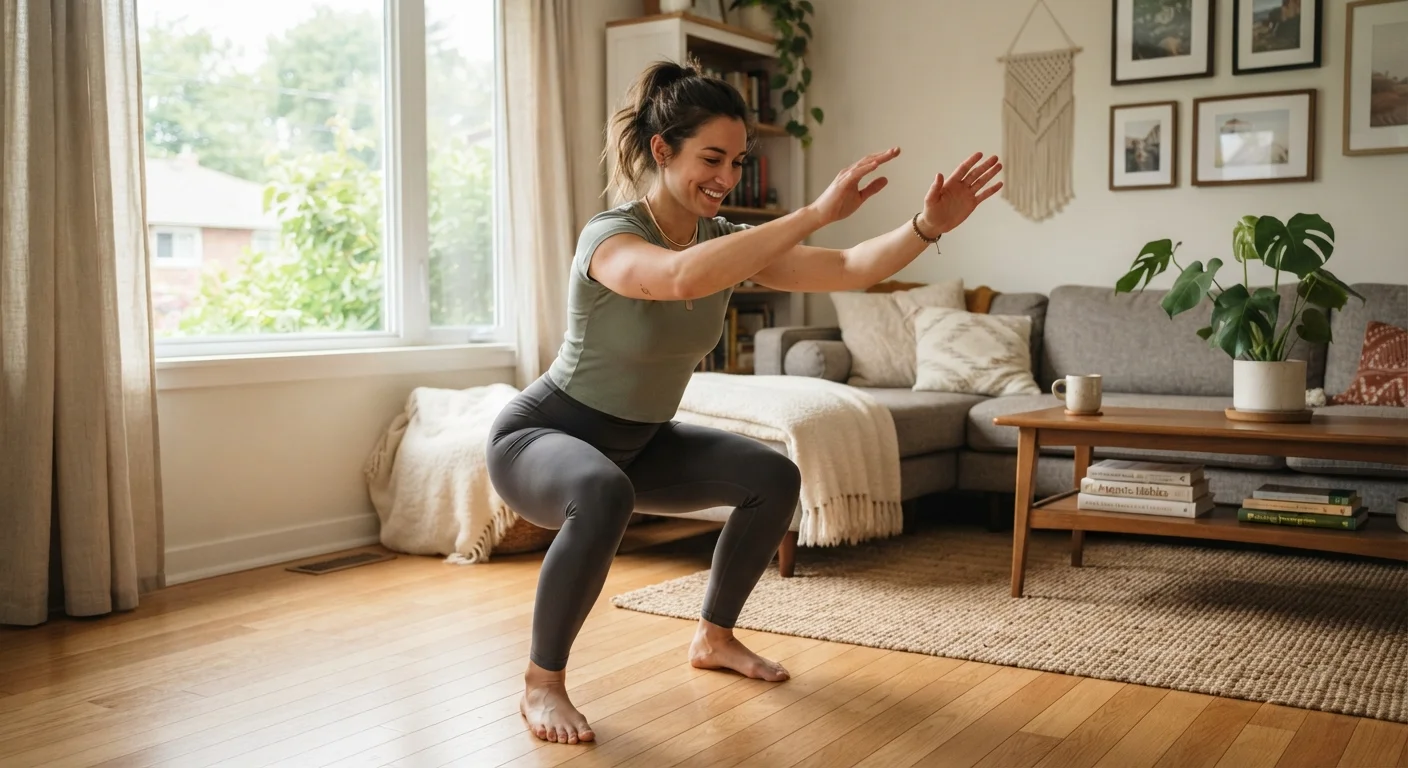
One of the most durable fitness myths is that meaningful exercise requires a gym membership, specialty equipment, or dedicated workout clothing. In reality, bodyweight training performed consistently can build genuine strength and cardiovascular fitness.
150 min
Weekly moderate activity recommended for adults
U.S. Department of Health and Human Services guidelines recommend at least 150 minutes of moderate-intensity aerobic activity per week, achievable without a gym.
~20 min
Minimum session length shown to improve cardiovascular markers
Research on high-intensity interval training has found sessions as short as 20 minutes can produce meaningful cardiovascular and metabolic adaptations in untrained individuals.
Research consistently shows that resistance training using body weight — squats, push-ups, lunges, planks — produces measurable improvements in muscular endurance and functional strength, particularly for people new to exercise. Progression happens by adjusting leverage, tempo, and volume rather than adding weight plates.
For a clear-eyed look at what bodyweight training can and can't do, see strength training without equipment: what's actually possible. And if you want to understand the broader fundamentals, strength training without a gym is a practical starting point for beginners.
Sharp or Joint Pain Is a Stop Signal
Muscular fatigue during exercise is normal; sharp, stabbing, or joint pain is not. If you experience chest pain, dizziness, or pain that persists after activity, stop exercising and consult a healthcare professional before continuing. Never push through pain on the assumption that it signals effort — it more often signals risk.
This article is for general informational purposes only and is not a substitute for professional medical or fitness advice. Consult a qualified healthcare provider before starting a new exercise program, especially if you have an existing health condition.