

Key Takeaways
- Brief bouts of movement — even two to five minutes — can meaningfully offset the health effects of prolonged sitting.
- Consistency matters more than intensity; small daily habits compound over weeks and months.
- Movement snacks require no equipment, gym membership, or dedicated workout window.
- Pairing movement breaks with existing routines helps them stick long-term.
- People with chronic conditions or injuries should consult a healthcare professional before starting any new movement routine.
What you will need
Why Short Movement Breaks Actually Matter
The term movement snack refers to brief, intentional bouts of physical activity — typically two to ten minutes — scattered throughout the day rather than consolidated into a single workout. Research published in journals such as Applied Physiology, Nutrition, and Metabolism suggests that interrupting prolonged sitting with short activity breaks can help regulate blood sugar, reduce fatigue, and support cardiovascular health, even when total daily movement is modest.
This matters because most desk workers sit for seven or more hours a day, and evidence increasingly suggests that long unbroken sitting periods carry independent health risks — separate from whether a person exercises at other times. The goal of movement snacking is not to replace structured exercise, but to fill the gaps between it. For people returning to activity after a break, this low-stakes format can also serve as a bridge — see our grounded guide to restarting exercise for context on easing back in gradually.
The practical appeal is real: no change of clothes required, no commute to a gym, and no minimum fitness level needed to begin.
Even Low-Intensity Movement Counts
You don't need to break a sweat for movement snacks to be worthwhile. Light activity — slow walking, gentle stretching, standing in place — still interrupts sedentary physiology in ways that matter. Intensity can increase gradually as the habit becomes established.
What You'll Need Before You Start
The barrier to entry is intentionally low. Review the prerequisites and tools below, then move on to the step-by-step routine.
What you will need
Recurring phone or computer alarm
Prompts movement breaks at set intervals so they happen automatically rather than relying on memory.
Resistance band
Adds light resistance to seated or standing exercises like rows and leg extensions without requiring weights.
Standing desk or desk riser
Allows alternating between sitting and standing posture, which complements movement snacks but is not required.
How to Build a Movement-Snack Habit
The steps below are designed to be implemented progressively. Start with one or two and layer in more as the habit takes hold. Pair this approach with everyday micro-habits for stress to reinforce the overall routine.
Audit your current sitting patterns
Before changing anything, track how long you typically sit uninterrupted. Most people underestimate this. A simple method: note the time when you sit down and when you next stand up. Do this for one workday. You're looking for stretches longer than 60–90 minutes — those are your target windows for inserting movement snacks.
Set a recurring movement reminder
Choose an interval that feels achievable — every 60 or 90 minutes is a practical starting point. Set a recurring alarm or use a free browser extension designed for break reminders. Label the alarm something specific, like "stand and move," rather than a generic alert, so you're less likely to dismiss it on autopilot.
Choose two or three go-to movements
Decision fatigue is a real obstacle. Prepare a short personal menu of movements so that when the reminder fires, you act immediately rather than deliberating. Good desk-job options include:
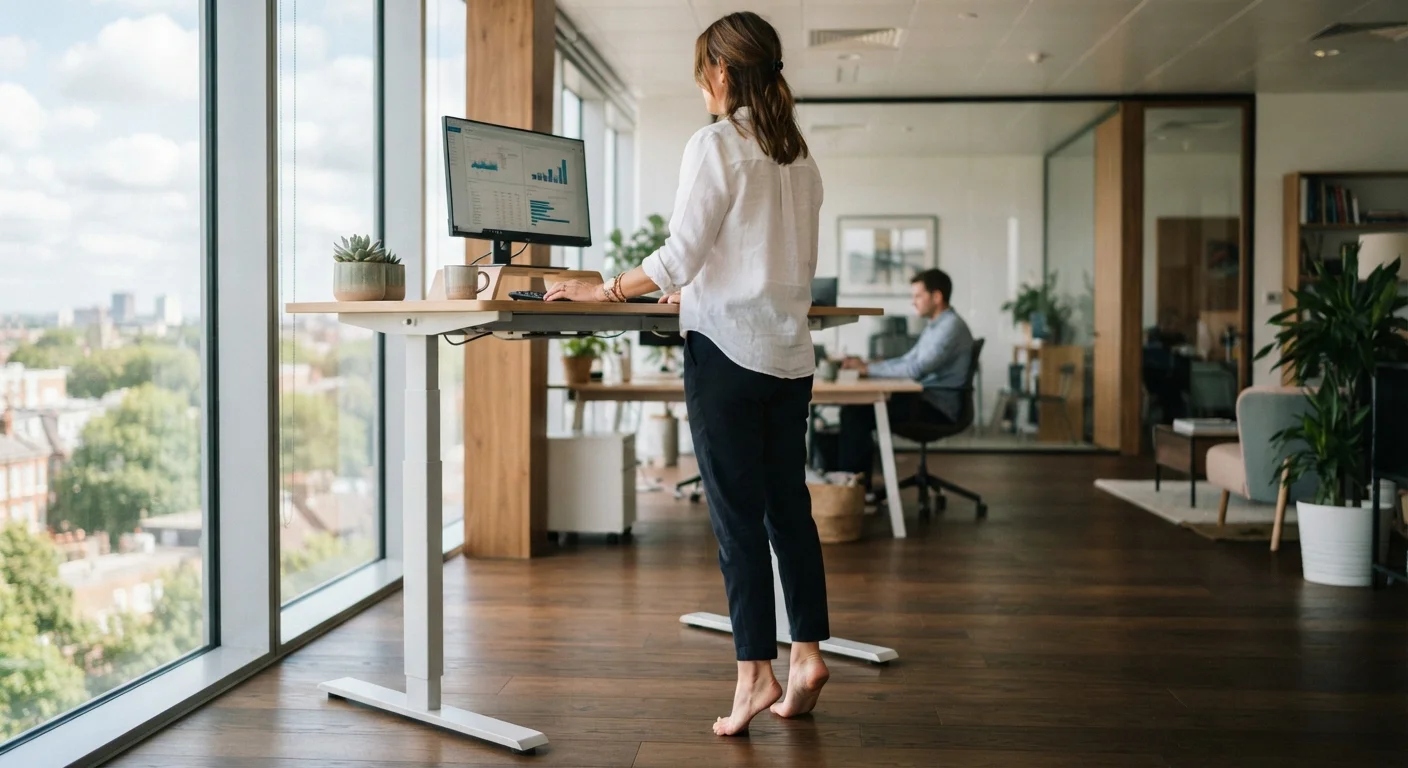
- Standing calf raises — hold your desk for balance, rise onto your toes 10–15 times
- Wall sit — slide back against a wall until thighs are roughly parallel to the floor, hold 20–30 seconds
- Shoulder rolls and neck tilts — address upper-body tension common in keyboard workers
- Brisk corridor walk — one or two laps of your floor at a purposeful pace
- Standing hip circles — hands on hips, draw slow circles to mobilise the hip joint; see also our article on mobility work versus stretching for why this distinction matters
Stack movement snacks onto existing habits
Habit stacking — attaching a new behaviour to an established one — dramatically improves follow-through. Identify two or three fixed daily anchors: brewing coffee, waiting for a file to upload, walking to a colleague's desk instead of messaging them. Assign a specific movement to each anchor so it becomes automatic rather than optional.
Track progress simply and adjust
After one week, review whether the habit is actually happening. A simple tally — a checkmark on a sticky note for each break taken — provides enough data to spot patterns. If you're consistently skipping the 3 p.m. break, change the anchor or the movement, not the goal. Gradually increase the number of breaks or the duration as the habit solidifies. The aim is sustainable consistency, not perfection.
Listen to Pain Signals
Movement snacks should feel manageable, not painful. If any exercise causes sharp joint pain, dizziness, or unusual shortness of breath, stop immediately and consult a healthcare professional. Discomfort from prolonged sitting is common, but new or worsening pain during movement warrants medical evaluation.
Troubleshooting Common Obstacles
"I forget to get up." This is the most common barrier. Digital reminders work well for many people, but a low-tech option — a sticky note on your monitor or a water bottle that prompts you to refill frequently — can be equally effective. The refill walk itself counts as a movement snack.
"My office doesn't feel like a safe space to move around." Desk-based options (seated torso rotations, shoulder rolls, ankle circles) are invisible to colleagues and still interrupt static posture meaningfully. Our related article on building a movement habit for sedentary workdays covers additional strategies for office-specific constraints.
"A few minutes can't really make a difference." The evidence suggests otherwise. Movement snacks are not a substitute for sustained aerobic activity — for a fuller picture of structured cardio options, see our comparison of walking versus running for everyday fitness. But even brief bouts appear to provide meaningful metabolic and mood benefits. Small inputs, applied consistently, accumulate.
Movement Snacks Don't Replace Structured Exercise
Current public health guidelines generally recommend at least 150 minutes of moderate-intensity aerobic activity per week for most adults — movement snacks contribute to that total but are unlikely to fulfil it entirely on their own. Think of them as a complement to, not a replacement for, more sustained activity. If you're unsure what level of activity is appropriate for your health status, speak with a qualified healthcare provider.
This article is for general informational and educational purposes only and is not a substitute for professional medical advice, diagnosis, or treatment. Always consult a qualified healthcare provider before beginning any new exercise program, particularly if you have a pre-existing condition, injury, or health concern.