

Key Takeaways
- Mindfulness is the practice of paying deliberate, non-judgmental attention to the present moment.
- You don't need to clear your mind — noticing thoughts without reacting to them is the actual skill.
- Research links regular mindfulness practice to reduced stress, improved focus, and better emotional regulation.
- Even two to five minutes of daily practice can build meaningful mental habits over time.
- Mindfulness complements other wellness routines but is not a substitute for professional mental health care.
Start here
What Mindfulness Actually Is
Clear up myths
What Mindfulness Is Not
Understand the research
The Evidence Behind the Practice
Try it now
Simple Ways to Start Today
Make it stick
Building a Sustainable Habit
What Mindfulness Actually Is
Mindfulness is the practice of paying deliberate, non-judgmental attention to what is happening right now — in your body, your thoughts, and your surroundings. The concept draws from contemplative traditions but has been studied extensively in Western psychology since the 1970s, most notably through Jon Kabat-Zinn's Mindfulness-Based Stress Reduction (MBSR) program developed at the University of Massachusetts Medical School.
At its core, mindfulness involves two simple moves: noticing what is present in your experience, and accepting it without immediately trying to change, fix, or avoid it. This doesn't mean passive resignation — it means seeing clearly before responding. That pause between stimulus and reaction is where much of the value lies.
Mindfulness
The practice of deliberately paying attention to the present moment — thoughts, feelings, and surroundings — without judging what you notice.
MBSR
Mindfulness-Based Stress Reduction: an eight-week structured program developed in clinical settings that introduced secular mindfulness to mainstream healthcare.
Non-judgment
Observing your thoughts and feelings as they are — without labeling them as good or bad — so you can respond rather than react automatically.
Breath awareness
A foundational mindfulness technique that uses the physical sensation of breathing as an anchor point for attention.
Body scan
A mindfulness exercise in which you move your attention systematically through different body parts, noticing physical sensations without trying to change them.
What Mindfulness Is Not
Several misconceptions stop people before they begin. Mindfulness is not about emptying your mind. Thoughts will arise — that is what minds do. The practice is noticing those thoughts without getting swept along by them.
It is also not a religious requirement, though its roots include Buddhist meditation. Secular mindfulness programs have been widely adopted in healthcare, education, and workplaces. Nor is it a quick fix: mindfulness is a skill that develops through repetition, not a single transformative session.
Secular practice, diverse roots
Modern clinical mindfulness draws on techniques from Buddhist meditation but is practiced in secular, evidence-based contexts worldwide. You do not need to adopt any spiritual or philosophical framework to benefit from the attention-training aspects of mindfulness. The two traditions — contemplative and clinical — can coexist, and individuals are free to engage with either or both.
Finally, mindfulness is general wellness education, not a replacement for professional mental health treatment. If you are managing a diagnosed condition, speak with a qualified healthcare provider about how mindfulness might fit alongside your existing care — not instead of it.
The Evidence Behind the Practice
A substantial body of peer-reviewed research supports mindfulness as a tool for everyday stress management and emotional regulation. Studies published in journals such as JAMA Internal Medicine and Psychological Science have linked mindfulness-based interventions to reductions in self-reported stress, improvements in focused attention, and better sleep quality in non-clinical populations.
Researchers have also observed changes in brain structure associated with sustained mindfulness practice — particularly in areas linked to attention control and emotional processing — though this field is still evolving and findings should be interpreted cautiously. The evidence is strongest for structured programs practiced consistently over weeks rather than occasional sessions.
Start with guided audio if you feel lost
Beginners often find it easier to follow a guided session than to practice in silence. Many libraries, health systems, and non-commercial apps offer free guided mindfulness sessions based on established MBSR methods. Choose a short, structured session — five to ten minutes — rather than a long open-ended recording to build the habit gradually.
For a broader look at stress-reducing habits backed by research, see everyday micro-habits that support lower stress.
Simple Ways to Start Today
You do not need a meditation cushion or a quiet retreat to begin. Here are four approachable entry points:
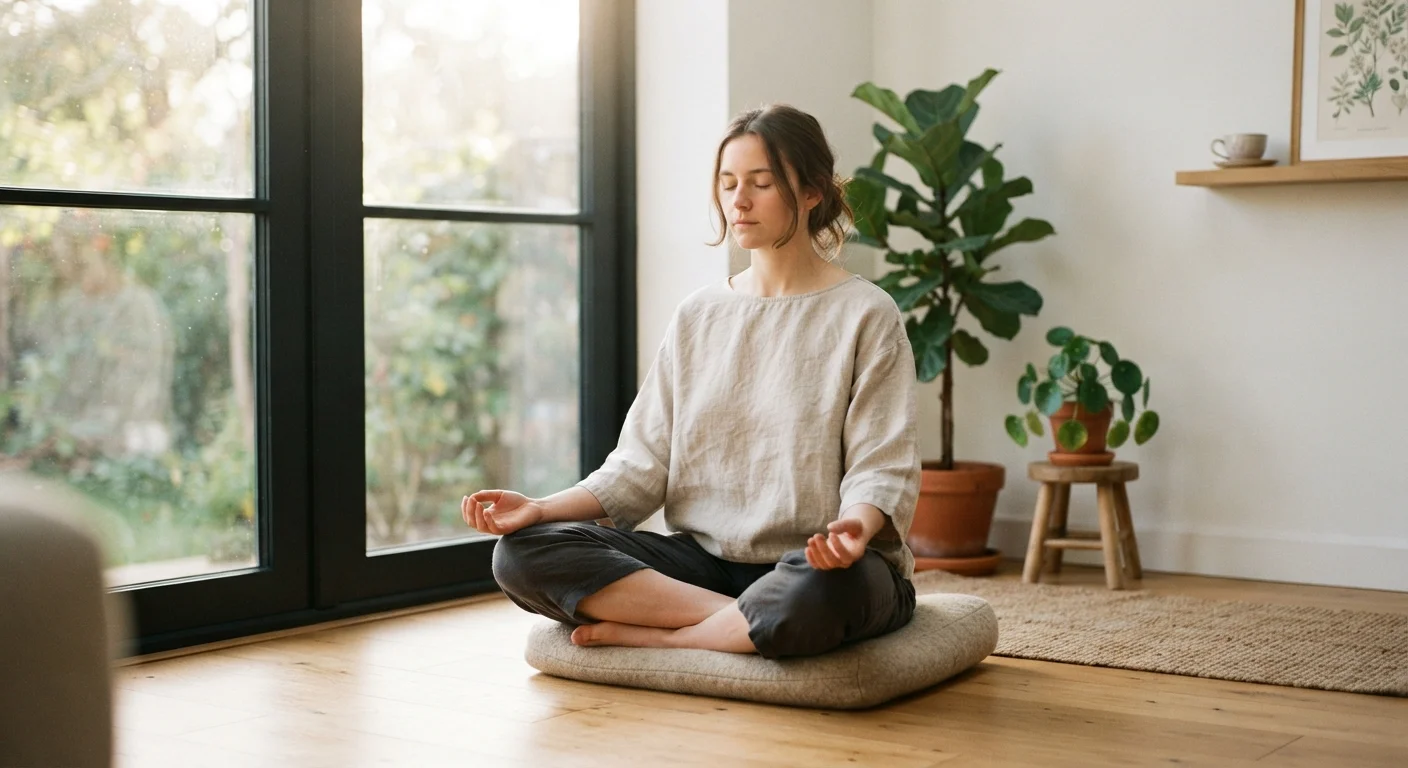
- Breath awareness (2–5 minutes): Sit comfortably, close your eyes if you like, and simply observe your breathing. Notice the sensation of air entering and leaving. When your mind wanders — and it will — gently return your focus to the breath without self-criticism.
- Mindful eating: During one meal or snack, set aside your phone. Eat slowly, noticing flavors, textures, and the physical sensation of hunger and fullness.
- Body scan: Lie down or sit quietly and mentally move your attention through different parts of your body, noticing any tension or sensation without trying to change it.
- Mindful walking: On a short walk, focus on the physical sensations of movement — your feet on the ground, the rhythm of your pace, sounds around you — rather than mentally rehearsing your to-do list.
If you are exploring related stress-relief approaches, journaling, meditation, and breathwork each offer different entry points worth comparing.
Mindfulness is not for every moment
For some individuals — particularly those with a history of trauma — certain mindfulness exercises, such as closed-eye body scans, can occasionally surface distressing feelings. If any practice feels overwhelming, stop and return to normal activity. A mental health professional can help tailor mindfulness approaches that are appropriate for your history and needs.
Building a Sustainable Habit
Consistency beats intensity for beginners. A two-minute daily practice maintained for a month builds more mental infrastructure than an hour-long session done once. Consider anchoring mindfulness to an existing routine — morning coffee, a lunch break, or the moments before sleep — so it rides on a habit already in place.
Track your practice informally: a simple check mark in a notebook is enough. When you miss a day, start again without judgment. The non-judgmental quality you cultivate in formal practice applies equally to your relationship with the practice itself.
Just as returning to exercise after a break requires patience and realistic expectations, establishing a mindfulness habit works best when you prioritize gradual consistency over ambitious goals you cannot sustain.
This article provides general wellness information and is not a substitute for professional medical or mental health advice. If you have concerns about your mental health, please consult a qualified healthcare professional.