

Key Takeaways
- Silicone caulk excels in wet environments due to its superior waterproofing and flexibility.
- Acrylic caulk is paintable and easier to clean up, making it better for interior trim and dry surfaces.
- Silicone bonds poorly to painted surfaces, while acrylic adheres well to drywall, wood, and plaster.
- Neither caulk is a replacement for grout — each serves a different structural and sealing role.
- Matching the caulk type to the location prevents premature failure, mold growth, and costly repairs.
Option A
Silicone Caulk
The waterproof, flexible choice for wet and high-movement areas.
Best for: Best for areas with constant moisture exposure — showers, tubs, sinks, and exterior gaps.
Option B
Acrylic Caulk (Latex Caulk)
The paintable, easy-to-work-with choice for interior gaps and trim.
Best for: Best for interior trim, baseboards, window casings, and any surface that will be painted over.
If you're sealing around a bathtub, shower surround, or kitchen sink
Silicone Caulk
Silicone remains flexible and fully waterproof even under daily water exposure and surface movement — acrylic will crack or absorb moisture in these conditions.
If you're filling gaps along baseboards, window trim, or interior door casings
Acrylic Caulk (Latex Caulk)
Acrylic caulk accepts paint cleanly, cleans up with water, and adheres reliably to drywall and wood trim in low-moisture interior settings.
If you're caulking exterior siding, window frames, or outdoor gaps
Silicone Caulk
Silicone handles UV exposure, temperature swings, and outdoor moisture far better than acrylic, which can shrink and crack in changing weather.
If you're a first-time DIYer and need the most forgiving product to work with
Acrylic Caulk (Latex Caulk)
Acrylic caulk is easier to apply smoothly, wipes off with a damp cloth before curing, and is less sensitive to application errors than silicone.
What's Actually Different Between These Two Caulks
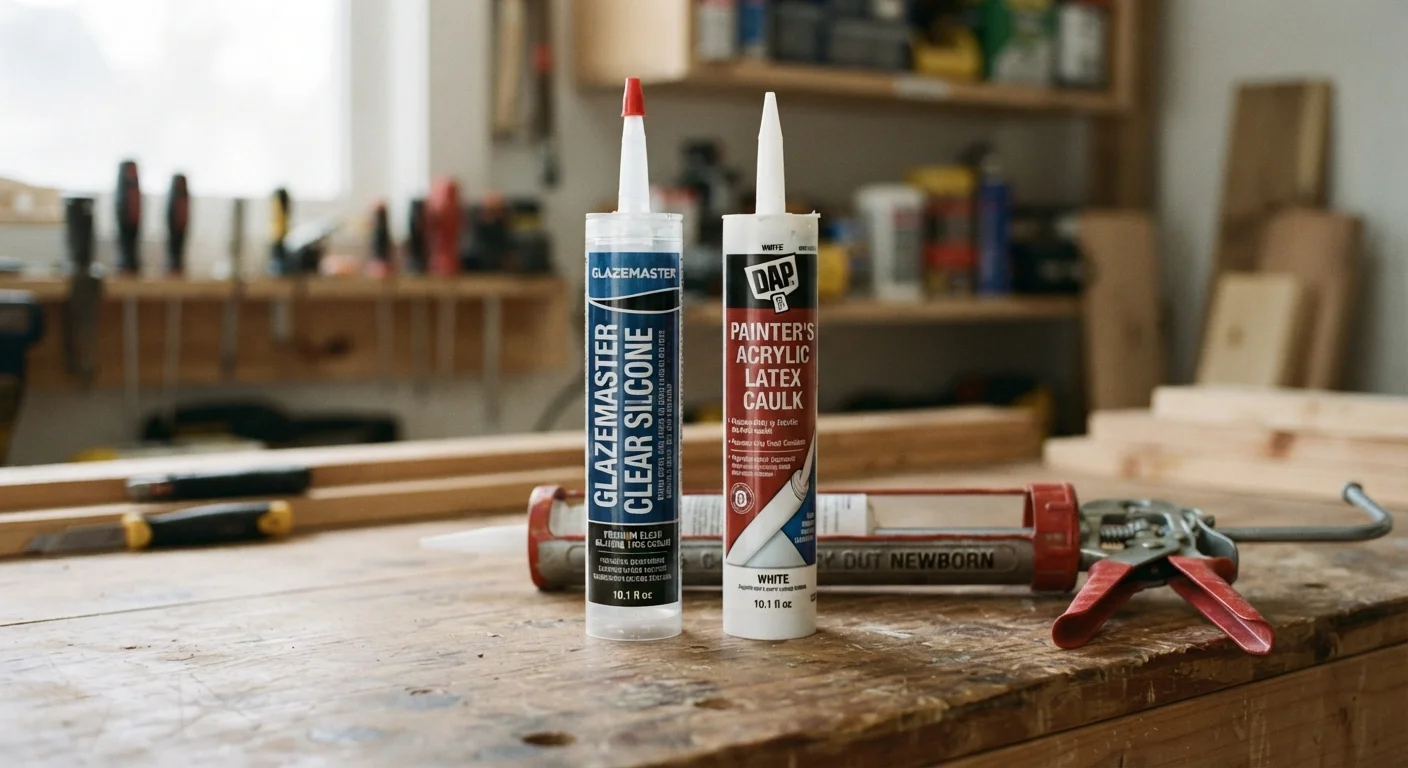
At the hardware store, silicone and acrylic caulk tubes sit side by side, and to the untrained eye they look nearly identical. But their chemistry — and how they behave once applied — is quite different.
Silicone caulk is made from a synthetic rubber compound. It cures into a rubbery, flexible seal that bonds well to non-porous materials like glass, ceramic tile, and metal. It does not shrink noticeably over time, and it resists water permanently rather than just repelling it temporarily. The trade-off: silicone is difficult to paint over, doesn't adhere well to painted drywall, and requires mineral spirits or a dedicated solvent to clean up before it cures.
Acrylic caulk — also called latex caulk or painter's caulk — is water-based. It's more rigid when cured, cleans up easily with water, and takes paint without any adhesion issues. However, it's not fully waterproof and will soften, crack, or develop mold if used in areas with sustained moisture.
Many products on the market are marketed as "siliconized acrylic" or "acrylic with silicone," which blends some flexibility into an otherwise acrylic formula. These hybrids can work in lightly damp areas but generally shouldn't be treated as a full silicone substitute in truly wet zones. If you want to go deeper on how caulk fits into the broader picture alongside grout and sealant, see what homeowners get wrong about caulk, grout, and sealant.
| Criterion | Silicone Caulk | Acrylic Caulk |
|---|---|---|
| Waterproofing | Fully waterproof | Water-resistant only |
| Flexibility after curing | Highly flexible, rubber-like | Rigid, may crack under movement |
| Paintable | No — paint won't adhere | Yes — accepts latex paint |
| Adhesion to drywall/wood | Poor | Excellent |
| Cleanup before curing | Solvent (mineral spirits) | Water and soap |
| Exterior use | Well-suited | Not recommended |
| Ease of application | Moderate — less forgiving | Easy — beginner-friendly |
| Typical cure time | 24–48 hours | 24 hours |
Where Each Caulk Belongs — and Where It Fails
Choosing the wrong caulk for a location is one of the most common DIY mistakes. Here's a practical breakdown by room and surface type.
Use Silicone In:
- Showers and bathtubs — along the seam where the tub meets tile or drywall
- Kitchen sinks — around the sink basin where it meets the countertop
- Exterior windows and doors — where frames meet siding or masonry
- Glass applications — mirrors, glass block, or glass-to-tile transitions
Use Acrylic In:
- Interior trim and molding — where baseboards, crown molding, or casings meet walls
- Interior window casings — gaps between the frame and drywall in dry rooms
- Drywall gaps and nail holes — before painting walls or ceilings
- Around interior doors — to seal drafts where trim meets the wall
~80%
Bathroom caulk failures due to wrong product
Industry estimates from caulk manufacturers suggest the majority of premature caulk failures in bathrooms stem from using acrylic caulk in consistently wet areas rather than silicone.
24–48 hrs
Silicone caulk full cure time
Most silicone caulk formulations require at least 24 hours — and up to 48 hours in low-humidity conditions — before the seal should be exposed to water.
The clearest failure mode for each: silicone applied to painted drywall often peels away from the surface rather than bonding. Acrylic applied in a shower will absorb moisture, swell, and create the exact conditions that allow mold to take hold — often within months.
Practical Tips for Application and Removal
Even the right caulk will fail if applied poorly. A few principles apply regardless of which type you're using:
- Surface preparation matters most. Both silicone and acrylic need a clean, dry, residue-free surface. Remove all old caulk, clean with rubbing alcohol or a dedicated surface cleaner, and allow the area to dry fully before applying anything new.
- Apply in one smooth, continuous pass. Stopping and starting creates weak joints. Hold the gun at a consistent 45-degree angle and move at a steady pace.
- Tool the bead immediately. Use a wet finger or a caulk-smoothing tool to press the caulk into the joint and create a concave, sealed surface before it begins to skin over.
- Respect cure times. Acrylic caulk typically skins over in 30–60 minutes but may take 24 hours to fully cure. Silicone can take longer — often 24 to 48 hours — and should not be exposed to water during that window.
A Note on Siliconized Acrylic Blends
Many tubes are labeled "acrylic with silicone" or "siliconized latex caulk." These hybrid products do offer more flexibility than standard acrylic and can handle light moisture better, but they are not a full substitute for 100% silicone in consistently wet areas like showers. If you're sealing around a bathtub or shower threshold, always reach for a product labeled 100% silicone or mold-resistant silicone. Check the product label carefully — marketing language can be misleading.
Removing old silicone is significantly harder than removing acrylic. A plastic scraper, utility knife, and a silicone-removing solvent are usually required. Trying to apply fresh caulk over old, deteriorated silicone is one of the most reliable ways to cause a new bead to fail prematurely.