

Key Takeaways
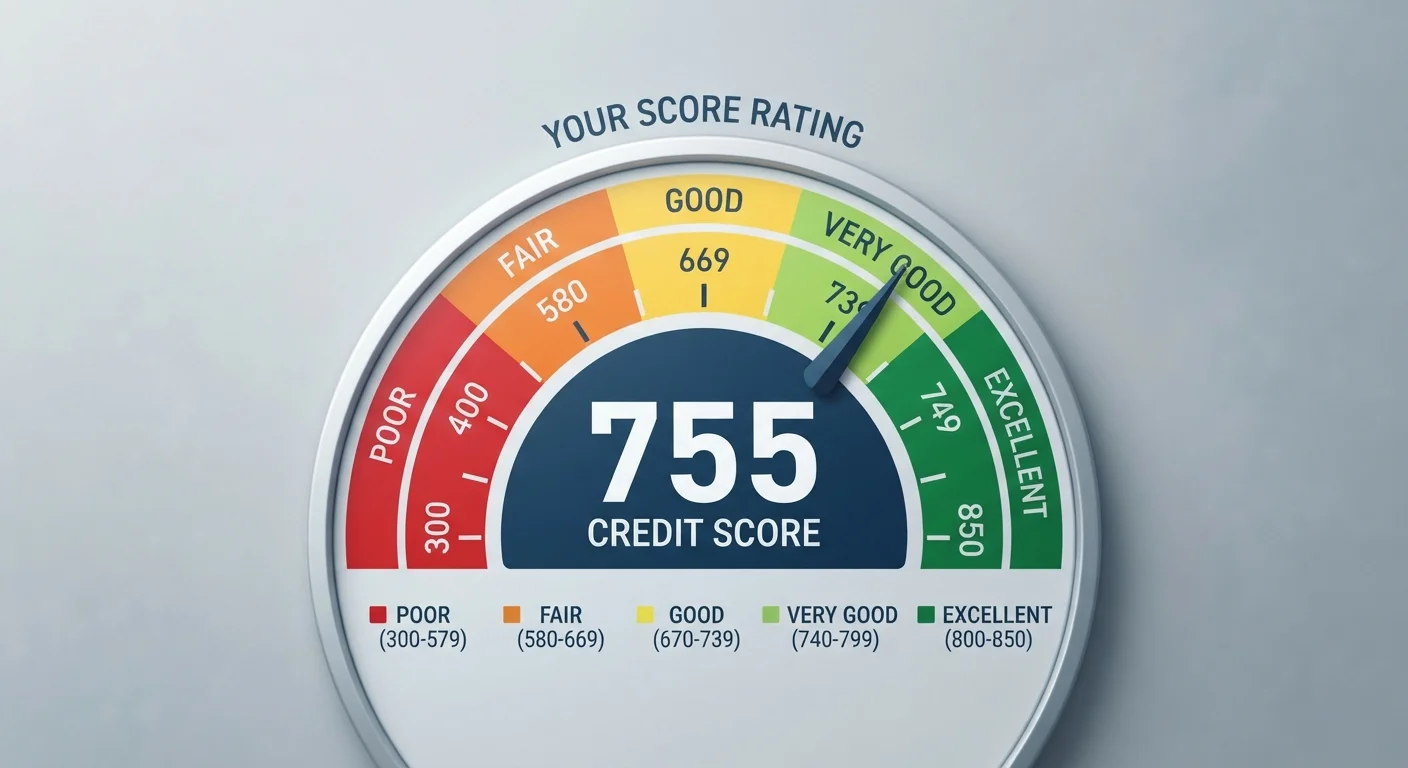
- Credit scores typically range from 300 to 850, with higher numbers indicating lower lending risk.
- Payment history is the single largest factor in most scoring models.
- You can have multiple different scores at the same time depending on which model and credit bureau is used.
- Checking your own credit score does not hurt it — only certain lender inquiries do.
- Your score is calculated from your credit report, so report errors can affect your number.
Credit Score
A credit score is a three-digit number — typically ranging from 300 to 850 — that summarizes how reliably you've managed borrowed money over time. Lenders use it to quickly estimate the likelihood that you'll repay a new loan or credit card on schedule. The higher the number, the lower the perceived risk to a lender.
Most scores in the U.S. are generated using models developed by FICO or VantageScore, each with their own proprietary weighting formulas applied to data from your credit report.
Where the Number Comes From
Your credit score doesn't come from a single place or formula. It's calculated by credit-scoring companies — most commonly FICO and VantageScore — using data pulled from your credit report. That report, maintained by one of the three major credit bureaus (Equifax, Experian, and TransUnion), is essentially a running record of your borrowing and repayment activity.
Because each bureau may hold slightly different information, and because FICO and VantageScore each apply their own weighting formulas, you can have several different scores at any given moment. None of them is the 'official' number — lenders choose which model and bureau they prefer, which is why the score a mortgage lender sees may differ from the one shown in your banking app.
For more on the specific terms that appear in your credit file, see our credit report glossary for plain-language definitions.
300–850
Standard FICO and VantageScore range
Both major scoring models use this scale, though some industry-specific scores use different ranges.
~35%
Weight of payment history in FICO scores
FICO's published breakdown identifies payment history as the single most influential factor in its model.
3
Major U.S. credit bureaus
Equifax, Experian, and TransUnion each maintain separate credit files, which is why scores can differ across sources.
The Five Factors That Shape Your Score
Most scoring models weigh a similar set of factors, though the exact percentages vary by model. Here's how FICO — the most widely used model — breaks it down:
- Payment history (~35%): Whether you've paid accounts on time. A single late payment can have a noticeable effect, especially on an otherwise short history.
- Amounts owed (~30%): How much of your available credit you're currently using — called your credit utilization ratio. Keeping this below 30% is a widely cited guideline, though lower is generally better.
- Length of credit history (~15%): How long your accounts have been open. Older accounts tend to help, which is one reason closing an old card can sometimes lower a score.
- Credit mix (~10%): Whether you have a variety of account types — credit cards, installment loans, etc. — though this is a minor factor for most people.
- New credit (~10%): Recent applications for credit. Each hard inquiry (a lender checking your report when you apply) can temporarily nudge your score down a few points.
Focus on Payment History First
Because payment history carries the most weight, consistently paying at least the minimum due by the due date is the single most impactful habit for maintaining or building a score. Setting up autopay for at least the minimum amount can help prevent accidental late payments.
Understanding these factors helps clarify a common point of confusion: your score reflects behavior patterns over time, not a single financial moment. For a deeper dive into what's true versus what's myth, see common credit score myths.
What Lenders Actually Do With Your Score
A lender uses your score as one input in a broader decision. It signals risk — the statistical likelihood, based on millions of past borrowers with similar profiles, that you'll miss payments. A higher score typically translates to easier approval and, often, lower interest rates offered on loans or credit cards.
That said, your score is rarely the only factor. Lenders also review your income, existing debt load, employment status, and the specific purpose of the loan. Someone with a 'fair' score and stable income may be approved for a loan that someone with a slightly higher score but irregular income is not.
This is also why improving your score — even by a modest amount — can have real-world effects on borrowing costs. It doesn't happen overnight, but the factors that move a score are knowable and within your control over time. Our broader debt and credit starting point covers how these concepts connect.
You Can Access Your Credit Reports for Free
Under federal law, you're entitled to request a free credit report from each of the three major bureaus. You can do this through AnnualCreditReport.com, the official site authorized under the Fair Credit Reporting Act. Reviewing your report regularly helps you catch errors that could be dragging your score down. See our guide to reading your credit report for a practical walkthrough.
This article is for general informational purposes only and does not constitute financial or credit advice. For guidance specific to your situation, consider speaking with a nonprofit credit counselor or a licensed financial professional.