

Key Takeaways
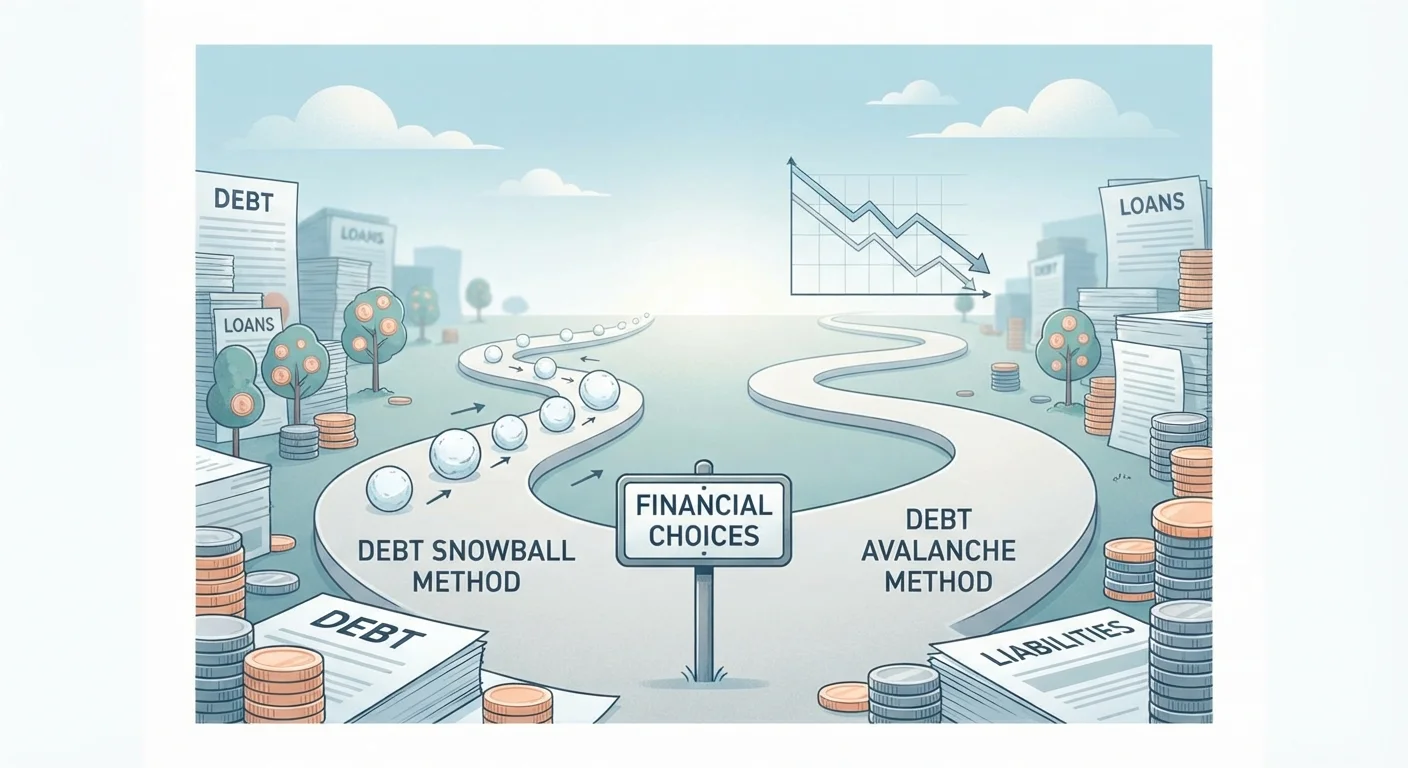
- The debt snowball targets your smallest balance first, regardless of interest rate.
- The debt avalanche targets your highest-interest debt first, reducing total interest paid.
- Snowball wins on motivation; avalanche wins on long-term cost.
- Both methods require you to make minimum payments on all other debts.
- The best strategy is whichever one you'll actually stick with over time.
Option A
Debt Snowball
The motivation-first approach to paying off debt.
Best for: People who need early wins to stay on track with a repayment plan.
Option B
Debt Avalanche
The math-first approach that minimizes total interest paid.
Best for: People who can stay disciplined over time and want to pay as little interest as possible.
If you've struggled to stay motivated with debt repayment before
Debt Snowball
Paying off smaller balances quickly creates visible progress, which research suggests helps sustain commitment to a repayment plan.
If you have high-interest debt like credit cards and want to minimize what you spend overall
Debt Avalanche
Attacking the highest interest rates first reduces the total amount of interest that accumulates, saving more money over time.
If your debts are similar in balance and interest rate
Debt Snowball
When the financial difference between methods is small, the motivational boost of the snowball may make it the more practical choice.
If you have one very large, high-interest balance among several smaller ones
Debt Avalanche
Letting a high-interest balance grow while clearing small ones could cost significantly more in interest charges over months or years.
What These Two Strategies Actually Do
Both the debt snowball and the debt avalanche are structured repayment methods — meaning you pay minimums on all your debts, then direct any extra money toward one specific target. They differ only in how you choose that target.
If you're new to the basics of interest and credit, our plain-language guide to debt and credit is a solid place to start before diving into either strategy.
Debt Snowball: List your debts from smallest balance to largest. Put all extra money toward the smallest one first. Once it's gone, roll that payment amount into the next smallest. The payments grow — like a snowball — as you eliminate each debt.
Debt Avalanche: List your debts from highest interest rate to lowest. Put all extra money toward the highest-rate debt first. Once it's paid off, roll that payment into the next highest-rate debt. The total interest you pay shrinks with each eliminated account.
| Criterion | Debt Snowball | Debt Avalanche |
|---|---|---|
| Repayment order | Smallest balance first | Highest interest rate first |
| Total interest paid | Typically more | Typically less |
| Speed of first payoff | Usually faster | May take longer initially |
| Motivational structure | High — frequent wins | Lower — rewards patience |
| Best suited for | Behavior-driven savers | Math-driven planners |
| Complexity | Simple to follow | Simple to follow |
The Real Cost Difference
In purely mathematical terms, the avalanche method almost always costs less. By eliminating high-interest debt first, you stop expensive interest charges from compounding as long. Over months or years, that gap can be meaningful — sometimes hundreds of dollars, depending on your balances and rates.
The snowball, by contrast, may leave high-rate debt sitting longer. You might pay off a $400 medical bill before a $5,000 credit card charging 22% APR. That credit card keeps accumulating interest while you work through smaller balances.
22%+
Average credit card APR in the US
The Federal Reserve has reported average credit card interest rates exceeding 20% APR in recent years, making high-rate debt costly to carry.
$6,000+
Median credit card balance per US household
Federal Reserve data indicates many US households carry thousands in revolving credit card debt, making repayment strategy consequential.
That said, the difference in total interest isn't always dramatic, especially if your debts are similar in size or rate. Running the numbers on your specific situation — using a free debt payoff calculator — can show you exactly how much each approach would cost you.
Why Motivation Matters in a Strategy Choice
Personal finance isn't just math — behavior plays a huge role. The debt snowball exists because many people quit a repayment plan before it's finished. If you pay minimums for two years on a high-interest card and never see a balance drop to zero, it's easy to feel like nothing is working.
Early wins from the snowball — eliminating two or three accounts quickly — provide tangible proof that the plan is working. That sense of progress tends to reinforce the habit.
Neither Method Requires a Perfect Budget
You don't need to have every dollar mapped out to start either strategy. Even a rough sense of your monthly cash flow — income minus fixed expenses — can reveal extra money to redirect toward debt. A structured budget can sharpen that number over time, but waiting for a perfect plan often means not starting at all.
The avalanche rewards patience. If you can look at a spreadsheet, trust the numbers, and stay the course without needing visible milestones, the avalanche is likely the more efficient path for you.
Budgeting plays a role in both methods. Knowing exactly where your money goes each month is what frees up the extra dollars you need to accelerate any repayment plan. Our guide to spending categories can help you find room in your budget, and you might also explore budgeting basics for a fuller picture of building a workable monthly plan.
How to Get Started With Either Method
Regardless of which approach you choose, the setup steps are similar:
- List every debt — include the balance, minimum payment, and interest rate for each.
- Sort your list — by balance (snowball) or by interest rate, highest first (avalanche).
- Set your monthly extra payment amount — even $25 or $50 per month beyond minimums accelerates payoff meaningfully.
- Make minimums on everything else — only the target debt gets extra money.
- Roll payments forward — when one debt is gone, add its former payment to the next target.
If debt includes an auto loan, understanding how interest works on installment loans is worth reviewing. Our article on financing a car explains how loan structures differ from revolving credit like credit cards.
This article is for general informational purposes only and does not constitute personalized financial advice. For guidance specific to your situation, consider speaking with a nonprofit credit counselor or a licensed financial professional.