

Key Takeaways
- Crates provide a structured safe space and support housetraining, but must never be used as punishment.
- Free roaming suits dogs that are fully housetrained, non-destructive, and emotionally settled.
- Most dogs transition naturally from crate use to more freedom as they mature and prove trustworthy.
- Neither approach is inherently better — the right choice depends on the individual dog's age, temperament, and training history.
- Always consult a veterinarian or certified behaviorist if your dog shows anxiety signs in either setting.
Option A
Crate Training
The structured, den-based approach to managing your dog's space.
Best for: Puppies, newly adopted dogs, or any dog still learning household boundaries and building bladder control.
Option B
Free Roaming
The open-access approach that gives dogs the run of the home.
Best for: Well-settled adult dogs with a reliable track record of safe, calm behavior when unsupervised.
If you have a new puppy or recently adopted dog
Crate Training
A crate gives a new dog a predictable, safe zone while you establish routines, protect your home, and build trust gradually.
If your dog is fully housetrained and calm when left alone
Free Roaming
An emotionally stable, reliably housetrained adult dog can thrive with full home access, and many dogs enjoy the freedom.
If your dog shows signs of separation anxiety
Crate Training
A properly introduced crate can act as a calming anchor — though severe anxiety warrants guidance from a certified behaviorist or veterinarian.
If you want to phase out the crate over time
Crate Training transitioning to Free Roaming
Start with a crate, then expand access room by room as your dog demonstrates reliable behavior — a gradual approach most behaviorists recommend.
What Each Approach Actually Involves
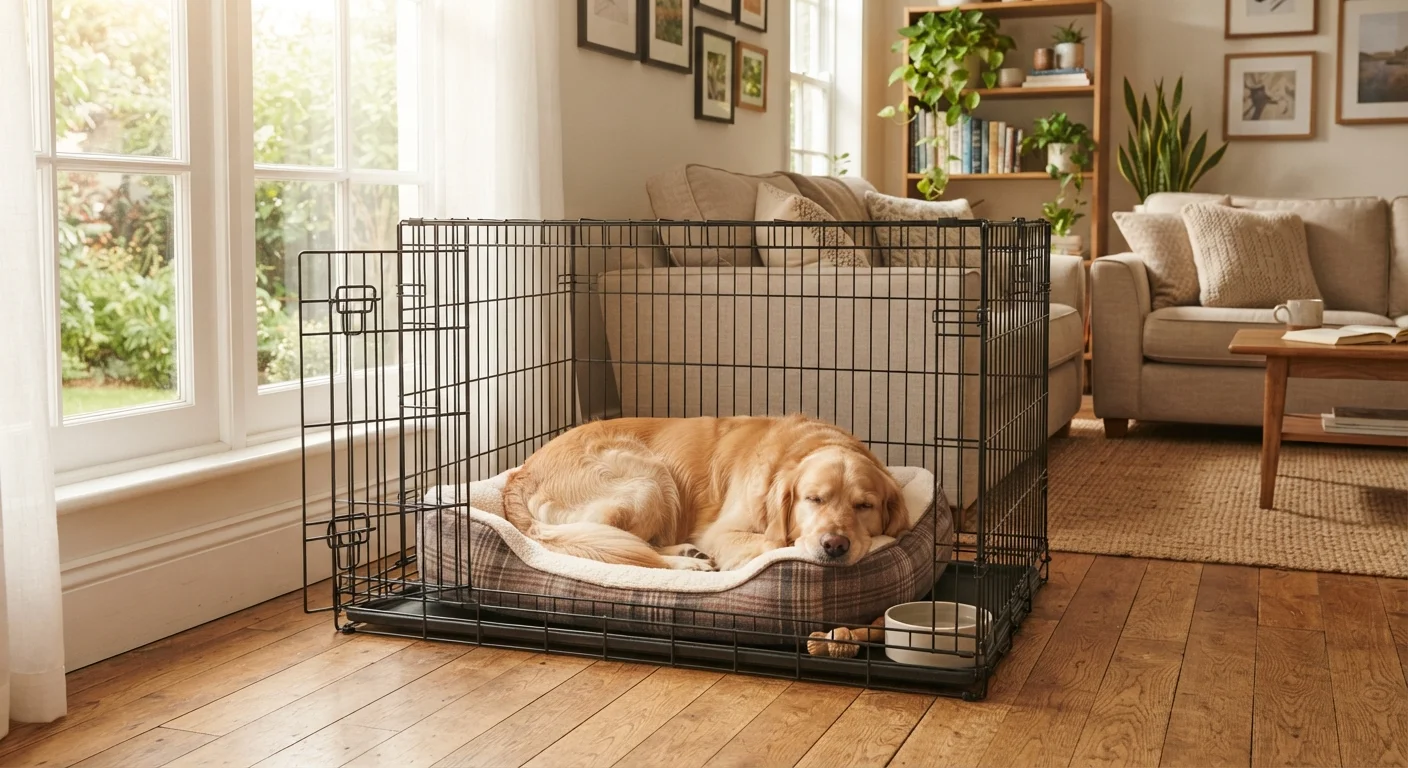
Crate training means giving your dog a designated enclosed space — typically a wire or plastic crate — that they can rest in and, during early training or absences, stay confined to. Done correctly, the crate becomes a den-like retreat the dog chooses voluntarily, not a penalty box. The goal is to pair it with positive experiences: comfortable bedding, calm arrivals, and never locking a dog inside as punishment.
Free roaming means allowing your dog unsupervised access to part or all of the home. This can range from one dog-proofed room to full house access. It assumes the dog has already developed the habits — reliable housetraining, no destructive chewing, stable behavior when alone — that make unsupervised time safe for both dog and home.
If you're preparing your home for a new arrival, our guide to bringing a dog home for the first time walks through what to set up before day one.
| Criterion | Crate Training | Free Roaming |
|---|---|---|
| Best starting point | Puppies and newly adopted dogs | Settled adult dogs with proven habits |
| Housetraining support | Strong — limits accidents by design | Relies on existing housetraining |
| Safety during absences | High — limits access to hazards | Depends on dog-proofing and dog's behavior |
| Risk of misuse | Overuse or punishment use is harmful | Too much freedom too soon can set back training |
| Dog autonomy | Limited during confinement periods | High — dog can self-select rest and movement |
| Transition required | Gradual positive introduction needed | Dog must earn access through reliable behavior |
The Case for Crate Training
Behavioral science supports the idea that dogs are naturally inclined toward small, enclosed resting spots — the crate taps into this tendency when introduced gradually and positively. For puppies especially, a crate accelerates housetraining: dogs instinctively avoid soiling their sleeping area, which builds bladder awareness faster than free access does.
Crates also provide a safety net. Puppies and newly adopted dogs may chew electrical cords, ingest household objects, or get into situations that cause injury when left unsupervised. Confining them during early weeks limits risk while trust is being established.
4 hrs
Max recommended daytime crating for adult dogs
Veterinary and behavioral guidelines generally suggest adult dogs should not be confined for more than four hours at a stretch without a break.
3–4 wks
Typical time for a puppy to show housetraining progress with crate use
Consistency with crate-based housetraining routines typically shows measurable progress within three to four weeks, though individual dogs vary.
The most common mistake owners make is overusing the crate. Puppies under six months should not be crated for more than three to four hours at a stretch during the day; adult dogs should not be confined for excessively long periods without exercise, interaction, and mental stimulation. A crate used properly is a tool for building good habits, not a substitute for training and engagement.
The Case for Free Roaming
For the right dog, free roaming supports wellbeing in meaningful ways. Dogs that have earned household freedom can self-regulate rest, seek comfort spots, and avoid the frustration that can come from prolonged confinement. Some dogs — particularly those with a calm, settled temperament — cope better when they can move around rather than wait in a small space.
Free roaming also becomes the practical reality for most dogs eventually. The question is usually not whether to allow it, but when. Owners who observe their dog carefully over weeks and months — watching for reliable housetraining, no destructive behavior, and calm responses to being left alone — are generally in the best position to judge readiness.
For context on how living arrangements affect dogs more broadly, see our article on what indoor vs. outdoor living really means for dogs.
Separation Anxiety Is a Special Case
Some dogs find confinement deeply distressing — panting, vocalizing, or attempting to escape — rather than calming. For these dogs, a crate may worsen anxiety rather than help. Equally, some anxious dogs do better with the reassurance of a contained space. If your dog shows significant distress in either arrangement, seek guidance from a veterinarian or certified animal behaviorist before continuing. Anxiety is a welfare concern, not a training failure.
How to Move from One Approach to the Other
Most owners find that crate training is a starting point, not a permanent arrangement. The typical progression: crate at night and during unsupervised periods early on, then expand access to one room, then multiple rooms, as the dog demonstrates reliability. This gradual expansion — sometimes called "earning freedom" — gives the dog the chance to build good habits in smaller increments.
If a dog that previously free-roamed suddenly starts having accidents, chewing, or showing anxious behavior, a temporary return to a crate or confined space can help reset routines. Regression is common after major household changes — a move, a new baby, or an illness — and isn't a failure.
First-time owners planning their setup will find our first-dog checklist useful for thinking through safe spaces alongside other early decisions.
This article is for general informational purposes only. For concerns about your dog's behavior, anxiety, or welfare, consult a licensed veterinarian or a certified animal behaviorist.