

Key Takeaways
- A well-stocked car kit covers safety, comfort, navigation, and documentation—not just snacks.
- Experienced road-trippers routinely edit their packing list down, cutting items they never actually use.
- Physical documents and offline maps remain valuable backups even when technology works perfectly.
- A compact emergency kit and basic first-aid supplies belong in every road trip vehicle.
- Overpacking creates clutter and reduces visibility—prioritize versatile, purpose-driven items.
The Philosophy Behind a Smart Road Trip Kit
Every experienced road-tripper eventually learns the same lesson: a bloated car is a stressed car. The goal isn't to bring everything that might be useful—it's to bring everything that's genuinely likely to matter on the road. That mindset shift separates the drivers who arrive relaxed from the ones who spend 20 minutes digging through the back seat for a phone charger.
Think of your kit in four clear categories: safety and emergency, documents and navigation, comfort and convenience, and food and hydration. When each item has a category, it's easier to notice what's redundant and what's actually missing. For a broader look at how preparation shapes the whole experience, see our guide to well-planned US road trips.
Emergency Roadside Kit
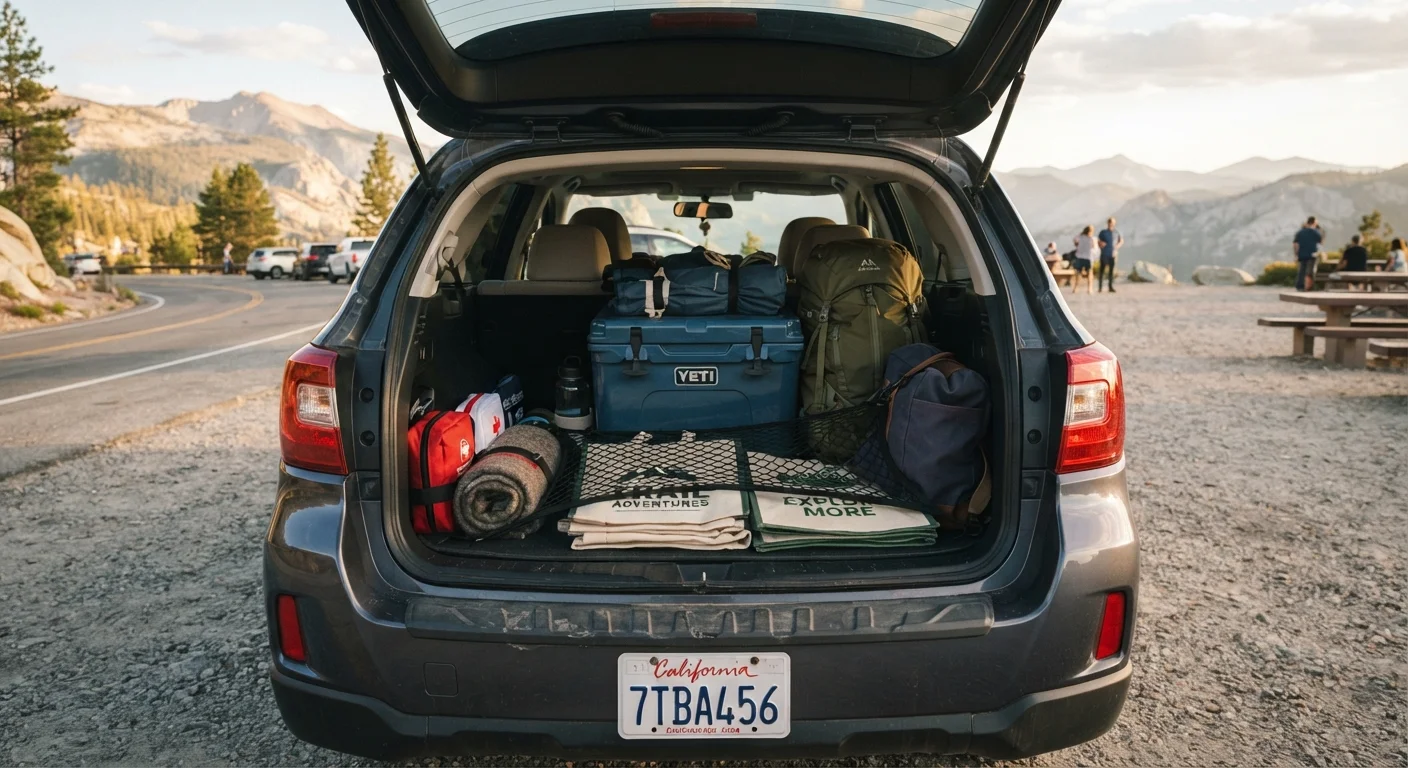
A compact emergency kit is the one item every driver should have regardless of trip length. At minimum, it should include jumper cables or a portable jump starter, a reflective triangle or road flares, a tire pressure gauge, a basic multi-tool, and work gloves. Many drivers also add a small flashlight with fresh batteries. Store it in an accessible corner of your trunk—not buried under luggage—so it's reachable when you actually need it.
For detailed guidance on what to keep in the car year-round, the driver's readiness checklist covers vehicle prep from a safety-first perspective.
An emergency kit buried under luggage is almost as useless as no kit at all.
First-Aid Supplies
A pre-assembled first-aid kit handles the most common road trip inconveniences: blisters from hiking a trail, a headache from hours in the sun, a minor cut from unloading gear. Look for a kit that includes adhesive bandages in multiple sizes, antiseptic wipes, pain relievers, antihistamines, and any prescription medications your group takes regularly. Keep medications in their original labeled containers and check expiration dates before you leave.
This information is general in nature and not a substitute for professional medical advice. Consult a qualified healthcare provider for guidance specific to your health needs.
Check expiration dates on every item in your first-aid kit before departure, not after.
Physical Documents and Backup Navigation
Your driver's license, vehicle registration, and proof of insurance should always travel with you—but on a long road trip, also consider printing your hotel confirmations, a rough route overview, and any reservation numbers. Digital copies can vanish with a dead battery or spotty signal. A paper state atlas or a downloaded offline map adds genuine peace of mind in areas with unreliable coverage.
Paper documents don't need a signal or a charged battery to work.
Charging and Power Essentials
A multi-port USB car charger keeps phones, tablets, and GPS units powered without requiring anyone to take turns. A portable power bank matters most during stops where you're away from the vehicle but still need your devices. Bring the right cables for every device in your car—a forgotten cable is a surprisingly common and avoidable frustration. Cable organizers or a small zip pouch keep everything from tangling.
One forgotten cable can create hours of low-battery anxiety across an entire crew.
A Cooler Stocked Intentionally
A well-packed cooler is one of the highest-return items on any road trip packing list. It keeps drinks cold, reduces fast-food stops, and lets you carry snacks that actually sustain energy rather than spike and crash it. Hard-sided coolers retain temperature longer; soft-sided ones compress when empty. Pack it with a mix of hydrating drinks, protein-forward snacks, and easy grab-and-go foods. Avoid anything that requires utensils unless you've packed those too.
A cooler that's easy to access from the back seat gets used; one buried in the trunk usually doesn't.
Comfort Layer: What Makes Hours Feel Shorter
Experienced road-trippers develop strong opinions about comfort items over time. A travel pillow and a light blanket genuinely earn their space on overnight drives or long stretches with passengers who sleep. Sunglasses, lip balm, and hand lotion address the slow-burn discomfort of hours in a dry, sun-exposed cabin. A reusable water bottle per person reduces plastic waste and keeps everyone consistently hydrated.
What experienced drivers stop bringing is often just as telling: overstuffed entertainment bags, duplicate chargers, heavy "just in case" clothing layers that never get used. Edit ruthlessly.
The items experienced drivers stop bringing are often just as instructive as the ones they keep.
Trash and Organization System
A small hanging trash bag or a foldable bin prevents the gradual chaos that turns a clean car into a landfill by day two. Pair it with a simple organization system: a backseat organizer for frequently accessed items, a designated spot for chargers, and one bag per person for personal items. When everything has a place, you spend less time hunting and more time enjoying the drive. First-time road trip planners often overlook this—until the third rest stop.
A car that stays organized on day one is far easier to manage by day four.
Before You Pull Out of the Driveway
Packing smart is only half the equation. The other half is making sure the vehicle itself is ready to carry everything you've brought. Tire pressure, fluid levels, and wiper condition are the kind of details that seem minor until they aren't. Our pre-departure road trip checklist walks through every vehicle and packing step in sequence so nothing slips through the cracks.
Do a Trial Load Before Departure Day
Pack your car the night before—or even a few days early—to see how everything fits. You'll spot the items that don't actually have a logical place, identify what's missing, and avoid the rushed chaos of loading on departure morning. It also gives you time to buy anything you realized you forgot without scrambling.
And once you're on the road, don't underestimate the navigation question. Even drivers who trust their phones completely should understand what happens when cell service disappears in rural stretches. Our piece on road trip navigation in the smartphone era covers offline maps, dedicated GPS devices, and when a paper backup still earns its keep.
When Technology Fails on the Road
Rural stretches across the American West, parts of the Southeast, and remote national park corridors can have limited or no cell service for extended distances. Downloaded offline maps—available through several major navigation apps—work without a data connection. A downloaded map of your route costs nothing and can prevent significant stress when signal disappears unexpectedly.