

Key Takeaways
- Always run a vehicle history report before committing to any used car purchase.
- A pre-purchase inspection by an independent mechanic is one of the smartest investments you can make.
- Check for rust, panel misalignment, and paint inconsistencies that may signal past collision damage.
- Review the title carefully — a salvage or rebuilt title significantly affects value and insurability.
- Never skip a test drive, and test in multiple conditions including highway speeds if possible.
- Ownership costs like insurance, registration, and fuel economy should factor into your budget.
Summary
22 items · 30–60 minutes on-site per vehicle
Why a Structured Checklist Matters
Buying a used vehicle is one of the larger financial commitments most people make outside of housing. Unlike new cars, used vehicles come with unknown histories, previous owners with varying maintenance habits, and no factory warranty to catch early problems. A structured approach helps you evaluate each vehicle on the same terms and avoid making a decision driven by emotion or urgency.
This checklist is organized into five areas: paperwork and history, exterior condition, interior and electronics, mechanical health, and the test drive. Work through each section in order — the earlier steps often reveal issues that make the later ones irrelevant. For ongoing care after you purchase, our car maintenance hub covers essential upkeep to keep your vehicle running reliably.
VIN History Report Service
Look up accident records, title brands, ownership history, and odometer readings tied to the vehicle's VIN.
NHTSA Recall Lookup (nhtsa.gov)
Check whether the vehicle has any open safety recalls that need to be addressed.
Independent Mechanic (Pre-Purchase Inspection)
Have a qualified mechanic perform a thorough inspection of the vehicle's mechanical condition before you buy.
Flashlight
Illuminate dark areas under the hood, inside the wheel wells, and under the vehicle when inspecting for rust or leaks.
OBD-II Scanner
Read stored diagnostic trouble codes from the vehicle's computer to identify hidden fault conditions.
Paperwork and Exterior: Start Before You Touch the Door Handle
Before you even open the car, the paperwork tells you most of what you need to know about its past. A vehicle history report tied to the VIN can reveal prior accidents, flood or fire damage, title branding (such as salvage or rebuilt), and whether the mileage reading appears consistent over time. Cross-reference the VIN stamped on the dashboard, inside the driver's door jamb, and on the title itself — they should match exactly.
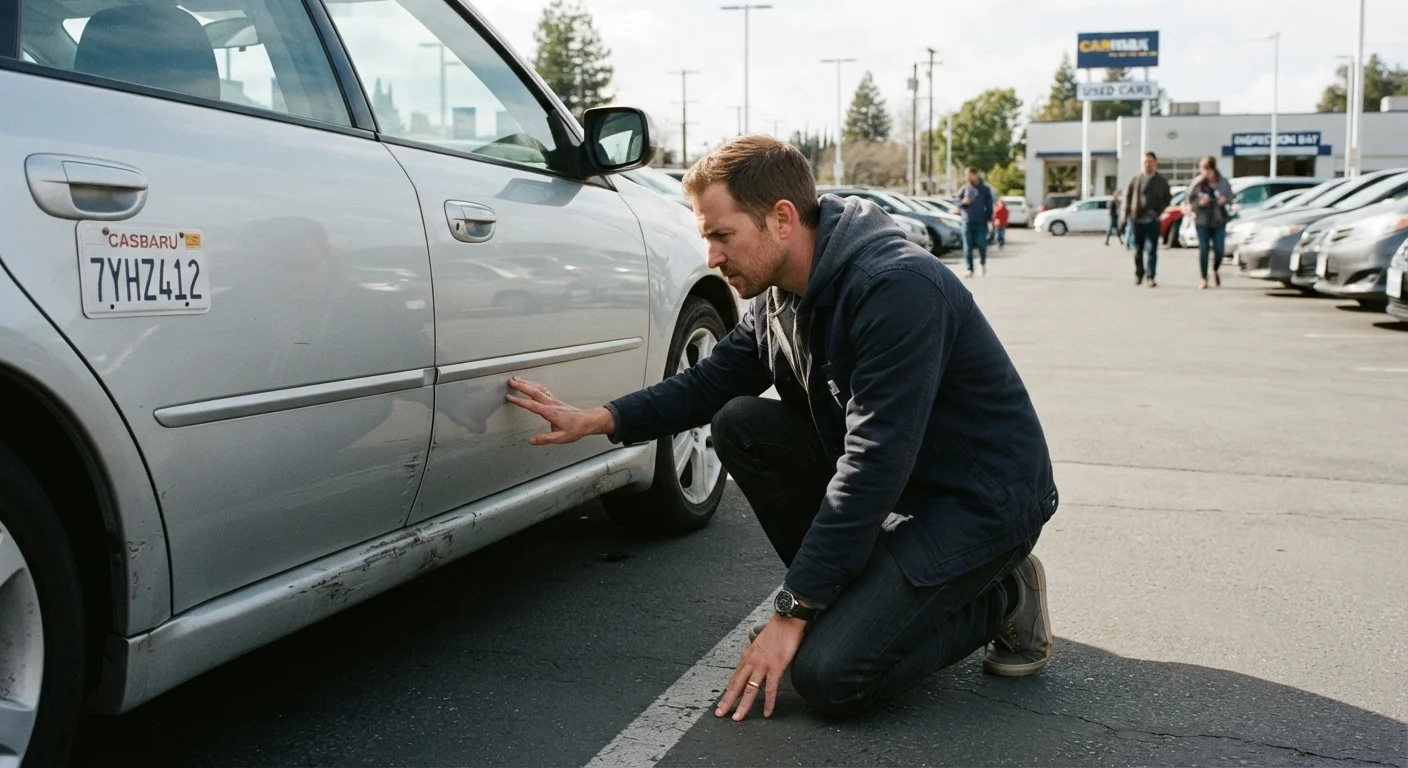
Once you move to the exterior, train your eye on panel alignment and paint consistency. Mismatched color, overspray on rubber trim, or uneven gaps between doors and the body often indicate prior collision repair. Crouch down and look along the sides in natural light — this angle reveals rippling or texture differences invisible from standing height.
Always Get an Independent Mechanic Inspection
A pre-purchase inspection by a mechanic you hire — not one recommended by the seller — is the single most effective safeguard against buying a vehicle with hidden problems. This inspection typically costs between $100 and $200 and can reveal thousands of dollars in potential issues. Never waive this step, no matter how clean the car appears or how trustworthy the seller seems.
Check tire wear carefully. Feathering or cupping across the tread width often points to alignment or suspension problems, which can be expensive to correct. Also verify all exterior lights cycle on properly — a non-functioning light is a minor fix, but it signals whether the seller has maintained the basics.
Interior, Electronics, and Under the Hood
Inside the cabin, test every electronic system methodically. Power windows, mirrors, seat adjusters, air conditioning, heat, and the infotainment all need to function. Turn the ignition on without starting the engine and observe which dashboard warning lights illuminate — most should clear within a few seconds of starting. Any that remain lit, particularly the check engine, ABS, or airbag indicator, represent issues requiring diagnosis.
Smell and feel matter here too. A musty or mildewy odor, damp carpet, or staining in the lower door panels can point to water intrusion — a serious problem tied to flood damage, which may not appear in a history report if it was never insured. Open the trunk and press the floor liner down to check for moisture pooling beneath.
Private Sellers May Offer No Recourse
When buying from a private party, you generally have limited legal protection if problems surface after the sale. Ensure all paperwork is in order, never pay without receiving a signed title, and consider having an attorney review any bill of sale if the transaction is significant. 'As-is' sales are common and legally binding in most states.
Don't Let Pressure Override Your Checklist
Sellers — private or dealership — may create urgency by suggesting other buyers are interested. Take your time regardless. Skipping even one step in this checklist, especially a mechanic inspection, can result in costly repairs shortly after purchase. A legitimate seller will accommodate a reasonable inspection process.
Under the hood, check fluid levels and look at their condition. Engine oil should be amber to dark brown but not gritty or milky — a milky appearance may indicate coolant mixing with oil, often caused by a head gasket failure. Start the engine from cold and listen for the first 30–60 seconds, when irregular sounds are most audible. Then have an independent mechanic perform a full pre-purchase inspection. Their report is your most objective data point.
Paperwork & History
Exterior Inspection
Interior & Electronics
Mechanical & Under the Hood
Test Drive
The Test Drive and Ownership Costs
A test drive should cover varied conditions. Pull onto a highway if possible, bring the vehicle to cruising speed, and note any vibration through the steering wheel or seat. Apply the brakes firmly in a safe environment — pulsing or pulling to one side can indicate warped rotors or caliper issues. Take a few turns at low speed and listen for clunking, which may signal worn tie rods or ball joints.
After the test drive, factor in the total cost of ownership, not just the purchase price. Insurance rates, fuel economy, registration fees, and the likely cost of deferred maintenance (tires, brakes, timing belt if applicable) should all enter your calculation. A vehicle priced attractively may carry hidden costs that shift the math significantly.
Once you've made your purchase, keep your vehicle in good shape with a routine maintenance schedule. Our guide to seasonal car maintenance walks through the key checks that matter as conditions change throughout the year. And when you're ready for your first road trip in the new vehicle, the pre-departure road trip checklist covers everything you need before pulling out of the driveway.