

Key Takeaways
- Mindfulness is an awareness quality; meditation is a formal practice used to cultivate it.
- You can be mindful without meditating, but most meditation practices incorporate mindfulness.
- Both approaches are supported by research linking them to reduced stress and improved mood.
- Meditation typically requires scheduled, uninterrupted time; mindfulness can be woven into daily tasks.
- Choosing between them depends on your schedule, goals, and how you engage best with mental habits.
- Consulting a mental health professional is advisable if you are managing a clinical condition.
Option A
Mindfulness
An everyday quality of awareness you can bring to any moment.
Best for: People who want to reduce reactive stress and stay grounded throughout a busy day without setting aside dedicated practice time.
Option B
Meditation
A structured, time-bound practice that trains the mind.
Best for: People who want a deliberate, repeatable routine that systematically builds focus, emotional regulation, and mental clarity over time.
If you have a hectic schedule and struggle to carve out quiet time
Mindfulness
Mindfulness integrates into existing routines — eating, commuting, working — so it requires no separate block of time to begin.
If you want a structured, progressive mental training habit
Meditation
A consistent seated meditation practice provides measurable, repeatable sessions that are easier to track and build on incrementally.
If you are new to both and unsure where to start
Mindfulness
Starting with informal mindfulness costs nothing, requires no instruction, and naturally introduces the attentional skills that formal meditation later deepens.
If your goal is deeper emotional regulation and focused attention
Meditation
Research on structured meditation programs, such as Mindfulness-Based Stress Reduction (MBSR), shows consistent gains in emotional resilience and sustained attention.
If you want the widest possible daily benefit from one approach
Mindfulness
Because mindfulness can be practiced continuously throughout the day, its cumulative effect on moment-to-moment stress is accessible around the clock.
Two Terms, One Overlap — and a Real Distinction
Walk into any wellness conversation and you'll hear mindfulness and meditation used as though they mean the same thing. They don't — and the difference is worth understanding before you invest time in either.
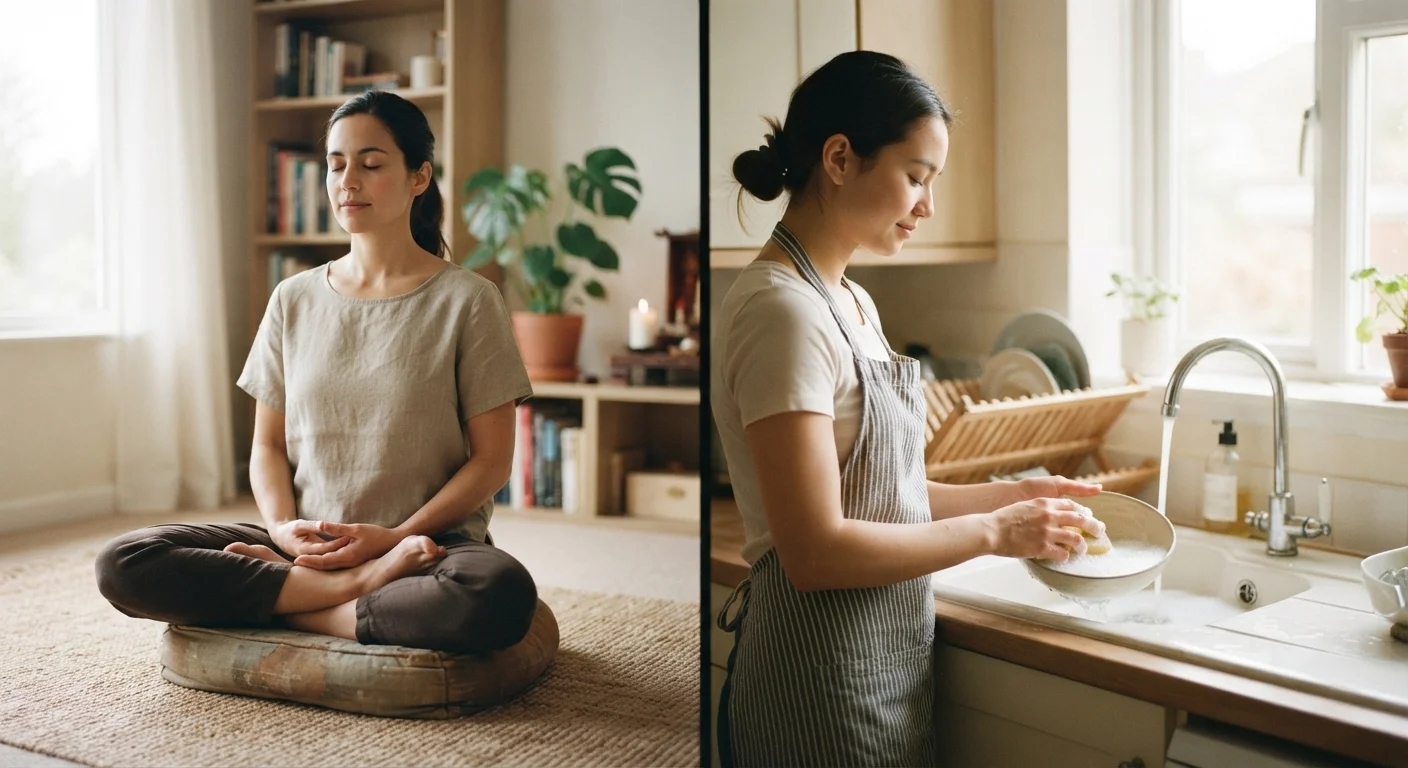
Mindfulness is a quality of attention: deliberately noticing what's happening right now — your thoughts, sensations, surroundings — without immediately judging or reacting to it. It is not a technique you perform at a set time; it's a mental stance you can apply while making coffee, listening to a colleague, or sitting in traffic.
Meditation, by contrast, is a formal practice — a deliberate exercise, usually performed in a quiet setting for a defined period, designed to train attention and awareness. Many meditation styles use mindfulness as their core mechanism, but meditation can also involve visualization, loving-kindness, breath counting, or body scans. The relationship flows one way: meditation almost always involves mindfulness, but mindfulness does not require meditation.
A useful analogy: mindfulness is to meditation what physical fitness is to going to the gym. Fitness is an ongoing quality you cultivate; the gym is one structured method for building it. You can be physically active without ever joining a gym, just as you can practice mindfulness without ever sitting for a formal session.
| Criterion | Mindfulness | Meditation |
|---|---|---|
| What it is | A quality of present-moment awareness | A structured, time-bound mental exercise |
| When it happens | Anytime, woven into daily activity | During a dedicated, uninterrupted session |
| Time required | No set time — moments throughout the day | Typically 5–45 minutes per session |
| Formal instruction needed | Not required to begin | Helpful, especially for guided techniques |
| Relationship to the other | Can exist independently of meditation | Almost always incorporates mindfulness |
| Research framework | Studied as a trait and informal practice | Studied in structured programs (e.g. MBSR) |
| Primary skill trained | Non-reactive awareness in the moment | Sustained, directed attention over time |
What the Evidence Says About Each
Both practices have accumulated meaningful research support, though it's important to distinguish between established findings and areas still being studied.
Formal meditation — particularly structured programs like Mindfulness-Based Stress Reduction (MBSR) — has been studied extensively. A widely cited meta-analysis published in JAMA Internal Medicine found that mindfulness meditation programs showed moderate evidence of improving anxiety, depression, and pain. These programs typically involve eight weeks of guided sessions and home practice, providing a replicable framework researchers can study rigorously.
Informal mindfulness is harder to measure scientifically because it happens in the flow of daily life, but studies on trait mindfulness — how naturally present and non-reactive a person tends to be — consistently link higher mindfulness to lower perceived stress and better emotional regulation.
~47%
Time the mind is wandering
A Harvard study using experience-sampling found that people's minds wander nearly half of their waking hours, which mindfulness practices are specifically designed to address.
8 weeks
Duration of standard MBSR program
The Mindfulness-Based Stress Reduction program, developed at UMass Medical School, runs for eight weeks and is among the most researched structured meditation interventions.
Moderate
Evidence level for meditation on anxiety
A meta-analysis in JAMA Internal Medicine rated the evidence for mindfulness meditation improving anxiety and depression as moderate — meaningful but not conclusive for all populations.
Neither practice is a substitute for professional mental health care. If you're managing anxiety, depression, or trauma, speak with a qualified clinician before relying on self-guided techniques as a primary strategy.
How to Actually Use Both in a Wellness Routine
The most practical approach for most people is not choosing one over the other — it's understanding where each fits.
Mindfulness in daily life
Informal mindfulness needs no equipment or schedule. Common entry points include:
- Mindful transitions: Pause for three deliberate breaths between tasks rather than rushing straight into the next one.
- Sensory anchoring: When attention wanders during a routine activity, redirect it to one specific sensation — the warmth of water while washing hands, the weight of your feet on the floor.
- Single-tasking: Choose one activity and give it your full attention, resisting the pull to check a screen simultaneously.
For a deeper dive into building these micro-habits, see our guide to small habits that reduce daily stress.
Starting a meditation practice
If formal meditation appeals to you, starting simply is key. Even five to ten minutes of focused breath awareness each day is a legitimate starting point — consistency matters more than session length in the early stages. Guided apps, community classes, and MBSR programs all provide structure for beginners.
If you're weighing meditation alongside other structured options, our article on journaling, meditation, and breathwork can help you identify which format suits your habits best.
Meditation Styles Vary Widely
Not all meditation is mindfulness meditation. Transcendental Meditation uses mantras; loving-kindness meditation focuses on compassion; body scan and breath-awareness practices anchor attention to physical sensations. If one style doesn't resonate, it's worth exploring others before concluding meditation isn't for you. A qualified instructor or structured program can help you find the right fit.
For those ready to go deeper into the mindfulness side specifically, Mindfulness for Beginners offers a grounded, step-by-step introduction to the practice.
This article is for general informational and educational purposes only and is not a substitute for professional medical or mental health advice. Please consult a qualified healthcare provider for guidance specific to your situation.