

Key Takeaways
- Acute stress is a normal, protective response; chronic stress is where health risks accumulate.
- Cortisol and adrenaline are the primary hormones driving the physical effects of stress.
- Prolonged stress is linked to cardiovascular strain, immune suppression, and cognitive impairment.
- Stress affects mood, memory, and decision-making — not just physical health.
- Recognising your personal stress signals is the first step toward managing them effectively.
Stress Response
The stress response is your body's automatic reaction to any perceived threat or demand — physical, emotional, or psychological. It triggers a cascade of hormonal and physiological changes designed to help you react quickly. While this system is protective in the short term, repeated or prolonged activation can have measurable negative effects on health.
The stress response is primarily regulated by the hypothalamic-pituitary-adrenal (HPA) axis and the sympathetic nervous system, which together orchestrate the release of hormones like cortisol and adrenaline (epinephrine).
The Two Faces of Stress: Acute vs. Chronic
Not all stress is created equal. Acute stress is the immediate surge of tension you feel before a presentation or during a heated moment — it's intense but brief. Your body mobilises resources, you respond, and the system resets. This is an adaptive, evolutionarily important mechanism.
Chronic stress is different. It occurs when stressors persist — financial pressure, unresolved conflict, ongoing overwork — keeping your body's alert systems partially activated for weeks or months. It's this sustained activation that researchers associate with long-term health consequences.
Understanding which type of stress you're experiencing matters, because the strategies that help are often the same, but the urgency differs. For a deeper look at the biology driving this process, see The Stress Response Demystified.
Not Every Stressor Looks the Same
Stress triggers are highly individual. What causes a significant physiological stress response in one person may feel manageable to another. Factors like prior experience, social support, sleep quality, and overall health all influence how your body and brain respond to a given stressor. This variability is one reason blanket stress advice doesn't work for everyone.
What Stress Does to Your Body
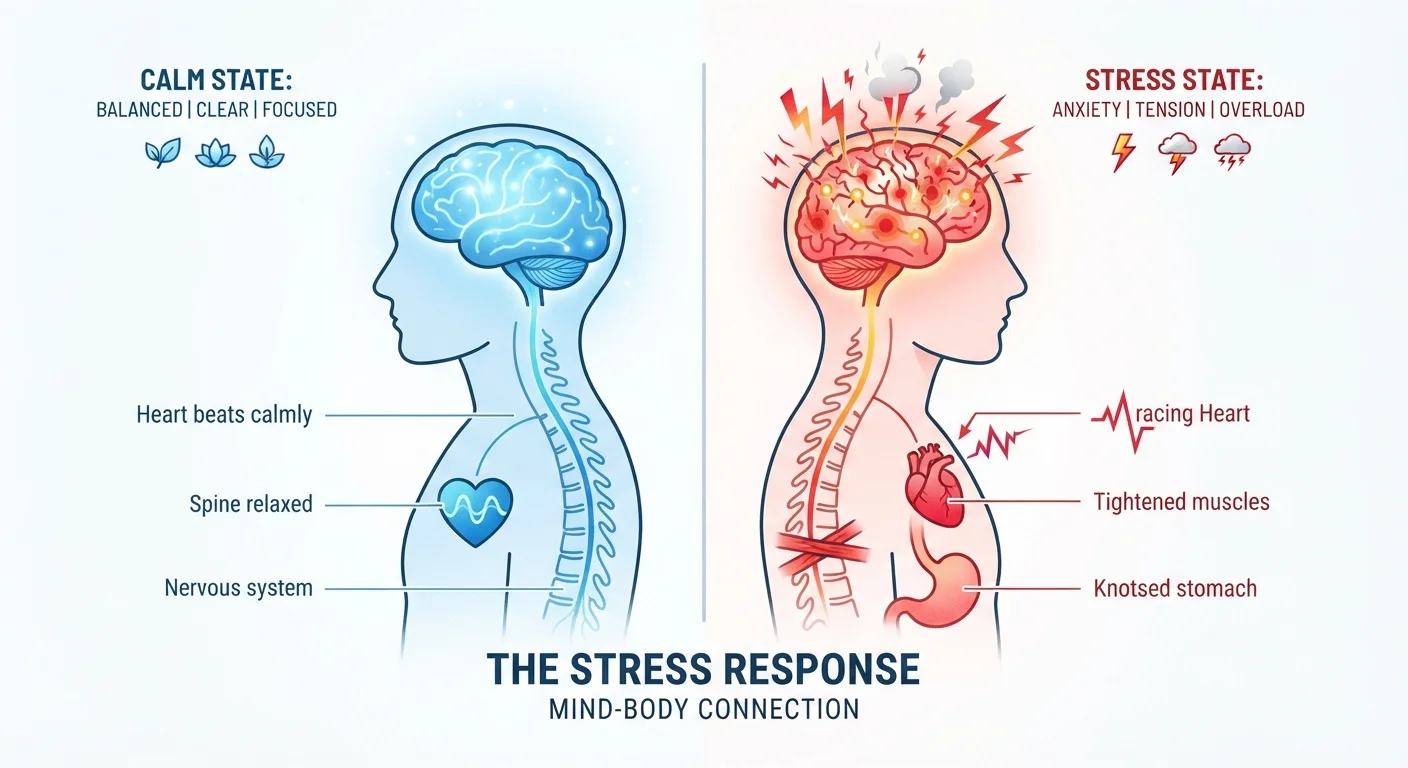
When your brain perceives a stressor, it signals the adrenal glands to release adrenaline and cortisol. Adrenaline spikes your heart rate and redirects blood to your muscles. Cortisol raises blood sugar, suppresses non-essential functions like digestion and immune activity, and keeps your brain on high alert.
In the short term, these changes are useful. Over time, however, elevated cortisol is associated with:
- Cardiovascular strain — sustained high blood pressure and increased inflammatory markers
- Immune suppression — reduced ability to fight off infections
- Digestive disruption — including changes in appetite and gut motility
- Sleep disturbance — cortisol naturally falls at night; chronic stress can blunt this drop
- Muscle tension — persistent physical tightening, especially in the neck, shoulders, and jaw
77%
Adults who report physical stress symptoms
According to the American Psychological Association's Stress in America survey, a large majority of US adults regularly experience physical symptoms they associate with stress.
3x
Greater heart disease risk linked to chronic stress
Research published in peer-reviewed cardiology literature suggests individuals with high chronic stress exposure face meaningfully elevated cardiovascular risk compared to low-stress counterparts, though individual factors vary widely.
40%
Of adults report stress affecting sleep quality
The APA's survey data consistently shows that sleep disruption is one of the most frequently reported consequences of elevated stress among American adults.
How Stress Shapes Your Mood and Mind
Stress doesn't stay in the body — it reshapes how you think and feel. Prolonged cortisol exposure affects two key brain regions: the prefrontal cortex, which handles rational thinking and decision-making, and the hippocampus, which is central to memory formation.
At the same time, the amygdala — your brain's threat-detection hub — becomes more reactive. The result: increased anxiety, difficulty concentrating, impaired short-term memory, and a tendency to perceive neutral situations as threatening. This is why people under sustained stress often describe feeling overwhelmed by things that wouldn't normally bother them.
Mood effects are also significant. Chronic stress is associated with lower levels of serotonin and dopamine — neurotransmitters involved in mood regulation and reward — which is part of why prolonged stress and depression can overlap. This doesn't mean stress causes depression, but it is a recognised risk factor worth taking seriously.
“The brain is the organ most sensitive to stress. Prolonged exposure to stress hormones can alter its structure and function — but it is also remarkably capable of recovery when conditions improve.”
— Robert Sapolsky, Professor of Biology and Neurology, Stanford University, and author of research on stress and the brain
Building Habits That Help Your Nervous System Recover
Understanding stress is most useful when it leads to action. The good news is that the same nervous system that activates the stress response can also be trained toward recovery. Consistent daily routines, intentional rest, and practices that engage the parasympathetic ("rest and digest") system all support this.
Simple evidence-informed habits — such as regular movement, sufficient sleep, and pacing your day — can meaningfully reduce baseline stress load. See small habits that lower daily stress levels for practical starting points.
If you're unsure where to begin, structured daily routines offer a low-barrier entry point. Building a Daily Routine That Supports Emotional Balance outlines how to structure your day in a way that stabilises mood over time. And if you'd like to explore mind-based practices, journaling, meditation, and breathwork offers a grounded comparison of popular approaches.
Listen to Your Body's Early Signals
Your body often signals stress before your mind consciously registers it — through jaw clenching, shallow breathing, or an uptick in irritability. Getting familiar with your personal early-warning signs means you can respond sooner, before the stress response compounds. A few slow, deliberate breaths can begin to engage the parasympathetic nervous system within minutes.
This article is for general informational purposes only and does not constitute medical advice. If you are experiencing persistent stress-related symptoms, please consult a qualified healthcare professional.