

Key Takeaways
- Serving size is the foundation of every number on the label — always check it first.
- % Daily Value shows how much a nutrient contributes to a standard 2,000-calorie daily diet.
- Added sugars are listed separately from total sugars and deserve close attention.
- The ingredient list reveals what's actually in the food, ordered by weight.
- Five or fewer ingredients doesn't automatically mean healthier — context matters.
- No single number makes a food good or bad; the full label tells a more complete story.
What you will need
Why Nutrition Labels Can Feel Overwhelming
A standard Nutrition Facts panel packs a surprising amount of information into a small box — calories, fats, carbohydrates, vitamins, and more, all expressed in grams, milligrams, and percentages. For most people, scanning that panel quickly in a grocery aisle feels more confusing than helpful.
The good news: the label follows a predictable structure. Once you understand what each section is actually measuring, you can move through it efficiently and extract the information that matters most to your own eating goals. This guide walks you through each part in the order it appears on the label. For a broader look at how food marketing language can add to the confusion, see common nutrition label myths.
What you will need
Step-by-Step: How to Read Every Section of the Label
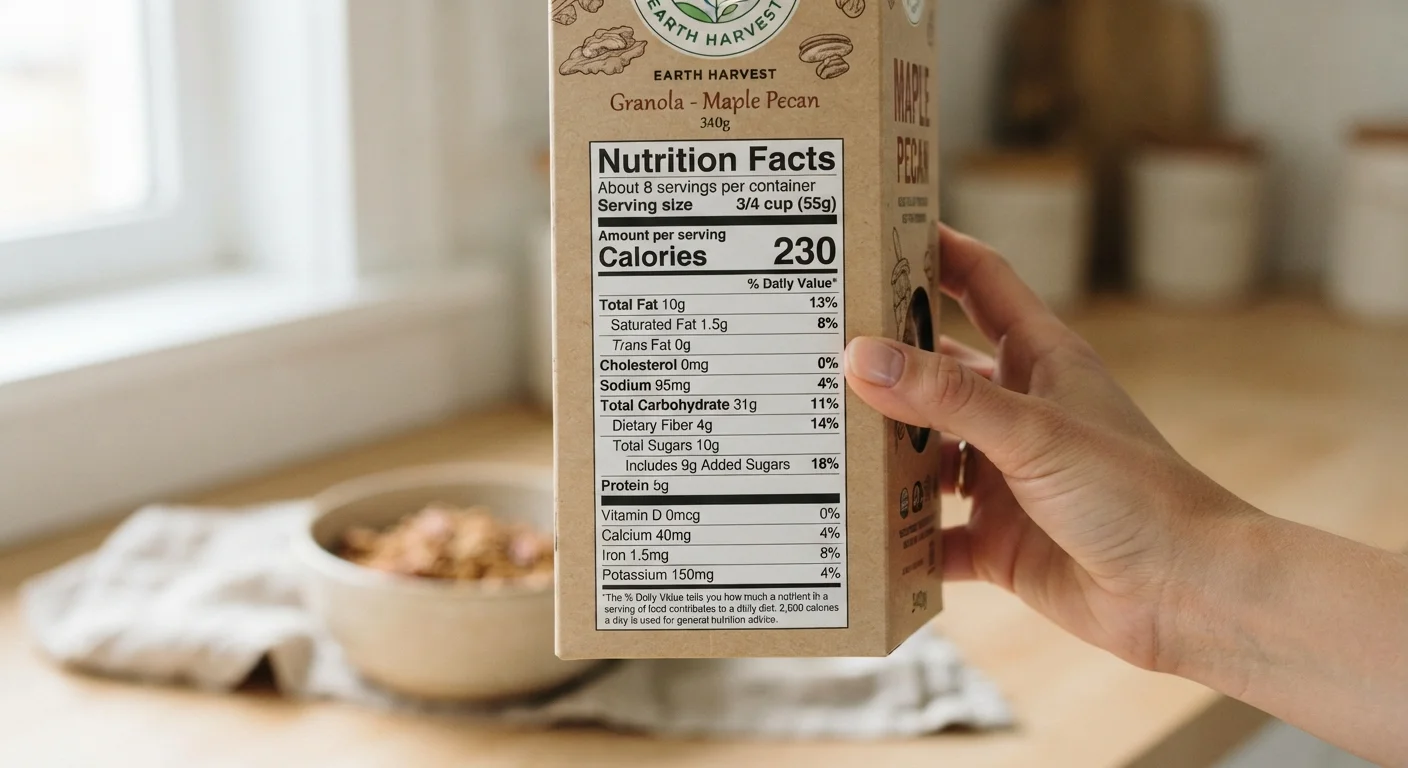
Work through the label from top to bottom. Each section builds on the one before it, so skipping steps can lead to misinterpretation.
Start with serving size
The serving size appears at the very top of the panel and is the reference point for every number that follows. It reflects how much of the food is measured — not necessarily how much you should eat. If the label shows 1 cup as one serving but you pour 2 cups, every figure on that label doubles for your actual intake.
Also check servings per container, listed just below serving size. A bag of chips showing 3 servings per container means the calorie count applies to just one-third of the bag.
Check calories
Calories tell you how much energy one serving provides. This number is prominently displayed and intentionally large. While calorie totals matter in the context of overall energy balance, they don't tell you much about nutritional quality on their own — 200 calories from almonds and 200 calories from a cookie deliver very different nutrients. Use calories as one data point, not the deciding factor.
Review total fat, saturated fat, and trans fat
The fat section breaks down into total fat and its subtypes. Saturated fat is worth watching — current dietary guidance generally recommends keeping it moderate. Trans fat (partially hydrogenated oils) is strongly associated with cardiovascular risk; most manufactured trans fats have been phased out in the U.S., but a label can legally read "0g trans fat" if a serving contains less than 0.5g. Check the ingredient list for partially hydrogenated oils if this matters to you.
Understand sodium
Sodium is measured in milligrams (mg). The DGA recommends most adults stay under 2,300 mg per day. Processed and packaged foods are the primary source of sodium in most American diets, so even foods that don't taste salty can carry significant amounts. A single serving of canned soup, for example, can account for 30–40% of the daily recommended limit.
Examine total carbohydrates, dietary fiber, and sugars
Total carbohydrates include fiber, naturally occurring sugars, and added sugars. Dietary fiber supports digestive health and is an area where most Americans fall short — higher %DV is generally favorable here.
Added sugars now appear as a separate line below total sugars, a requirement introduced with the updated FDA label format. This distinction is meaningful: fruit contains natural sugars alongside fiber and micronutrients, while added sugars provide calories without nutritional benefit. The DGA recommends keeping added sugars below 10% of total daily calories. Hidden sugars in everyday habits can add up faster than most people realize.
Look at protein and micronutrients
Protein content is listed in grams but lacks a %DV on most labels because individual protein needs vary widely. Use it as a general reference. Below protein, you'll find Vitamin D, calcium, iron, and potassium — nutrients the FDA identified as commonly under-consumed in the U.S. population. These are listed with %DV to help you gauge whether a food meaningfully contributes to your daily intake of each.
Read the ingredient list
Ingredients are listed in descending order by weight — meaning the first ingredient is present in the largest amount. If sugar, refined flour, or a fat appears in the first two or three spots, that food is primarily composed of those ingredients. Look for recognizable, whole-food ingredients near the top. A long ingredient list isn't automatically bad, but unfamiliar chemical-sounding additives may be worth researching separately. For plain-English definitions of common nutrition terminology, this nutrition glossary is a useful reference.
Use % Daily Value as Your Quick Guide
The % Daily Value (%DV) column shows how much of a nutrient one serving contributes toward a 2,000-calorie daily diet. A %DV of 5% or less is considered low; 20% or more is considered high. Most people don't eat exactly 2,000 calories, but %DV still works as a reliable comparison tool between products.
Putting It All Together at the Grocery Store
Reading a single label in isolation only tells part of the story. The real skill is comparing labels across similar products — for example, two breakfast cereals side-by-side — using the same serving size as your reference point.
Front-of-Pack Claims Can Be Misleading
Terms like "natural," "multigrain," or "made with real fruit" appear on front packaging but are largely unregulated. They are marketing language, not nutritional assessments. Always flip the package and read the Nutrition Facts panel and ingredient list before drawing conclusions. For a deeper look, why healthy eating feels complicated addresses how food marketing contributes to confusion.
A useful mental shortcut from nutrition researchers: use % DV as a quick filter. A nutrient at 5% DV or less per serving is considered low; 20% DV or more is considered high. Aim for higher %DVs in fiber, vitamins, and minerals, and lower %DVs in saturated fat, sodium, and added sugars.
For a fuller picture of how individual nutrients work in your body, understanding macronutrients is a helpful next step. And if you want to apply this knowledge to real meals, building a balanced plate offers practical, non-counting approaches to everyday eating.
This article is for general informational and educational purposes only and is not a substitute for personalized advice from a registered dietitian or other qualified healthcare professional.