

Key Takeaways
- Many homes contain unused storage space that requires no structural renovation to access.
- Areas like under stairs, cabinet door backs, and toe kicks are commonly wasted.
- Simple additions like hooks, bins, and shallow shelves can unlock significant storage capacity.
- Identifying overlooked spots before buying new furniture often solves clutter problems for less.
The storage you already have — and haven't noticed yet
Most homes have more storage capacity than their owners realize. The impulse when clutter builds is often to buy new shelving or furniture, but a closer look at existing architecture frequently reveals underused cavities, surfaces, and gaps that cost nothing to identify and relatively little to activate. Whether you live in a roomy suburban house or a compact apartment, the spots listed below appear in a wide range of home types — and none of them require tearing out walls or hiring a contractor.
Before You Add Storage, Audit First
Adding organizers to cluttered spaces often just reorganizes the clutter. Before investing in any storage solution, work through a room-by-room audit to decide what actually needs a home. Our seasonal decluttering checklist walks through the process systematically. Removing items you no longer use frequently frees up the hidden spaces described in this article without any additional purchases.
If you're working with limited square footage and want a broader strategy, organizing a small home without sacrificing comfort covers practical approaches that go beyond individual storage hacks.
Under-stair cavities
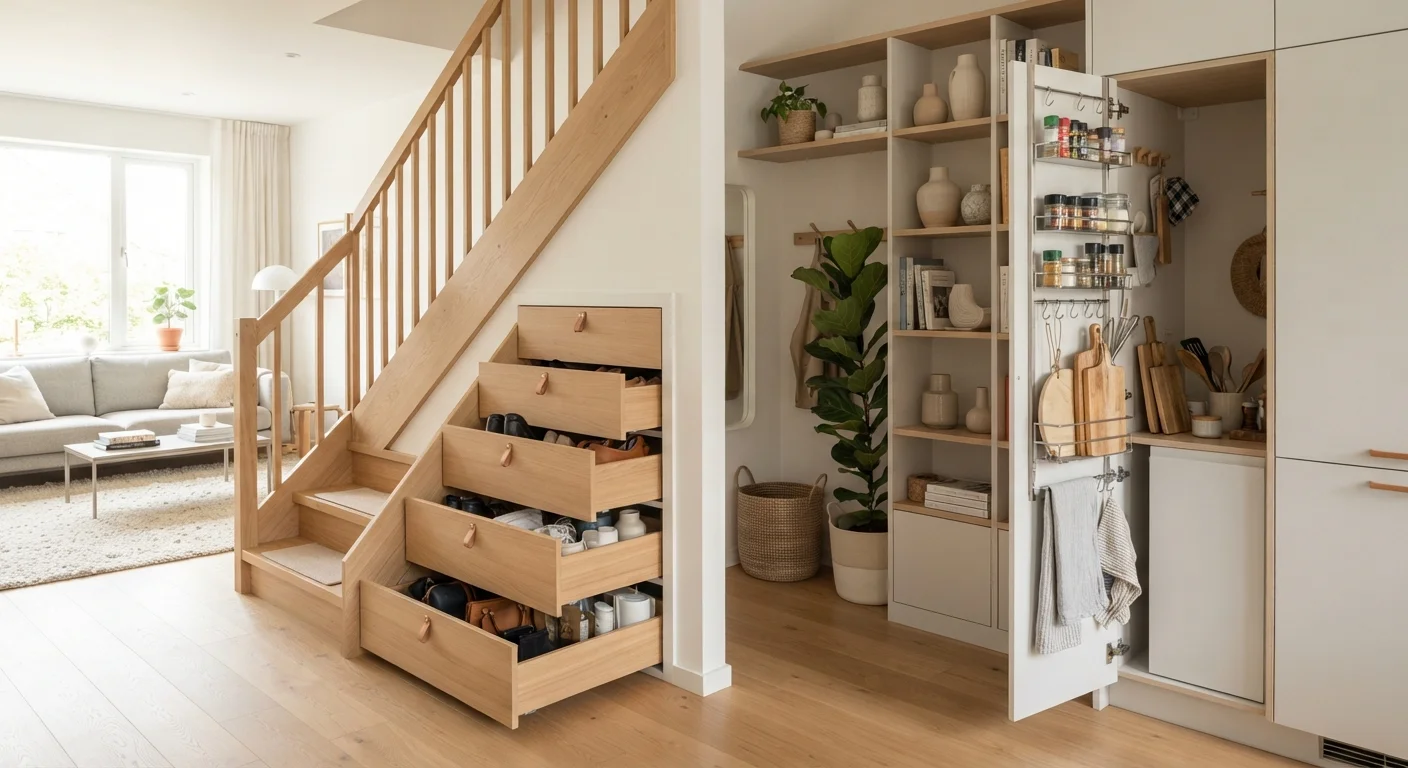
The triangular space beneath a staircase is one of the largest unused volumes in many homes. Depending on how the stairs are constructed, this area may be accessible as an open cavity, a closet, or a framed-in wall. Even without a door, the space under lower treads can hold baskets, bins, or a compact rolling cart. If the area is already enclosed, adding shelving or pull-out drawers makes it functional for shoes, cleaning supplies, or seasonal items. Before modifying any structural elements near stairs, consult a contractor to confirm the framing is not load-bearing in ways that affect safe access.
The space beneath stairs is often the single largest untapped storage cavity in a home.
The backs of cabinet and pantry doors
Cabinet doors swing open dozens of times a day, but the interior face is almost always bare. Shallow over-door organizers — designed for spices, cleaning products, foil and wrap rolls, or bathroom essentials — mount with hooks or tension rods that require no drilling. Inside pantry doors, tiered organizers can hold canned goods or snack packets, effectively adding a full extra shelf without touching the cabinet interior. Measure the clearance between the door and the nearest shelf before purchasing any organizer to avoid interference when the door closes.
A single pantry door can hold the equivalent of an extra shelf when fitted with an over-door organizer.
Toe-kick drawers beneath kitchen cabinets
The recessed strip at the base of base cabinets — called the toe kick — is typically four inches tall and the full width of the cabinet run. Many homeowners never realize this space can house shallow pull-out drawers that slide flat against the floor. These are particularly useful for flat, infrequently used items: baking sheets, serving platters, tablecloths, or spare cutting boards. Toe-kick drawer kits are available for DIY installation, though fitting them cleanly requires removing the existing toe-kick panel and working in a confined space — take your time and follow manufacturer instructions carefully.
Toe-kick drawers use dead floor-level space to store flat items that otherwise clutter shelves.
Above kitchen cabinets
The gap between cabinet tops and the ceiling — common in homes where cabinets don't extend to full ceiling height — tends to collect dust rather than serve a purpose. Closed-top baskets or lidded bins placed in a neat row here can store infrequently used items: extra small appliances, seasonal serving dishes, or entertaining supplies. Because this area is high and less accessible, it works best for things you reach for only a few times a year. Use a stable step stool, not a chair, when accessing items at this height.
Above-cabinet space is ideal for infrequently accessed items stored in lidded, dust-resistant containers.
The space between the refrigerator and adjacent walls or cabinets
A narrow gap of even four to six inches beside the refrigerator can accommodate a slim rolling pantry cart. These tall, wheeled units typically hold canned goods, condiments, or dry goods on multiple shelves and pull out smoothly for access. They're especially valuable in galley kitchens where every inch matters. Measure the gap carefully before selecting a cart — account for the refrigerator door swing on the side closest to the unit to ensure it opens fully when the cart is in place.
A slim rolling cart beside the refrigerator can store dozens of pantry items in otherwise wasted space.
Inside hollow ottomans and bed bases
Furniture with built-in storage is widely available, but plenty of households already own ottomans or bed frames with accessible interiors they've never used systematically. Ottoman interiors are well-suited for throw blankets, board games, or remote controls. Under-bed storage — whether via lift-up platforms or simple rolling bins — works well for off-season clothing, extra linens, or shoes. Use breathable fabric bins rather than sealed plastic bags for soft goods stored in these areas, as air circulation helps prevent musty odors over time.
Furniture you already own — ottomans, bed bases — often holds untapped interior storage waiting to be used.
Vertical wall space in garages and utility rooms
Garage walls between studs represent a grid of potential storage that most households leave bare. Wall-mounted track systems allow hooks, bins, and shelves to be positioned exactly where needed and repositioned as needs change. Pegboards offer similar flexibility for tools and small equipment. The key is keeping heavier items — power tools, paint cans — on lower hooks or shelves and lighter items higher up. If you're anchoring anything into garage drywall or concrete block, use fasteners rated for the weight you plan to hang. For more on balancing vertical and horizontal approaches, see our guide on vertical vs. horizontal storage.
Wall-mounted track systems in garages can transform bare studs into a fully customized storage grid.
Putting it all together
The spots above tend to go unnoticed simply because they don't look like storage at first glance. A toe kick looks like trim. A cabinet door looks like a door. Reframing how you read your own home — treating every flat surface, gap, and cavity as a potential candidate — shifts the way you solve clutter problems.
Measure Before You Shop
The most common mistake when adding storage to overlooked spaces is buying an organizer before measuring the area. Take height, width, and depth measurements — including door swing clearance and any protruding hinges — before selecting any bins, carts, or drawer units. A few minutes with a tape measure prevents a frustrating return trip.
Start with one area rather than tackling everything at once. Identify the single space in your home that causes the most daily friction — overstuffed pantry, chaotic entryway, cluttered garage — and apply one or two of these strategies there first. Small, visible wins tend to build momentum for the rest of the home. For a structured way to reset multiple rooms, the seasonal decluttering checklist is a practical companion to the storage ideas here.