

Key Takeaways
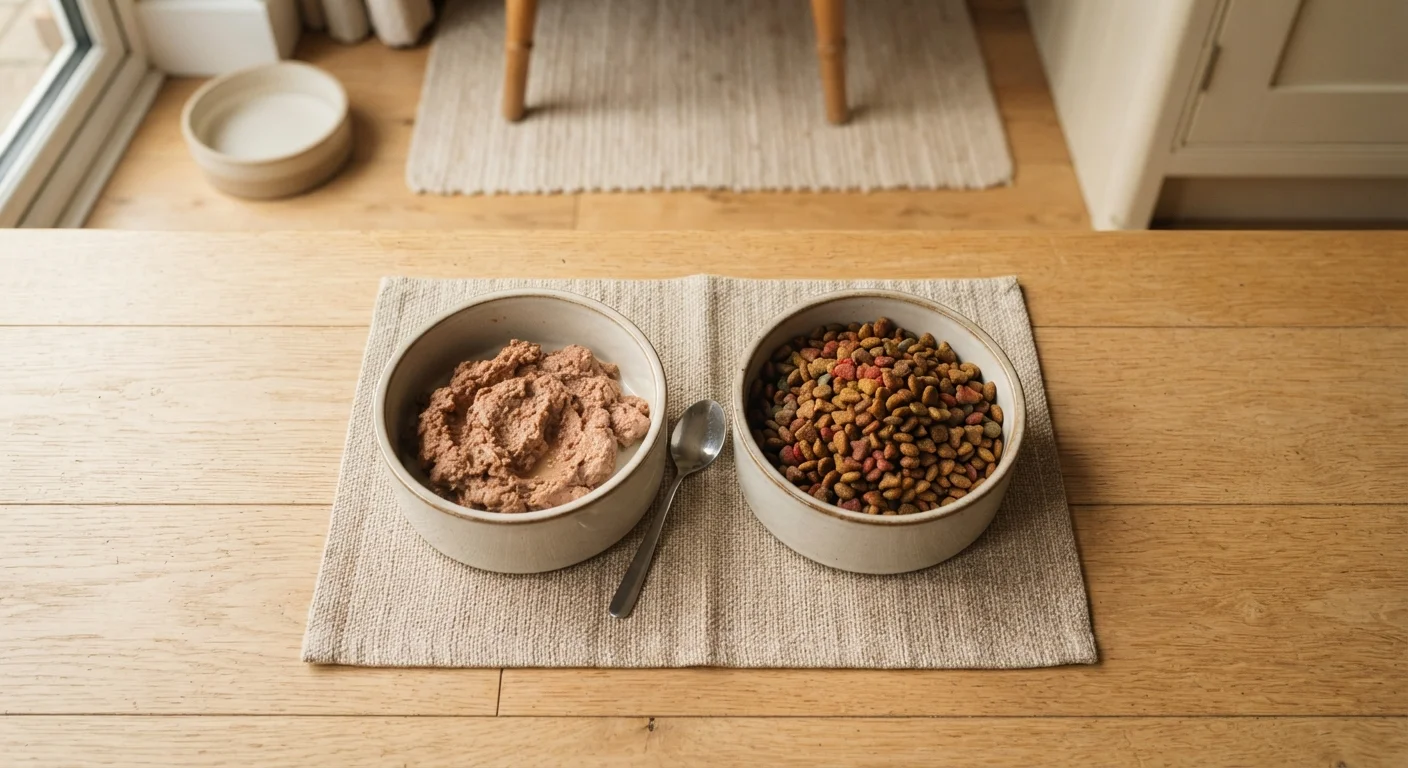
- Wet food contains roughly 70–80% moisture, making it far more hydrating than dry kibble.
- Dry kibble is calorie-dense and convenient, but cats eating only kibble may not drink enough water.
- Neither format is universally superior — the best choice depends on your individual cat's health needs.
- Many veterinarians suggest a mixed feeding approach can balance hydration and convenience.
- Cats are obligate carnivores, so high-quality animal protein should dominate whichever format you choose.
Option A
Wet Cat Food
The hydration-forward, protein-rich option.
Best for: Cats who need extra moisture in their diet, such as those prone to urinary issues or picky eaters who prefer a softer texture.
Option B
Dry Cat Food (Kibble)
The convenient, calorie-dense everyday staple.
Best for: Owners seeking a longer-lasting, budget-friendly option that supports grazing habits and dental wear for cats without hydration concerns.
If your cat has a history of urinary tract issues or kidney disease
Wet Cat Food
The high moisture content in wet food helps cats stay consistently hydrated, which supports urinary and kidney health. Always consult your veterinarian about dietary changes for cats with existing conditions.
If you need a practical option for free-feeding or longer work days
Dry Cat Food (Kibble)
Kibble won't spoil quickly once left out, making it a realistic choice for households where meals can't be scheduled to the hour.
If your cat is a picky eater or has low appetite
Wet Cat Food
The aroma and texture of wet food tend to be more appealing to finicky cats, and the variety of formats — pâté, chunks, shreds — gives you options to find what works.
If you want to balance convenience with nutritional variety
Wet Cat Food
A mixed approach — wet food once or twice daily alongside measured dry kibble — is widely used and can meet both hydration and convenience needs.
If cost and shelf life are primary considerations
Dry Cat Food (Kibble)
Dry food generally costs less per calorie and stores far longer than opened wet food, making it the more budget-conscious day-to-day option.
The Core Difference: Moisture Content
The most fundamental distinction between wet and dry cat food is water content. Wet food typically contains 70–80% moisture, closely resembling the water content found in a cat's natural prey. Dry kibble, by contrast, contains just 8–10% moisture.
This matters because cats evolved as desert animals with a naturally low thirst drive — they're biologically designed to obtain most of their hydration through food. A cat eating only dry kibble must compensate by drinking significantly more water, and many simply don't drink enough to make up the difference. Chronic mild dehydration has been linked to urinary tract problems and, over time, may contribute to kidney stress. For a deeper look at how cats process nutrients, see our guide on what cats actually need from their diet.
| Criterion | Wet Cat Food | Dry Cat Food (Kibble) |
|---|---|---|
| Moisture content | 70–80% | 8–10% |
| Hydration support | High — built into food | Low — relies on drinking |
| Carbohydrate level | Generally lower | Generally higher (binder needed) |
| Calorie density | Lower per gram | Higher per gram |
| Shelf life (opened) | 24–48 hours refrigerated | Weeks in airtight container |
| Cost per serving | Typically higher | Typically lower |
| Suitability for free-feeding | Not recommended | Feasible if portioned |
| Palatability for picky eaters | Often higher | Variable |
Nutrition, Calories, and Ingredients
When comparing labels, it's important to use dry matter basis — a calculation that removes moisture from the equation so you can compare protein, fat, and carbohydrate levels fairly. Wet food often appears lower in protein on its label simply because it contains so much water.
On a dry matter basis, high-quality wet foods frequently deliver a strong protein profile with relatively few carbohydrates. Dry kibble requires starch as a binding agent during manufacturing, so it tends to be higher in carbohydrates — a macronutrient cats have limited ability to digest efficiently. That said, carbohydrate content varies widely between products, and some premium kibbles are formulated to keep it low.
Calorie density is another key factor: kibble packs more calories per gram, so portion control is easier to measure by weight. Overfilling a bowl of dry food can contribute to weight gain over time.
70–80%
Moisture content in wet cat food
Veterinary nutrition literature consistently notes that wet food moisture closely mirrors a cat's natural prey, supporting hydration in a species with a low thirst drive.
~6–8%
Average moisture in dry kibble
Most dry cat food falls well below 10% moisture, meaning cats relying solely on kibble must drink significantly more water to compensate.
2–3×
More water cats may need when eating only dry food
Veterinary nutritionists estimate cats on exclusively dry diets need to drink two to three times more water than those eating wet food, which many cats do not naturally do.
Practical Considerations: Cost, Convenience, and Storage
Beyond nutrition, everyday practicality shapes feeding decisions for most households. Dry kibble wins on cost and shelf stability — a bag of kibble can last weeks once opened (stored in an airtight container), whereas opened wet food must be refrigerated and used within 24–48 hours.
Wet food does require more planning: it should be removed from the bowl within a few hours to prevent spoilage, making free-feeding impractical. Portioned meals two or three times a day work well with wet food and also help you monitor how much your cat is eating — useful for catching early signs of illness.
Transitioning Between Food Types
If you decide to switch your cat's food format — or introduce a new food alongside the current one — do so gradually over 7–10 days. Mix a small amount of the new food with the existing food, slowly increasing the proportion. Abrupt dietary changes can cause digestive upset, including vomiting or loose stools. If your cat refuses the new food entirely or shows signs of illness during the transition, consult your veterinarian.
If you're just setting up a feeding routine with a new cat, our article on bringing a cat home for the first time covers scheduling and portion guidance for new owners.
Choosing What's Right for Your Cat
No single format suits every cat. A healthy adult cat with no medical conditions may thrive on either format — or a combination of both. Many veterinarians suggest a mixed feeding approach: wet food once or twice daily for hydration and palatability, with a measured amount of dry kibble available at other times.
Life stage also matters. Kittens and senior cats often benefit from the softer texture and higher moisture of wet food. Cats managing weight may need carefully portioned dry food to avoid overeating. And cats with dental disease may find very hard kibble uncomfortable.
The best approach is always to discuss your cat's specific needs with a veterinarian — particularly if your cat has a chronic health condition. Feeding choices don't exist in isolation from the broader picture of your cat's environment and lifestyle. For context on how your cat's living situation intersects with their health needs, see our piece on indoor vs outdoor living for cats.
This article is for general informational purposes only and is not a substitute for veterinary advice. Always consult a qualified veterinarian before making significant changes to your cat's diet, especially if your cat has an existing health condition.