

Key Takeaways
- Start your cat in one quiet room before gradually introducing the rest of your home.
- Follow the one-box-per-cat-plus-one rule for litter boxes to prevent accidents.
- Establish a consistent feeding schedule using age-appropriate, complete cat food.
- Schedule a veterinary wellness exam within the first week of bringing your cat home.
- Cats need time and patience to adjust — resist the urge to rush introductions.
Start here
Setting Up a Safe Space First
Next
Litter Box Basics
Then
Feeding Your Cat Well
Important step
Your First Vet Visit
Ongoing
Helping Your Cat Settle In
Setting Up a Safe Space First
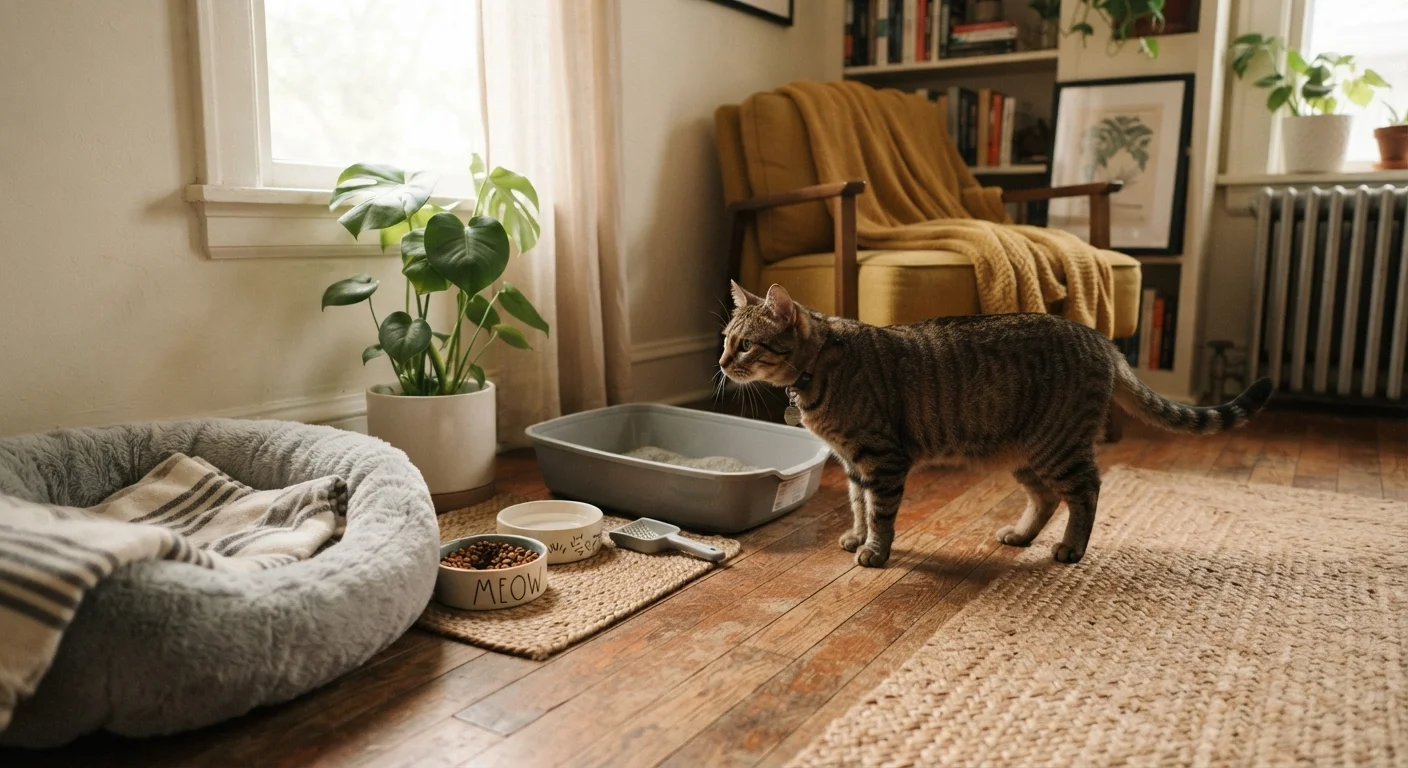
Before your cat walks through the door, designate one quiet room as their base camp — ideally somewhere low-traffic, like a spare bedroom or bathroom. Place their bed, a water bowl, a food bowl, and a litter box in this room. This containment strategy isn't about restriction; it's about giving an unfamiliar animal a manageable territory to claim before the wider world opens up.
Do a quick safety check of the room: secure or conceal electrical cords, remove toxic plants (common culprits include lilies, pothos, and philodendron), and check for small gaps or hidey-holes a frightened cat could squeeze into and get stuck. If you're keeping your cat indoors — which many vets recommend, at least initially — our guide on indoor vs. outdoor living can help you weigh the longer-term options.
Arrive with the carrier open
When you first bring your cat home, place the carrier on the floor of their base room with the door open and let them exit at their own pace. Forcing them out can trigger a fear response that lingers for days. Some cats will emerge immediately; others may sit inside for an hour or more — both are normal.
Litter Box Basics
Litter box setup is one of the most practically important things to get right. The standard rule is one box per cat, plus one extra — so for a single cat, aim for two boxes in different locations. Cats are clean animals by instinct; a dirty or poorly placed box is one of the most common reasons cats eliminate outside it.
Choose an unscented, clumping litter to start — most cats tolerate this well, and it makes daily scooping straightforward. Avoid placing boxes next to food bowls or in loud, high-traffic spots. Scoop at least once daily and do a full litter change and box wash weekly. If your cat is avoiding the box despite good hygiene, mention it at your first vet visit — it can occasionally signal a health issue worth ruling out.
Obligate carnivore
An animal that must eat meat to survive because its body cannot produce certain essential nutrients on its own. Cats fall into this category, unlike dogs, which are omnivores.
Base camp
A single, contained room used to introduce a new cat to a home before expanding their access. It reduces stress by giving the cat a small, manageable territory to feel safe in first.
Clumping litter
A type of cat litter that forms solid clumps when wet, making waste easy to scoop out and keeping the remaining litter cleaner for longer.
Taurine
An amino acid essential to cat health that cats cannot produce adequately on their own. It must come from their diet — deficiency can lead to serious heart and eye problems.
Microchipping
A procedure in which a small chip (about the size of a grain of rice) is implanted under the skin, containing a unique ID number linked to the owner's contact information. It's a permanent and widely recommended form of pet identification.
Feeding Your Cat Well
Cats are obligate carnivores, meaning they require nutrients found only in animal tissue — taurine and arachidonic acid being two critical examples. This makes feeding them a complete, commercially formulated cat food (not dog food or home-cooked meals without veterinary guidance) essential, not optional.
Establish a consistent feeding schedule: two measured meals a day works well for most adult cats, while kittens generally need three to four smaller meals. Avoid free-feeding dry food all day, as it can make portion control difficult. Fresh water should always be available; many cats prefer a wide, shallow bowl or a circulating water fountain.
For a deeper look at food types, our wet food vs. dry food guide covers the nutritional trade-offs clearly.
Transitioning food gradually
If your cat was eating a specific food at a shelter or previous home, ask what it was and try to start with the same one. Any change in diet should happen gradually over seven to ten days — mixing increasing amounts of the new food with the old — to avoid digestive upset. Sudden food switches are a common cause of diarrhea in newly homed cats.
Your First Vet Visit
Schedule a wellness exam within the first week. Even if your cat came with a health certificate from a shelter or breeder, a vet check gives you a baseline for their health and flags any issues that may not be immediately visible — dental problems, ear mites, or early signs of infection among them.
At this visit, your vet will typically confirm or begin a vaccination schedule, discuss flea, tick, and worm prevention, and advise on spaying or neutering if not already done. It's also a good opportunity to ask about microchipping if your cat isn't already chipped. For a detailed look at what annual visits involve going forward, see what to expect at your cat's annual vet visit.
Don't delay the vet visit
It can be tempting to wait until your cat has settled before scheduling a vet appointment, but early health checks catch problems before they escalate. Some conditions — like upper respiratory infections common in shelter cats — can worsen quickly without treatment. Register with a vet before or immediately after your cat arrives.
Helping Your Cat Settle In
Cats read their environment through scent, routine, and control over social interactions. In the first days, let your cat approach you rather than reaching out to pick them up. Sit on the floor at their level, speak quietly, and allow them to sniff and investigate at their own pace. Resist the urge to invite friends over to meet the new arrival — social overload in the early days often sets back trust-building.
Enrichment matters even during the adjustment period. A scratching post, a few simple toys, and a window perch give your cat productive outlets for natural behaviors. If you're working with a small living space, practical tips for enriching an indoor cat's environment can help you make the most of what you have.
For a broader pre-arrival checklist covering supplies and setup, your first cat: everything you need before bringing one home is a helpful companion read.
This article provides general information for educational purposes and is not a substitute for advice from a qualified veterinarian. Always consult a vet for guidance specific to your cat's health and circumstances.