

Key Takeaways
- Indoor cats need active mental and physical stimulation, not just food and shelter.
- Vertical space, scent variety, and predictable routines reduce stress and boredom significantly.
- Short daily play sessions using prey-mimicking toys satisfy deep hunting instincts.
- Window access and foraging-style feeding are low-cost, high-impact enrichment strategies.
- Signs of under-enrichment include destructive behavior, overeating, and excessive grooming.
Why Indoor Enrichment Matters More Than You Might Think
Keeping a cat indoors protects them from traffic, predators, disease, and injury. But safety alone doesn't equal wellbeing. Domestic cats retain the behavioral drives of their wild ancestors — the urge to hunt, patrol territory, climb, and investigate — and when those drives go unmet, the result is often a bored, anxious, or destructive cat.
Behavioral veterinarians generally agree that environmental enrichment is one of the most important aspects of indoor cat care, yet it's also one of the most overlooked. If you're just getting started, setting up your cat's space correctly from day one lays a strong foundation. For cats already settled in, the list below offers practical upgrades that work even in small apartments.
Enrichment looks different for every cat
Age, health, and personality all influence what kind of enrichment a cat finds rewarding. A kitten may be endlessly energetic while a senior cat prefers gentle sensory variety over vigorous play. Cats with health conditions may have physical limitations that affect how they interact with their environment. When in doubt about what's appropriate for your individual cat, consulting your veterinarian is always a sound first step.
Seven Ways to Make Indoor Life Genuinely Enriching
Add vertical space wherever possible
Cats are instinctively drawn to height. Elevated positions help them survey their territory, feel secure, and escape perceived threats — even in a home with no other animals. Cat trees, wall-mounted shelves, and cleared bookcase tops all count. Even a single sturdy shelf near a window can transform how a cat uses a room. Aim to create pathways that allow movement between levels rather than isolated perches.
Height isn't a luxury for cats — it's a core part of how they feel safe and in control.
Use feeding time as a foraging opportunity
Placing food in a bowl takes seconds to eat and leaves a cat mentally idle for hours. Puzzle feeders, snuffle mats, and scatter feeding (hiding small portions of dry food around the home) require cats to use their nose and problem-solving skills to find each meal. This closely mirrors natural hunting behavior and can meaningfully reduce boredom and stress. Start simple — overly complex puzzles can frustrate cats unfamiliar with the format.
Turning mealtime into a foraging activity engages a cat's brain as much as their appetite.
Schedule short, focused play sessions daily
Interactive play — using a wand toy, feather lure, or laser pointer — satisfies the predatory sequence: stalk, chase, pounce, catch. Most cats benefit from two sessions of 10–15 minutes each day. The key is to let the cat "catch" the toy regularly; a hunt that never ends is frustrating, not fun. Always conclude laser pointer play with a physical toy the cat can actually grab, to provide a satisfying conclusion to the sequence.
Letting your cat 'catch' the toy is as important as the chase itself.
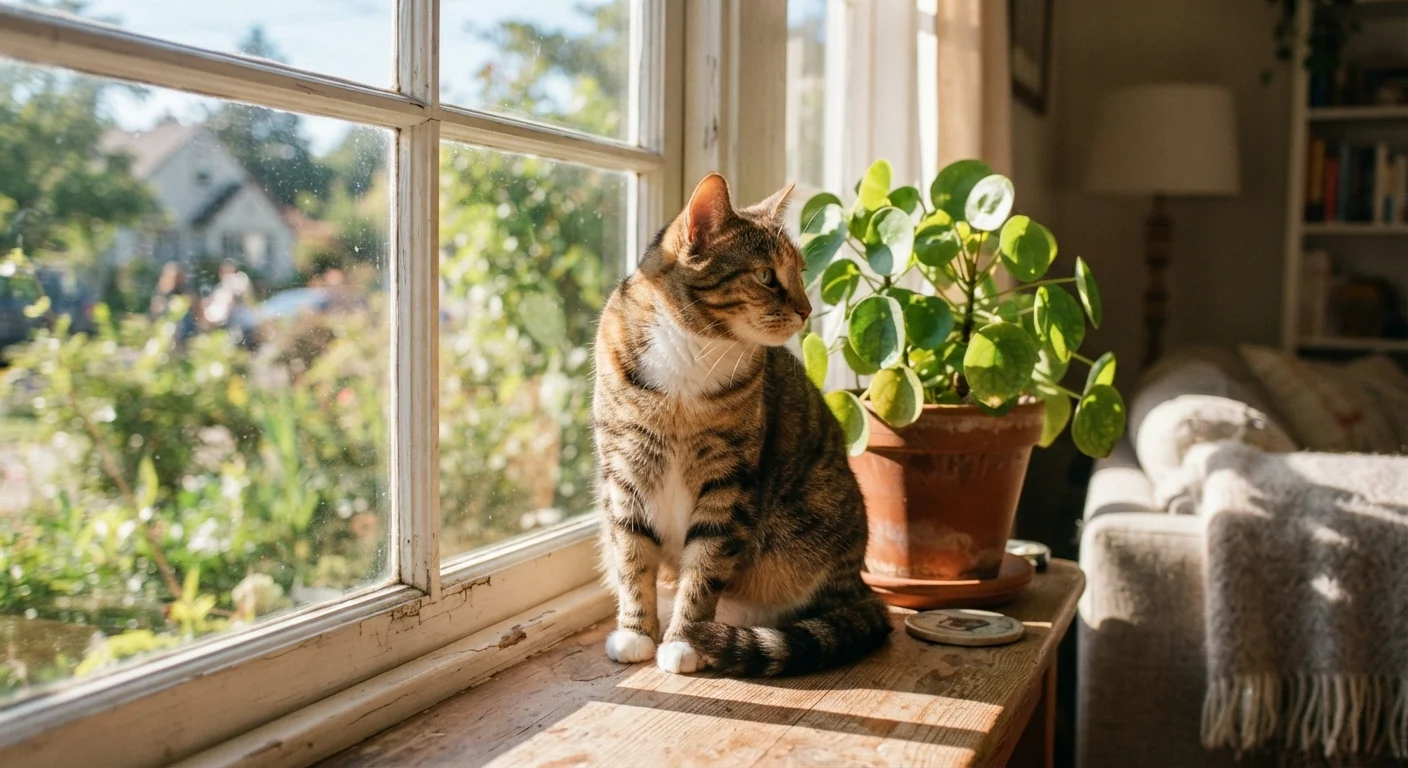
Maximize window access and outdoor views
A window with an interesting view functions like live television for cats. Bird feeders placed near an accessible window, or a window bird feeder attached directly to the glass, can provide hours of visual stimulation. If your living situation allows, a securely screened window or a "catio" (an enclosed outdoor enclosure) gives cats fresh air and natural smells without outdoor risk. Even a single sunny, bird-facing perch makes a measurable difference to daily activity levels.
A bird feeder outside the window is one of the most cost-effective enrichment tools available.
Rotate toys and introduce novel scents
Cats habituate to familiar objects quickly. Rotating toys in and out of circulation — rather than leaving everything available all the time — keeps them novel and interesting. Scent enrichment is equally powerful: safe herbs like valerian or silver vine (alternatives to catnip that work on cats who don't respond to catnip), paper bags, cardboard boxes, and even items from outdoors like pinecones or dried leaves can trigger exploratory behavior. Always verify that any plant or natural item is non-toxic to cats before introducing it.
Rotating toys weekly maintains novelty without the need to constantly buy new ones.
Provide appropriate scratching surfaces
Scratching is not destructive behavior — it's a physical and communicative need. Cats scratch to stretch muscles, maintain claw health, and leave scent marks from glands in their paws. If they're scratching furniture, it typically means suitable alternatives aren't available or aren't positioned correctly. Place scratching posts and pads near sleeping areas and beside furniture they already target. Variety matters too: some cats prefer vertical posts; others prefer horizontal mats.
Scratching posts placed near sleeping areas are far more likely to be used than isolated ones.
Respect the need for hiding and alone time
Enrichment isn't only about stimulation — it's also about giving cats control over their environment. Every cat should have at least one quiet retreat: a covered bed, a box with a cut-out entrance, or a low shelf with a blanket. These spaces allow a cat to self-regulate stress and decompress without being disturbed. In multi-cat or busy households, hiding spaces are especially important. A cat that always has somewhere to retreat is less likely to develop anxiety-related behaviors.
A cat who can choose to hide is a cat who feels genuinely safe in their home.
Watch for signs of under-enrichment
Boredom and frustration in cats often surface as over-grooming, repetitive pacing, increased vocalization, or compulsive eating. Destructive behavior directed at furniture or household objects is another common signal. If you notice these patterns, treat them as feedback rather than bad behavior — your cat is communicating that something in their environment needs to change. A veterinarian or certified feline behaviorist can help if signs persist.
Small Changes, Real Difference
You don't need a large home or an expensive setup to give a cat a stimulating life. Most of the strategies above cost little or nothing and can be rotated to stay fresh. What matters most is consistency and variety — offering your cat new sensory input, opportunities to move, and moments of social connection every day.
Enrichment also supports long-term health. Cats who stay mentally active and physically engaged are less likely to develop stress-related conditions or weight-related issues. Pairing good enrichment with a well-suited diet — understanding what cats actually need from their food is a helpful next step — gives your cat the best possible foundation for a healthy indoor life. As cats age, enrichment needs shift too; keeping an older cat comfortable covers how to adapt your approach for senior companions.
This article is for general informational purposes only and does not constitute veterinary advice. Consult a qualified veterinarian for guidance specific to your cat's health and behavior.