

| Primary masking reason | Evolutionary survival instinct — concealing weakness from predators |
| Most commonly missed sign | Subtle behaviour changes (withdrawal, appetite shifts, altered sleep) (Veterinary behavioural research consensus) |
| Facial pain indicators | Squinted eyes, tightened muzzle, raised inner brow corners (Dog Grimace Scale, developed by veterinary researchers) |
| When to seek urgent care | Multiple signs present together, or any sudden or worsening symptom |
Why Dogs Don't Show Pain the Way We Expect
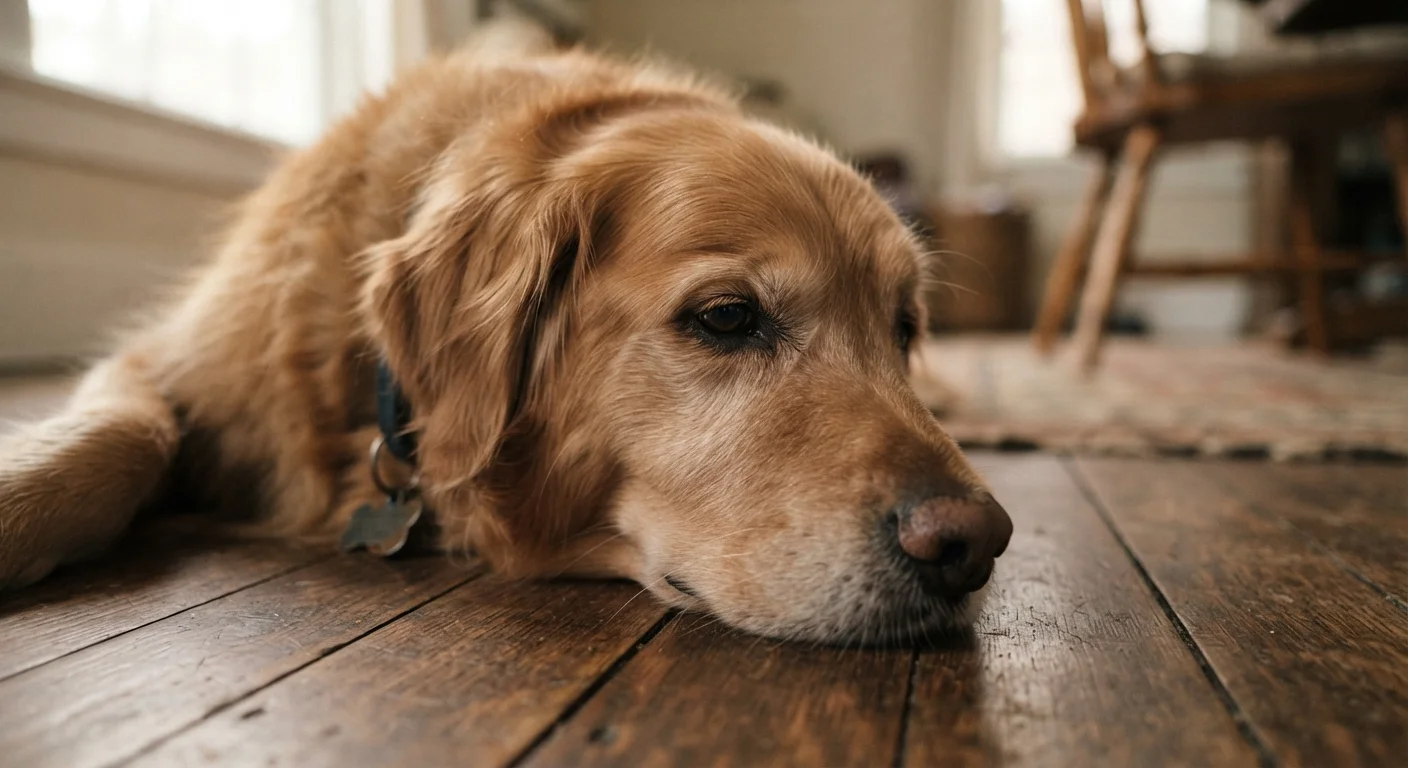
Most dog owners picture a painful dog as one that whimpers, cries, or limps dramatically. In reality, dogs evolved to suppress outward signs of vulnerability — an instinct rooted in survival. A visibly weak animal attracts predators, so masking discomfort is hardwired behaviour, not stubbornness or stoicism.
This means your dog can be experiencing significant pain while appearing mostly normal at a glance. Understanding the more subtle signals is one of the most practical skills a dog owner can develop. For comparison, cats use similar masking strategies — but the cues to watch for differ by species.
| Primary masking reason | Evolutionary survival instinct — concealing weakness from predators |
| Most commonly missed sign | Subtle behaviour changes (withdrawal, appetite shifts, altered sleep) (Veterinary behavioural research consensus) |
| Facial pain indicators | Squinted eyes, tightened muzzle, raised inner brow corners (Dog Grimace Scale, developed by veterinary researchers) |
| When to seek urgent care | Multiple signs present together, or any sudden or worsening symptom |
Behavioural Signals Worth Noticing
Behaviour shifts are often the earliest and most reliable indicators that something is wrong. Watch for the following:
- Reduced activity or reluctance to move: A dog that suddenly skips morning play or hesitates before jumping onto the couch may be guarding a sore area rather than being lazy.
- Changes in sleep patterns: Sleeping more than usual, or restlessness and difficulty settling, can both indicate discomfort depending on its nature.
- Appetite changes: Eating less or more slowly, especially with dental or abdominal pain, is a common but overlooked signal.
- Withdrawal or clinginess: Some dogs in pain retreat and avoid interaction; others become unusually needy. Both are deviations from their baseline worth noting.
- Irritability or uncharacteristic aggression: A dog that snaps when touched in a certain area is communicating pain, not bad manners. Learning to read these cues accurately is covered in more depth in our guide to what your dog's body language is actually telling you.
Pain guarding
A behaviour in which an animal holds a body part rigidly or avoids moving it to protect it from further pain. It is commonly seen in limbs, the abdomen, or the back.
Stoic behaviour
A tendency to suppress visible signs of pain or distress. In dogs, this is an evolutionary trait rather than a character choice, which makes pain harder for owners to detect.
Canine pain scale
A veterinary assessment tool used to evaluate and score a dog's pain level based on behavioural and physiological observations. It helps clinicians standardise pain management decisions.
Hyperalgesia
Heightened sensitivity to pain stimuli, often occurring around an injury site. A dog with hyperalgesia may react strongly to gentle touch in a normally unremarkable area.
Physical Signs That May Indicate Pain
Alongside behavioural changes, certain physical observations can help you identify a dog in discomfort:
20–30%
Dogs affected by osteoarthritis at some point
Veterinary estimates suggest osteoarthritis — a common pain source — affects a significant proportion of dogs, particularly as they age.
~80%
Pain signs that are behavioural, not vocal
Veterinary and behavioural specialists widely note that the majority of canine pain indicators are behavioural rather than auditory, making careful observation essential.
- Altered posture: A hunched back, tucked abdomen, or reluctance to bear weight on a limb are meaningful physical cues.
- Facial tension: Research in veterinary science has identified specific facial indicators of canine pain — a tightened muzzle, squinted eyes, and raised inner brow corners can all signal discomfort.
- Excessive grooming of one area: Dogs will often lick, chew, or bite repeatedly at a painful spot, even when there is no visible wound.
- Shallow or laboured breathing: Pain — particularly chest or abdominal pain — can affect breathing rate and depth.
- Changes in elimination habits: Difficulty squatting, accidents indoors, or straining may relate to musculoskeletal, urinary, or gastrointestinal pain.
If your dog is showing several of these signs together, that pattern matters more than any single symptom. Our article on signs your dog may need a vet sooner than you think can help you decide when to act quickly.
A Helpful Baseline Habit
Because pain signs are often subtle deviations from normal, knowing your individual dog's baseline is essential. Take brief mental or written notes of their typical energy, appetite, movement, and social behaviour during healthy periods. Any meaningful departure from that baseline is worth monitoring and, if it persists, discussing with your vet.
When to Contact Your Veterinarian
No checklist can substitute for a professional assessment. If you observe a cluster of the signs above, or if any symptom is sudden, severe, or worsening, contact your veterinarian promptly. Pain is always a signal that something in the body needs attention — and catching it early typically leads to better outcomes.
Keep a brief written note of what you observed, when it started, and any changes in routine or environment. This kind of detail helps your vet evaluate the situation more effectively. Some pain-related behaviours, such as lead-pulling that suddenly worsens, may have an underlying physical cause — something worth exploring if it appears out of character for your dog.
This article is for general informational purposes only and does not constitute veterinary advice. Always consult a qualified veterinarian if you are concerned about your dog's health or wellbeing.