

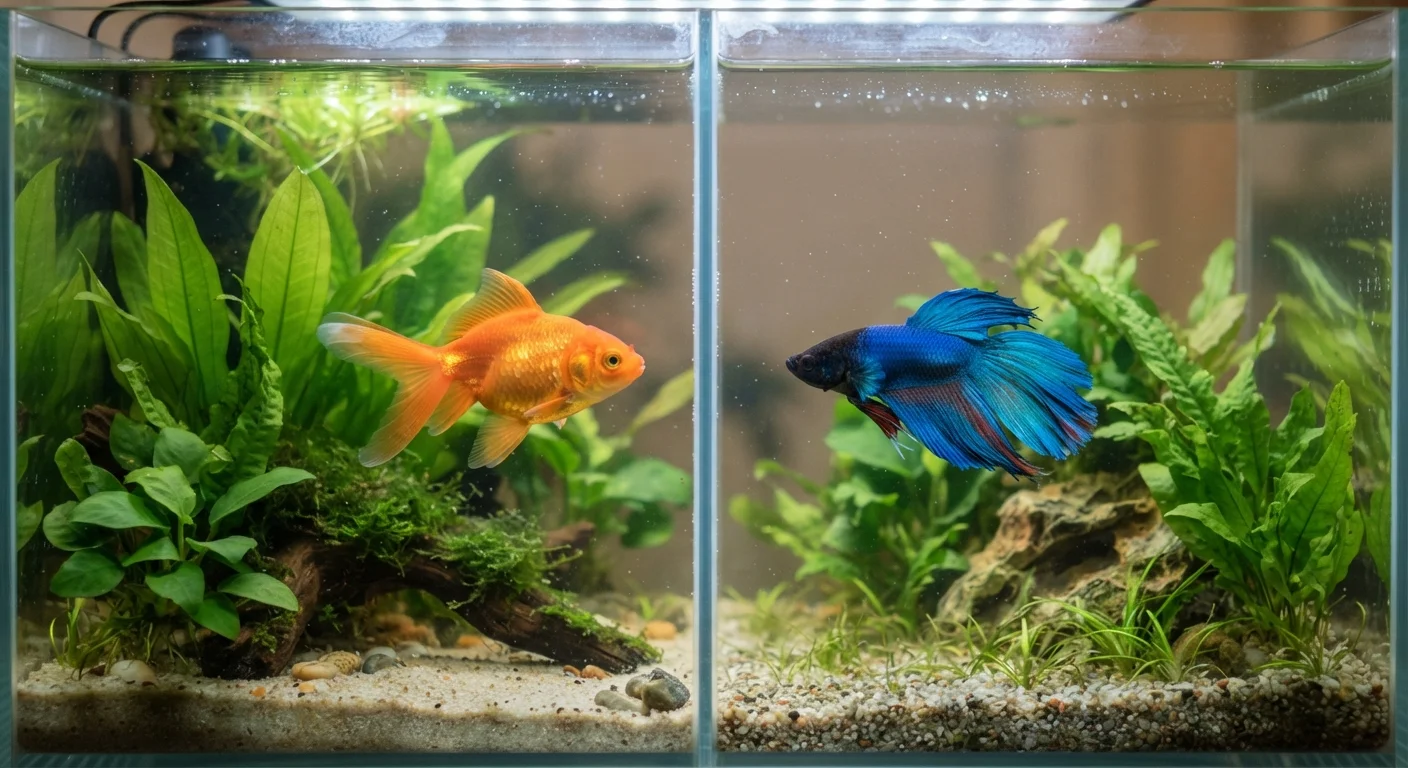
Key Takeaways
- Goldfish thrive in cool water (65–72°F) while bettas need warm water (76–82°F) — they cannot share a tank.
- Goldfish produce significantly more waste and require stronger filtration and larger tank volumes.
- Betta fish are solitary and aggressive toward other bettas; goldfish are generally peaceful community fish.
- Bettas can survive in smaller tanks (5+ gallons minimum) but goldfish need at least 20 gallons to stay healthy.
- Both species are beginner-friendly, but goldfish demand more frequent maintenance due to higher bioload.
Option A
Goldfish
The classic, hardy community fish for cool, spacious tanks.
Best for: Owners who want a social, long-lived fish and can provide a larger, well-filtered tank.
Option B
Betta Fish
The vibrant, low-footprint fish suited to smaller, warm setups.
Best for: Owners who want a visually striking solo fish in a compact, manageable aquarium.
If you have limited space and want a striking, low-footprint setup
Betta Fish
A single betta thrives in a well-maintained 5–10 gallon tank, making it practical for apartments or smaller living spaces.
If you want a long-lived fish you can keep for a decade or more
Goldfish
With proper care, goldfish routinely live 10–15 years — some even longer — making them a rewarding long-term companion.
If you want to build a community tank with multiple fish species
Goldfish
Goldfish coexist well with compatible cool-water species, whereas bettas are aggressive toward similar-looking fish and other bettas.
If you're a first-time fish owner with a modest budget for equipment
Betta Fish
Bettas need less filtration power and a smaller tank, which typically means lower upfront costs and simpler daily care.
Tank Size and Water Conditions
Water requirements are where goldfish and betta fish diverge most sharply, and getting these wrong is the most common mistake new owners make.
Goldfish are cold-water fish that prefer temperatures between 65°F and 72°F. Despite their reputation as bowl fish, they actually need substantial space — a single fancy goldfish should have at least 20 gallons, with an additional 10 gallons per additional fish. They produce a high amount of waste (called bioload), so a powerful filter rated above the tank's actual volume is essential. Weekly partial water changes of 25–30% are typically necessary to keep ammonia and nitrite at safe levels.
Betta fish are tropical fish requiring warm, stable water between 76°F and 82°F — a heater is non-negotiable in most US homes. A single betta can thrive in a 5-gallon tank, though 10 gallons gives more stable water parameters and room for enrichment. Their bioload is much lower, so filtration needs are modest, though bettas dislike strong currents, so a gentle sponge or low-flow filter is recommended.
Understanding the key water chemistry numbers — pH, ammonia, nitrite, and nitrate — matters for both species. Our guide to aquarium water chemistry explains what to test for and how to interpret the results.
| Criterion | Goldfish | Betta Fish |
|---|---|---|
| Minimum tank size | 20 gallons (single fish) | 5 gallons (single fish) |
| Ideal water temperature | 65–72°F (cool water) | 76–82°F (tropical, needs heater) |
| Waste output (bioload) | High — strong filter required | Low — gentle filtration sufficient |
| Typical lifespan | 10–15+ years | 2–4 years |
| Community compatibility | Generally peaceful; good in groups | Males are solitary and territorial |
| Maintenance frequency | Weekly 25–30% water changes | Weekly or biweekly partial changes |
| Heater required? | No (in most US climates) | Yes — essential |
Temperament, Tank Mates, and Behavior
Behavioral compatibility is critical — both for the fish themselves and for your enjoyment as an owner.
Goldfish are generally peaceful and social. They do well in groups and can coexist with other cool-water species of similar size. They are active, curious, and recognize their owners over time, often swimming to the front of the tank at feeding time. Because they are not territorial, a community goldfish setup is achievable with some planning.
Betta fish, particularly males, are highly territorial. Two male bettas in the same tank will fight, sometimes fatally. Female bettas can sometimes coexist in groups called sororities, but this requires a larger tank and careful monitoring. Bettas may also attack fish with flowing fins or bright coloration that they perceive as rivals. That said, bettas can live peacefully with certain non-aggressive tank mates — small bottom-dwellers like corydoras catfish are often compatible in appropriately sized setups.
10–15 yrs
Average goldfish lifespan with proper care
Goldfish are among the longest-lived common aquarium fish when housed in appropriate conditions, according to general aquatic husbandry guidance.
5 gallons
Recommended minimum tank size for a betta
Most aquatic veterinarians and fish-keeping organizations recommend at least 5 gallons for a single betta to maintain stable water parameters.
20+ gallons
Recommended minimum for one goldfish
Goldfish grow larger than most people expect and produce significant waste, making small tanks a common — and avoidable — welfare problem.
For owners who want an interactive, personable fish, both species deliver — just in different ways. Bettas are visually dramatic and respond to their owners' presence; goldfish are sociable and entertaining in groups.
Care Demands, Lifespan, and What to Expect Long-Term
Neither goldfish nor betta fish are truly low-maintenance, but their demands differ in character.
Goldfish require consistent, frequent water changes and a reliable filtration system due to their waste output. Overfeeding is a common problem — uneaten food degrades water quality quickly. Fed correctly (small amounts once or twice daily) and kept in a properly cycled tank, goldfish are hardy. Their lifespan is impressive: well-cared-for goldfish commonly live 10–15 years, and some reach 20 or more.
Betta fish are more sensitive to sudden water parameter changes despite their reputation for toughness. Bettas sold in small cups at stores are often stressed, so acclimating them slowly to a new tank matters. Their typical lifespan is 2–4 years, though some live longer with excellent care. Bettas benefit from environmental enrichment — live or silk plants, hiding spots, and gentle water movement stimulate natural behavior and reduce stress.
The Nitrogen Cycle: A Non-Negotiable First Step
Before adding any fish, a new tank must complete the nitrogen cycle — a biological process in which beneficial bacteria colonize the filter and convert toxic ammonia (from fish waste) into nitrite, then into the less harmful nitrate. This process typically takes 4–6 weeks in a new tank. Adding fish too soon exposes them to ammonia spikes that can be fatal. Test kits for ammonia, nitrite, and nitrate are inexpensive and widely available, and using one is the most reliable way to confirm your tank is ready.
Neither species should be kept in unfiltered bowls or vases. Both require cycled tanks — meaning the nitrogen cycle (the biological process that converts toxic ammonia into less harmful nitrate) has been established before adding fish. Rushing this step is the leading cause of preventable fish death in home aquariums.
This article is for general informational purposes only. For specific health concerns about your fish, consult an aquatic veterinarian or experienced fish-keeping specialist.