

Key Takeaways
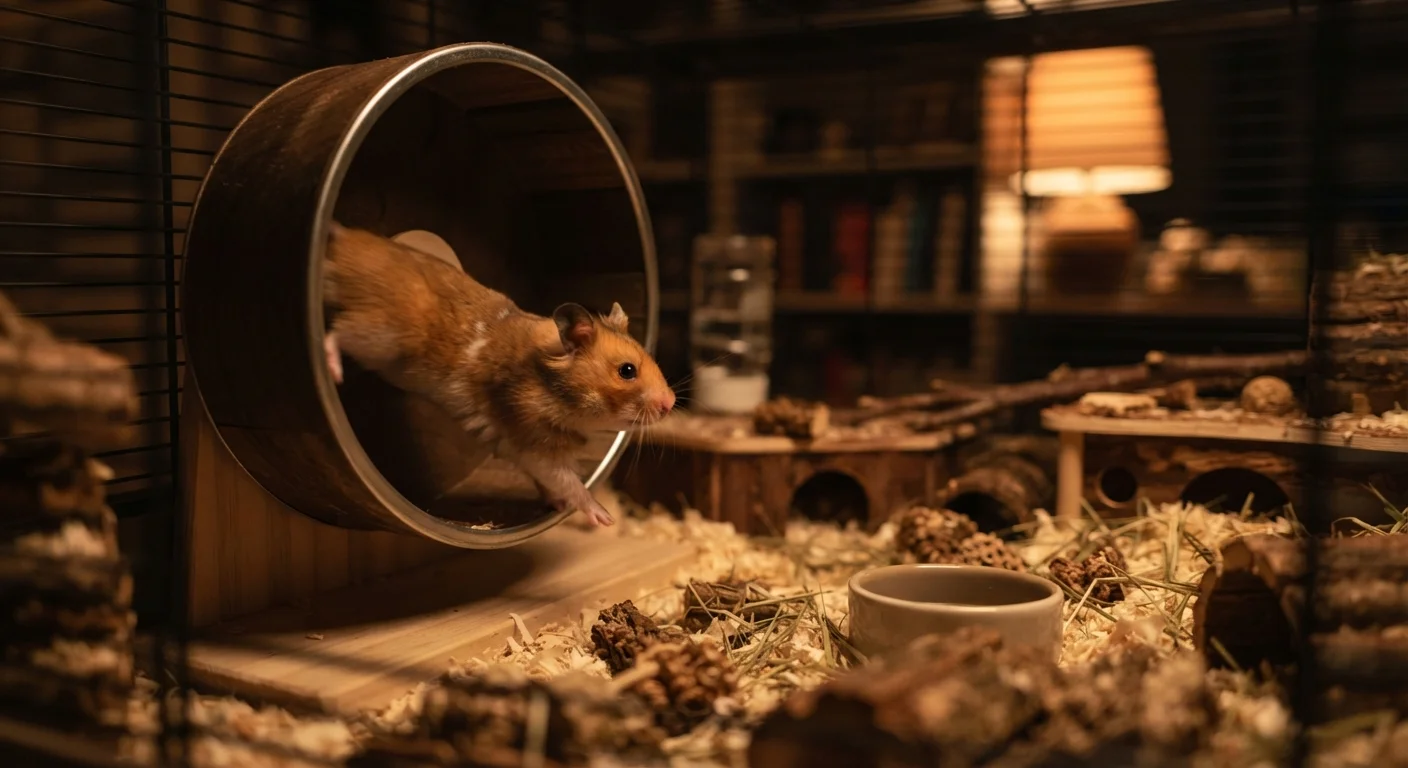
- Hamsters sleep during the day and become most active at dusk and dawn.
- Disrupting a hamster's sleep cycle causes stress that can affect its health and behavior.
- Handling a hamster while it's sleeping can lead to biting and anxiety.
- Evening is the best time to interact with and enrich your hamster's environment.
- Loud daytime disturbances near the cage should be minimized for a hamster's well-being.
Nocturnal Behavior in Hamsters
Nocturnal animals are naturally awake and active during the night and sleep during the day. Hamsters follow this pattern because their wild ancestors evolved to forage and move under cover of darkness to avoid predators. Most pet hamsters — including Syrian, dwarf, and Roborovski varieties — maintain this instinctive cycle even in a home environment.
Some researchers describe hamsters as "crepuscular," meaning their peak activity periods occur specifically around dusk and dawn rather than throughout the entire night. In practice, many pet hamsters exhibit a blend of both patterns.
Why Hamsters Sleep All Day
If your hamster seems unresponsive or hidden away during daylight hours, there's nothing wrong — it's simply doing what hamsters are biologically wired to do. Wild hamsters live in arid regions across Asia, the Middle East, and parts of Europe, where daytime temperatures are extreme and predators are plentiful. Sleeping underground during the day and emerging at dusk gave their ancestors a critical survival advantage.
Pet hamsters retain this instinct completely. No amount of gentle encouragement will make your hamster a morning person, and that's perfectly normal. Their internal clock — driven by light-sensitive hormones similar to melatonin in humans — regulates when they sleep and wake. Exposure to bright light during their active hours can even suppress this cycle and cause hormonal disruption.
Crepuscular vs. Nocturnal: What's the Difference?
While hamsters are commonly called nocturnal, many species show peak activity specifically at dusk and dawn — a pattern called crepuscular behavior. In practice, individual hamsters vary, and some may be active for stretches throughout the night. Either pattern is normal and healthy.
The Stress of Being Disturbed During Sleep
One of the most common mistakes new hamster owners make is handling their pet during the day when it's deep in sleep. A startled hamster that is abruptly woken is likely to bite — not out of aggression, but out of pure reflex. More importantly, repeated sleep disruption is genuinely stressful for hamsters and can contribute to weakened immunity, behavioral changes, and a shorter lifespan over time.
Children in the household especially need guidance on this. A hamster that appears to be "lazy" during school hours is simply on a different schedule. Teaching everyone in the home to respect the hamster's sleep is one of the most important steps in responsible ownership.
Build a Consistent Evening Routine
Try to interact with your hamster at roughly the same time each evening. Hamsters respond well to routine and will begin anticipating your presence during their active period. Consistency builds trust far more effectively than daytime handling attempts.
How to Time Enrichment and Interaction
The good news is that a hamster's natural schedule is easy to work with once you understand it. Dusk — roughly the hour after sunset — is typically when your hamster will start stirring, grooming, and exploring. This is the ideal window for feeding, handling, and any cage enrichment activities.
Spend time near the cage in the evening so your hamster associates your presence with its active period. Offer fresh food, rotate toys, or simply let it explore in a safe, contained play space. Over time, a hamster that is consistently approached during its waking hours becomes noticeably calmer and more comfortable with handling.
5–8 miles
Distance wild hamsters travel nightly while foraging
Research on wild hamster behavior shows these animals cover significant ground each night, explaining why exercise and a large enclosure are essential for pet hamsters.
12–14 hours
Typical daily sleep duration for a healthy hamster
Hamsters require extended sleep periods to support their metabolism and immune function, making undisturbed rest a key welfare consideration.
For a full picture of what your hamster needs beyond its sleep schedule — including cage size, diet, and exercise requirements — see our complete guide to hamster health and enrichment.
Setting Up a Sleep-Friendly Environment
Supporting your hamster's natural cycle starts with the right cage setup. Place the cage in a room that gets natural light during the day but isn't in direct sunlight, which can overheat the enclosure and disrupt sleep. Avoid placing the cage near televisions, speakers, or high-traffic areas where daytime noise is frequent.
Provide plenty of nesting material — shredded paper bedding or chemical-free tissue — so your hamster can burrow and block out light. A hideout or enclosed sleeping hut gives additional security. At night, normal household lighting won't cause problems, but avoid shining direct lamp or flashlight beams into the cage during active hours, as sudden bright light can startle and disorient your pet.
“Respecting a small animal's natural behavioral rhythms is one of the most meaningful things an owner can do. It reduces stress, supports normal physiology, and leads to a calmer, more trusting pet.”
— Small Animal Veterinary Association, Professional body for exotic and small animal veterinary practice
This article is for general informational purposes only and is not a substitute for professional veterinary advice. If you have concerns about your hamster's health or behavior, consult a qualified exotic animal veterinarian.