

Key Takeaways
- Hamsters need enclosures far larger than typical pet-store starter kits provide — aim for at least 40 inches by 20 inches of floor space.
- Deep, dust-free bedding is essential because hamsters are natural burrowers and need to express that behavior daily.
- A nutritionally balanced diet combines a quality seed/pellet mix with small amounts of fresh vegetables and occasional protein.
- A large, solid-surface wheel (at least 10 inches for Syrian hamsters) is a non-negotiable enrichment item.
- Hamsters are nocturnal, so most activity happens in the evening — plan handling and enrichment around their natural schedule.
- Hamsters often hide illness; subtle behavioral changes are the earliest warning signs to watch for.
Start here
Choosing the Right Enclosure
Next
Bedding and Burrowing Space
Then
Diet and Nutrition Basics
When you're ready
Exercise, Enrichment, and Mental Stimulation
Build the bond
Handling and Building Trust
Stay prepared
Recognizing When Something Is Wrong
Choosing the Right Enclosure
The enclosure is the single most consequential decision you will make for your hamster's welfare. Many cages marketed for hamsters — especially small wire or plastic kits — are genuinely too small to meet a hamster's behavioral needs. Most welfare-focused guidelines recommend at least 800 square inches of unbroken floor space (approximately 40 by 20 inches) for a single Syrian hamster; dwarf species need somewhat less, but still benefit from generous room.
Look for an enclosure with solid sides rather than wire bars spaced too widely, which can lead to injury. Tanks and large bin cages are popular among informed keepers because they retain bedding depth and prevent drafts. Avoid multi-level cages where vertical space substitutes for horizontal floor area — hamsters are ground and burrow dwellers, not climbers.
For a useful comparison of how small-pet housing requirements differ across species, see our guide on setting up a rabbit's living space.
Syrian hamster
The most common pet hamster species, larger than dwarf varieties, and strictly solitary — it must always be housed alone.
Dwarf hamster
A group of smaller hamster species (including Roborovski and Campbell's) that are more social than Syrians but still have specific housing and care needs.
Wet tail
A serious bacterial intestinal disease in hamsters characterized by wetness around the tail area. It requires immediate veterinary attention.
Cheek pouches
Expandable pockets inside a hamster's cheeks used to carry food back to a cache site — a completely normal and instinctive behavior.
Nocturnal
Active primarily at night. Hamsters follow a nocturnal schedule, sleeping through most of the daytime and becoming lively in the evening hours.
Bedding and Burrowing Space
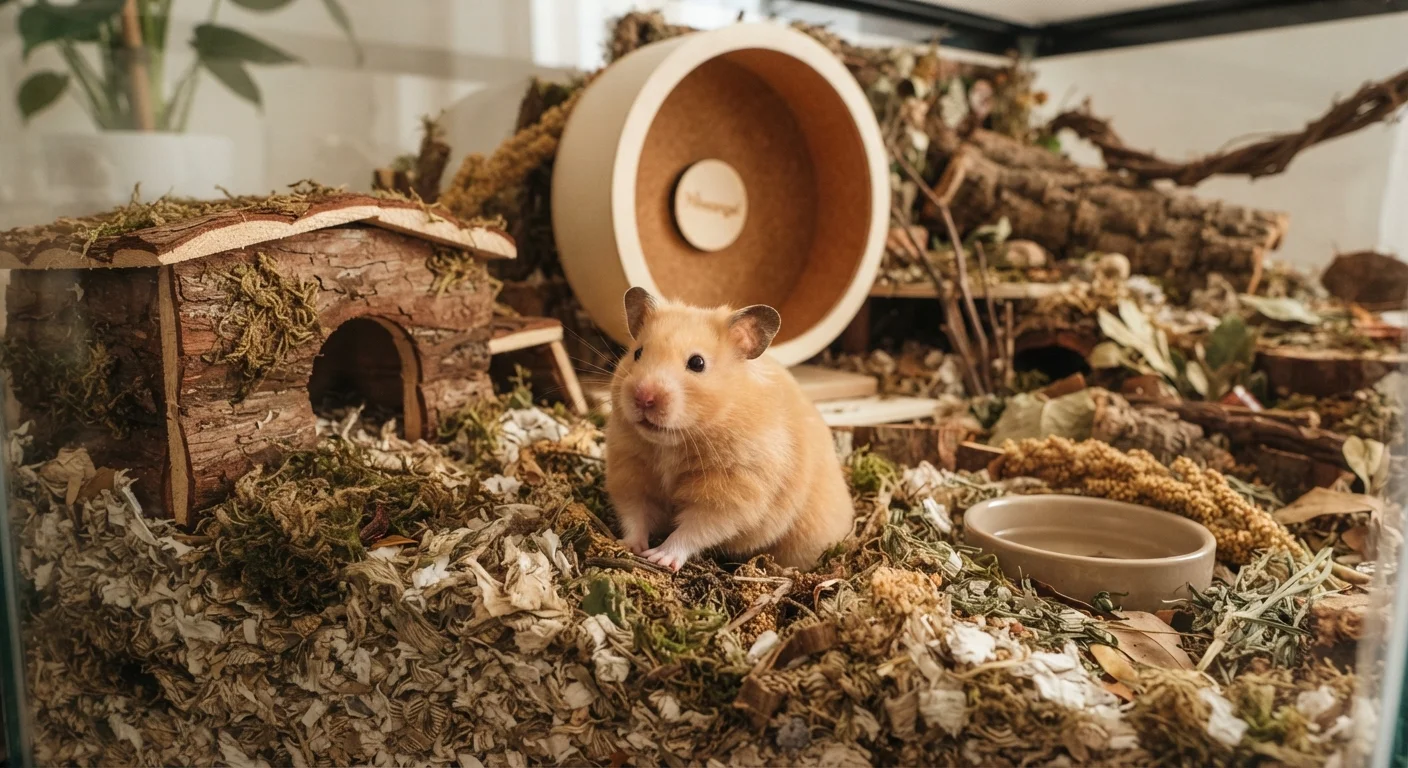
Hamsters in the wild dig complex tunnel systems that can extend several feet underground. In captivity, deep, loose bedding is the closest substitute — and it matters enormously for mental health. Aim for a minimum of six inches of bedding, with deeper sections (10–12 inches) in one part of the enclosure if the cage height allows.
Safe bedding materials include unscented paper-based bedding and plain kiln-dried aspen shavings. Avoid cedar and pine shavings, which contain aromatic oils that can irritate the respiratory tract. Scented or dusty beddings are similarly problematic. Refresh the entire cage every one to two weeks, spot-cleaning soiled areas in between, but preserve some used bedding to maintain familiar scent cues and reduce stress.
Save Some Bedding During Cage Cleans
When you replace the bedding, set aside a small handful of the old, unsoiled material and mix it into the fresh bedding. The familiar scent helps your hamster settle back in quickly and reduces the stress of a fully "reset" environment. This is especially helpful for newly acquired or anxious hamsters.
Diet and Nutrition Basics
In nature, hamsters are omnivores that forage for seeds, grains, insects, and plant matter. A captive diet should reflect that variety. The foundation is a quality hamster seed-and-pellet mix — one formulated specifically for hamsters rather than a generic rodent or "small animal" blend. Pellet-heavy mixes reduce selective feeding, where hamsters eat only high-fat seeds and leave the rest.
Supplement the staple mix several times a week with small amounts of safe fresh vegetables: leafy greens, broccoli, cucumber, and small pieces of carrot work well. Occasional protein sources — a small piece of plain cooked egg or a mealworm — are appropriate. Avoid sugary fruits in quantity, onions, garlic, grapes, raisins, and anything processed or salted.
Fresh, clean water must always be available. Both water bottles and heavy ceramic bowls work; bottles stay cleaner but should be checked daily for blockages. Hamsters naturally hoard food in their cheek pouches and cache it around the cage — this is normal behavior, not a sign of excess feeding.
Watch Out for Selective Feeding
Hamsters will often eat their favorite high-fat seeds first and ignore the rest of the mix. If you top up food before the bowl is empty, you may unknowingly be enabling an unbalanced diet. Allow the hamster to work through most of the mix before refilling, and check that nutritious pellets are actually being consumed, not just pushed aside.
Exercise, Enrichment, and Mental Stimulation
A hamster without adequate exercise opportunities will quickly show signs of stress — repetitive pacing, bar-chewing, or overgrooming. The cornerstone of enrichment is a solid-surface running wheel. For Syrian hamsters, the wheel should be at least 10–11 inches in diameter so the hamster's back remains flat during running. Smaller wheels force an unhealthy arched spine. Dwarf hamsters can use an 8-inch wheel. Avoid mesh or barred wheels entirely, as toes and feet can catch and be injured.
Beyond the wheel, rotate toys and foraging opportunities regularly. Cardboard tubes, wooden chews, dig boxes filled with sand, and scatter feeding (hiding food throughout the bedding) all encourage natural behavior. Hamster balls for out-of-cage exercise are controversial — they can cause disorientation and stress — so supervised, hamster-proofed free roaming in a safe space is generally preferable.
Understanding your hamster's nocturnal rhythm helps you schedule enrichment effectively. Our article on why hamsters are nocturnal explains how their sleep cycle should shape daily care routines.
Evening Is the Right Time to Interact
Because hamsters are nocturnal, they are naturally most alert and receptive from the evening onward. Disturbing a hamster during its daytime sleep — even for well-intentioned interaction — can cause chronic stress that affects both temperament and health. Plan feeding, enrichment changes, and handling for after dusk whenever possible.
Handling and Building Trust
Hamsters are prey animals with limited vision and an acute startle response. Rushing the taming process is one of the most common first-month mistakes new owners make. Spend the first few days simply sitting near the enclosure so your hamster becomes accustomed to your presence and scent. Offer treats through the bars or by hand before attempting to pick the hamster up.
When you do begin handling, do so close to a surface — never high above the ground — and keep early sessions to just a few minutes. Always handle your hamster during its active hours (typically evening onward) rather than waking it during the day, which causes stress. Avoid sudden movements and loud sounds. For more on avoiding common early errors with small pets, see mistakes new small-pet owners make.
Recognizing When Something Is Wrong
Hamsters are prey animals instinctively wired to conceal weakness, which means signs of illness are often subtle until a condition has progressed. Knowing what to look for — and acting on it quickly — is a core responsibility of ownership.
Watch for: sudden weight loss (run a finger along the spine weekly to feel for changes), wet fur around the tail (a symptom of a potentially life-threatening bacterial condition called wet tail), labored or clicking breathing, discharge from eyes or nose, overgrown teeth, reduced activity or hiding more than usual, and changes in eating or drinking habits.
Because hamsters mask illness so effectively, our related guide on why small pets get sick quietly is worth reading before you need it. Find a veterinarian experienced with small exotic mammals before an emergency arises — not all general-practice vets see hamsters regularly.
This article provides general information about hamster care and is not a substitute for advice from a qualified veterinarian. If you have concerns about your pet's health, consult a vet experienced with small mammals.