

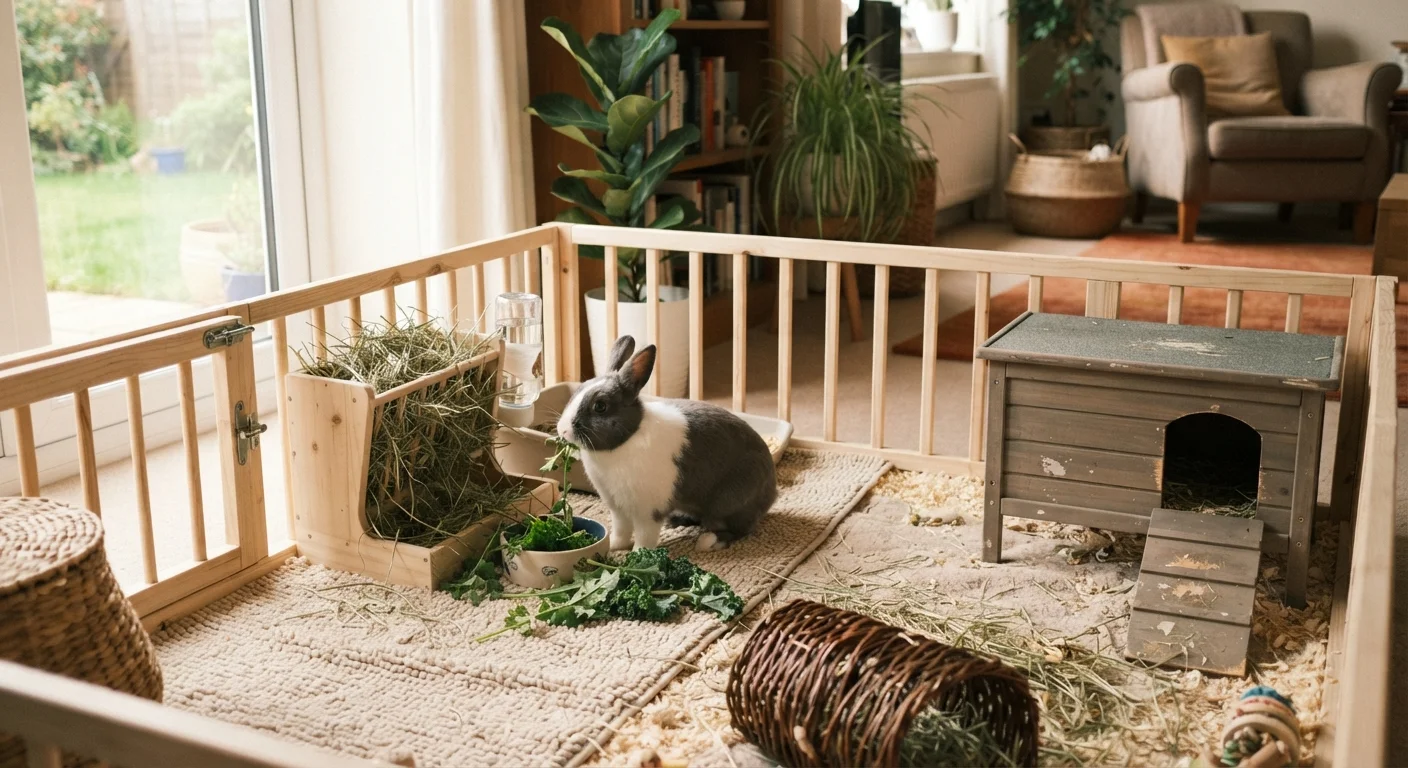
Key Takeaways
- Rabbits need far more space than most starter enclosures provide — minimum 8 square feet of living area.
- Solid, non-slip flooring protects rabbit feet from painful sores caused by wire mesh.
- A hiding spot, hay station, and separate litter area are non-negotiable essentials.
- Temperature, ventilation, and predator access matter as much indoors as they do outdoors.
- Rabbits are social animals — their environment should support daily interaction and free-roam time.
What you will need
Why Most Default Setups Fall Short
Walk into many pet shops and the rabbit enclosures on display are often compact, wire-floored, and sold as complete solutions. The reality is that most of these setups don't meet the behavioural or physical needs of a healthy rabbit. Rabbits are active, intelligent animals that need space to run, dig, and stretch fully — behaviours that simply can't happen in a small hutch.
Before purchasing or assembling anything, it helps to understand what rabbits actually need rather than what's most convenient to stock on a shelf. The guidance here is grounded in widely accepted small-animal welfare standards, and it applies whether you're housing your rabbit indoors or out. For a detailed comparison of both approaches, see our article on indoor vs. outdoor housing for rabbits.
What you will need
What You'll Need Before You Start
Gathering the right materials before setup day prevents last-minute compromises. The tools and supplies below reflect what's needed to create a space that's safe, comfortable, and practical to maintain.
Exercise pen or modular C&C panels
Creates a spacious, flexible enclosure that can be expanded as needed — far more adaptable than a fixed hutch.
Solid floor mat or interlocking foam tiles
Provides a safe, cushioned surface that protects feet and prevents slipping.
Hay rack or manger
Keeps hay accessible, fresh, and off the ground to reduce waste and contamination.
Hideaway box or tunnel
Gives the rabbit a secure retreat for rest and stress relief — essential for psychological wellbeing.
Shallow litter tray
Designates a toilet area, making cleaning easier and supporting natural litter-training behaviour.
Heavy ceramic food bowl
Stable enough that rabbits cannot tip it; used for pellets or fresh leafy greens.
Gravity water bottle or heavy ceramic water bowl
Provides a constant supply of fresh water; bowls are often easier for rabbits to drink from naturally.
Thermometer
Monitors ambient temperature to ensure the environment stays within a safe range, especially for outdoor setups.
Step-by-Step: Setting Up the Space
Follow these steps in order. Each builds on the last, so skipping ahead can result in having to dismantle and redo sections.
Choose and position the enclosure
Select a location that is away from direct sunlight, drafts, and loud appliances. For indoor setups, a quiet room with natural light is ideal. For outdoor setups, the enclosure must be raised off damp ground and positioned so it receives shade during the hottest part of the day.
The minimum recommended enclosure size for a single average-sized rabbit is approximately 8 square feet of floor space — more for larger breeds. Length matters most: the rabbit should be able to take at least three full hops in one direction.
Lay the flooring
Cover any wire or slatted base with solid, non-slip material. Fleece blankets, foam puzzle tiles, or untreated seagrass mats all work well. Ensure full coverage — partial matting leaves areas where sore hocks can still develop.
For outdoor hutches with solid wooden floors, add a layer of pet-safe bedding such as paper-based litter or compressed straw mats on top for insulation and comfort.
Set up the hay station
Mount a hay rack at roughly shoulder height for your rabbit, or place a generous pile of hay directly in one corner. Hay should make up approximately 80% of a rabbit's diet and must be available at all times. Position the hay near the litter tray — rabbits typically eat and eliminate simultaneously, which encourages good litter habits.
Place the litter tray
Position the litter tray in a corner — rabbits naturally gravitate to corners for elimination. Fill it with a thin layer of paper-based litter, then add a handful of hay on top to reinforce the hay-litter area connection. Keep the tray separate from the sleeping and eating zones.
Add hiding spots and enrichment
Place at least one solid-sided hideaway box inside the enclosure. Rabbits are prey animals and need a space to retreat when stressed. Cardboard boxes work as temporary options; untreated wooden boxes are more durable. Add a tunnel or two if space allows.
Enrichment doesn't need to be elaborate: willow balls, untreated wooden chews, and paper bags stuffed with hay all provide mental stimulation. Rotate items regularly to maintain interest.
Install food and water stations
Attach a water bottle to the enclosure wall at a comfortable height, or place a heavy ceramic bowl that cannot be tipped. Position the food bowl away from the litter tray. Pellets should be offered in measured amounts — your vet can advise on appropriate quantities based on your rabbit's size and age.
Secure the enclosure and plan free-roam time
Check all panel connections and latches. Rabbits are surprisingly strong and persistent — any weak join will eventually be exploited. For outdoor setups, verify that there are no gaps large enough for predators to reach through, and that the base is secured against digging.
Plan for a minimum of 3–4 hours of daily free-roam time outside the enclosure in a rabbit-proofed area. This is not optional — sustained confinement without exercise leads to muscle wastage and behavioural problems. See our full checklist in Before You Bring a Small Pet Home for pre-arrival safety-proofing steps.
Start Simple, Then Refine
You don't need a perfect setup on day one. A spacious, safe enclosure with hay, water, a hide, and a litter tray covers the essentials. Observe your rabbit over the first few weeks — their behaviour will show you what adjustments are needed. Most rabbits will indicate preferred toilet corners, favourite rest spots, and how much hiding space they actually use.
Common Mistakes and How to Avoid Them
Even well-intentioned setups frequently run into the same pitfalls. Wire-mesh flooring is the most common — it causes a painful condition called pododermatitis (sore hocks) in rabbits who stand on it for extended periods. Always cover wire floors with solid mats or replace them entirely.
Placing an enclosure in direct sunlight or near a heat source is another frequent error. Rabbits are highly vulnerable to heatstroke and cannot sweat to cool down. Keep the ambient temperature between roughly 60–70°F (15–21°C) where possible, and ensure airflow without drafts.
Heatstroke Is a Genuine Risk
Rabbits cannot tolerate heat well and can develop heatstroke rapidly in temperatures above 80°F (27°C). Signs include lethargy, rapid breathing, and wetness around the nose. If you suspect heatstroke, move the rabbit to a cooler area immediately and contact a vet — this is a medical emergency. Never leave a rabbit in a conservatory, greenhouse, or car during warm weather.
If you're also weighing up how a rabbit compares to other small pets like guinea pigs, our guinea pigs vs. rabbits guide walks through space needs and social behaviour side by side.
This article provides general husbandry guidance and is not a substitute for advice from a qualified exotic animal veterinarian. If you have concerns about your rabbit's health or behaviour, consult a vet experienced with small animals.