

Key Takeaways
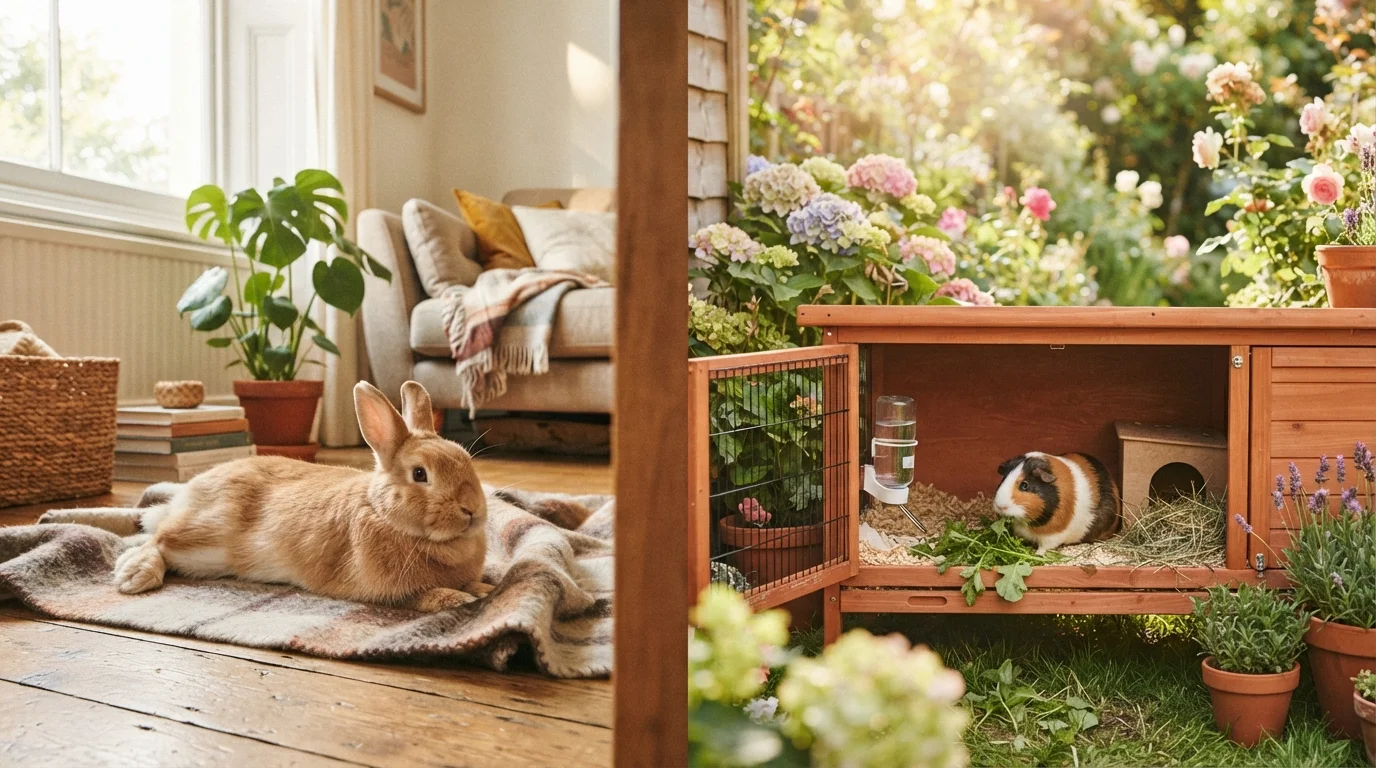
- Indoor housing generally offers better temperature stability and protection from predators for both rabbits and guinea pigs.
- Outdoor enclosures can provide more space and natural enrichment but require robust weatherproofing and predator-proofing.
- Guinea pigs are particularly sensitive to cold and damp — outdoor housing in colder climates carries significant health risks.
- Whichever setup you choose, daily social interaction and adequate exercise space are non-negotiable for both species.
- A hybrid approach — indoor shelter with supervised outdoor time — is a workable middle ground for many owners.
Our Verdict
For most owners in variable climates, indoor housing is the safer and more practical choice for both rabbits and guinea pigs, offering year-round temperature control and closer daily monitoring. Outdoor housing can work well for rabbits in mild climates when predator-proofing and weatherproofing are thoroughly addressed, but it is generally not recommended for guinea pigs outside of warm, stable conditions. The best setup ultimately depends on your climate, your home layout, and how much time you can dedicate to daily care.
| Best for | Recommended |
|---|---|
| Owners in cold or variable climates, especially those with guinea pigs | Indoor housing |
| Rabbit owners in mild climates who can invest in a fully predator-proofed enclosure | Outdoor housing |
| Owners who want enrichment benefits without full-time outdoor exposure | Hybrid (indoor base with supervised outdoor time) |
Why Housing Location Matters More Than You Might Think
When people picture a pet rabbit or guinea pig, they often imagine a hutch in the backyard — but housing decisions have a direct impact on health, lifespan, and quality of life for both species. Unlike cats or dogs, small prey animals are highly sensitive to environmental stress, temperature swings, and perceived threat. Getting the setup right isn't just a comfort issue; it's a welfare one.
Both rabbits and guinea pigs are social, active animals that need more space than traditional small cages provide. The question of indoor versus outdoor housing intersects with predator safety, climate control, enrichment, and how closely you can monitor your pets each day. For a fuller look at how these two species compare on other dimensions, see our Guinea Pigs vs. Rabbits as Companion Animals guide.
Indoor Housing: Benefits and Considerations
Keeping rabbits or guinea pigs indoors removes two of the most serious risks facing outdoor animals: predators and weather extremes. Even the scent or sound of a fox, cat, or dog near an outdoor enclosure can trigger a fatal stress response — a real and documented danger for prey species. Indoors, ambient temperature stays within a safer range year-round, which matters especially for guinea pigs, who are vulnerable to temperatures below about 60°F (15°C) and are prone to respiratory illness in damp or drafty conditions.
Indoor animals also benefit from more frequent human contact, which supports socialization and lets owners spot signs of illness early — subtle changes in eating, droppings, or behavior that are easy to miss if you're only checking once a day. The main challenges are space and odor management. A proper indoor setup requires a pen or free-roam area large enough for exercise (not just a cage), consistent cleaning, and some pet-proofing of cables and furniture.
Consider a Pen Over a Cage Indoors
Traditional small cages rarely give rabbits or guinea pigs enough room to move comfortably. Indoor exercise pens — the type used for puppies — can be configured into much larger floor-level living areas at a modest cost. This approach is more flexible than a fixed hutch and easier to clean. Aim for a minimum of 8 square feet of living space, with additional room for supervised free-roaming each day.
If you're setting up an indoor space for a rabbit for the first time, our Setting Up a Rabbit's Living Space That Actually Works covers enclosure sizing and flooring choices in detail.
Outdoor Housing: Benefits and Considerations
A well-designed outdoor enclosure can offer genuine benefits — more physical space, fresh air, natural light, and opportunities for natural behaviors like digging and grazing. For rabbits in particular, access to grass and the ability to move freely in a larger run can support both physical and psychological health.
However, outdoor housing demands a significantly higher investment in safety infrastructure. Enclosures must be fully predator-proof, including the floor (to prevent digging in by foxes or rats), and must provide weather protection from rain, wind, and direct sun. Hutches sold in pet stores are frequently too small and too flimsy for year-round use — research current welfare guidelines from veterinary or animal welfare organizations before purchasing.
Outdoor Guinea Pig Housing Carries Real Risks
Guinea pigs should not be kept outdoors in most parts of the US during fall and winter. They cannot tolerate cold, damp conditions and are at high risk of respiratory infections and hypothermia. Even in summer, outdoor housing requires consistent shade and monitoring for heat stress when temperatures exceed around 80°F (27°C). If in doubt, consult your veterinarian before transitioning a guinea pig to outdoor housing.
Guinea pigs should not be kept outdoors in most parts of the US during fall and winter. They cannot tolerate cold, damp conditions and are at high risk of respiratory infections and hypothermia. Even in summer, outdoor housing requires shade and monitoring for heat stress above 80°F (27°C).
Head-to-Head: How the Two Approaches Compare
The table below summarizes the key differences across the criteria that matter most to everyday owners.
| Indoor Housing | Outdoor Housing | |
|---|---|---|
| Temperature control | Stable year-round | Requires active weatherproofing |
| Predator safety | High — no direct exposure | High risk without robust enclosure |
| Space available | Limited by home layout | Potentially larger runs possible |
| Natural enrichment | Requires deliberate setup | Grass, fresh air, natural light |
| Owner monitoring ease | Easy — animal is visible daily | Requires deliberate daily checks |
| Suitability for guinea pigs | Strongly recommended | Only in warm, stable climates |
| Setup cost | Moderate (pen, pet-proofing) | Higher (weatherproof, predator-proof run) |
These trade-offs look different depending on your species. Rabbits are somewhat hardier than guinea pigs and better adapted to outdoor life in moderate climates, but both species thrive with stable, stress-free environments. For context on how similar considerations apply to other pets, see our indoor vs. outdoor living trade-offs for cats.
60°F (15°C)
Minimum safe temperature for guinea pigs
Veterinary welfare guidelines widely cite temperatures below this threshold as a significant cold stress risk for guinea pigs kept outdoors.
2+ animals
Recommended social group size
Both the RSPCA and many exotic animal veterinarians recommend keeping guinea pigs and rabbits in same-species pairs or groups to prevent loneliness-related stress.
Making the Right Choice for Your Situation
There's no single correct answer — the right setup depends on your climate, your home, and your routine. A few practical questions can guide your decision:
- What's your local climate? Cold, damp winters make outdoor housing high-risk for guinea pigs and require significant insulation investment for rabbits.
- How much time can you commit? Indoor animals benefit from daily free-roam time; outdoor animals need daily safety checks and more thorough weather management.
- What space do you have? A small apartment can still work for guinea pigs with a properly sized indoor pen; a garden space allows for a larger run but requires predator-proofing.
A hybrid approach — housing animals indoors as their primary base and offering supervised outdoor time in a safe, enclosed run — gives many owners the best of both worlds. Whichever route you choose, prioritize space, social companionship (both species do best in pairs or groups), and daily monitoring. For step-by-step setup guidance, visit our Setting Up a Rabbit's Living Space for the First Time article.
This article is for general informational purposes only and does not constitute veterinary advice. Always consult a qualified veterinarian for guidance specific to your pet's health and care needs.