
Car Depreciation Explained: Why Your Vehicle Loses Value and What Affects the Rate

Key Takeaways
- Most vehicles lose roughly 15–25% of their value in the first year of ownership.
- New cars typically depreciate faster than used cars over the same time period.
- Mileage, condition, brand reputation, and market demand all influence depreciation rate.
- Buying a vehicle that holds value well can meaningfully reduce long-term ownership costs.
- Depreciation is rarely visible day-to-day but is one of the largest costs of owning a car.
Car Depreciation
Car depreciation is the drop in a vehicle's market value over time. Every car loses worth from the moment it's driven off the dealership lot, continuing steadily as it ages, accumulates miles, and faces wear. It's the gap between what you paid for a vehicle and what you could sell it for later.
Depreciation is typically calculated as a percentage of the vehicle's original value lost per year. It is a non-cash cost, meaning you don't write a check for it — but it's reflected in resale value and is a key factor in total cost of ownership analyses.
What Depreciation Actually Means for Your Wallet
When you buy a car, you're not just paying for transportation — you're also absorbing a financial loss that happens whether you notice it or not. Depreciation is the steady erosion of your vehicle's resale value, and for most drivers, it's the single biggest cost of ownership over time.
Unlike fuel or insurance, there's no monthly bill for depreciation. Instead, it quietly reduces what your car is worth on the open market. When you eventually sell or trade in, that gap between your purchase price and the sale price is depreciation made visible. Understanding it upfront helps you make smarter decisions about what to buy, how long to keep it, and how to think about the full cost of ownership.
~20%
Typical first-year value loss for a new car
Industry estimates consistently show new vehicles lose roughly 15–25% of their value in year one, with variation by make and model.
~50%
Average value remaining after five years
After five years of average use, many vehicles retain around 40–60% of their original purchase price, depending on type and market demand.
$0
Monthly depreciation bill you'll ever receive
Depreciation is a hidden cost — it accrues silently and only becomes visible when you sell or trade in your vehicle.
How Fast Does a Car Lose Value?
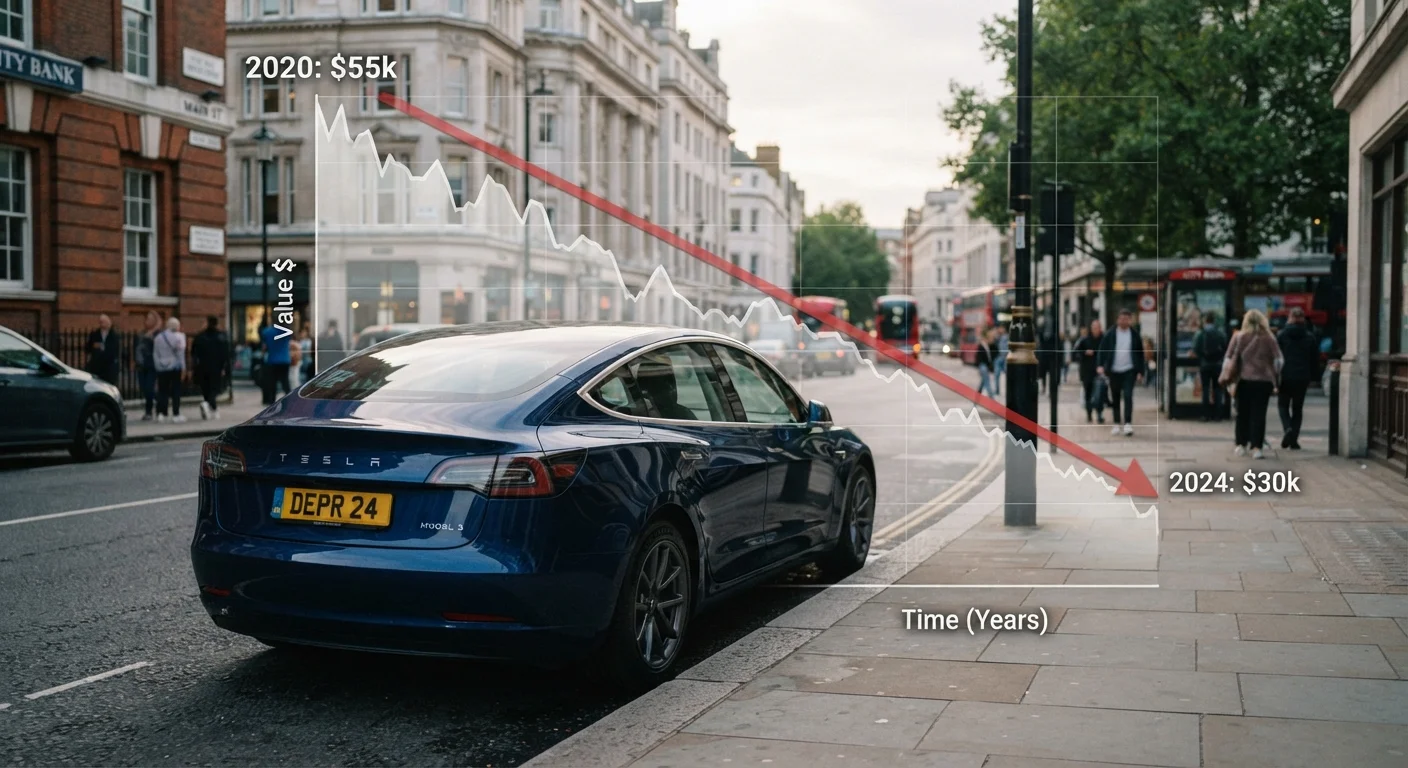
Depreciation isn't linear — it front-loads the loss. A new car typically loses a significant portion of its value in the first year, then continues declining at a more gradual pace. By years four or five, the sharpest drop has already happened.
A rough but useful mental model: assume a new vehicle loses around 15–25% of its value in year one, then roughly 10–15% per year for the next several years. After five years, many vehicles are worth 40–60% of their original purchase price, though this varies considerably.
This curve is why buying a lightly used vehicle — one that's two or three years old — can make financial sense. The previous owner absorbed the steepest drop, and you enter the ownership cycle at a shallower depreciation slope. For a deeper look at how depreciation interacts with financing options, see how loans, leasing, and paying cash compare.
Key Factors That Speed Up or Slow Down Depreciation
Not all vehicles depreciate at the same pace. Several factors — some within your control, some not — determine how quickly a car loses value:
- Mileage: Higher annual mileage accelerates depreciation. Vehicles clocking well above the national average of roughly 12,000–15,000 miles per year tend to drop in value faster.
- Condition: Cosmetic and mechanical condition matters significantly. Dents, worn interiors, and deferred maintenance all push resale value down.
- Brand and model reputation: Vehicles with strong reliability reputations and sustained buyer demand tend to hold value better. This is driven by consumer perception and supply-demand dynamics, not any single ranking.
- Vehicle type: Trucks and SUVs have historically held value better than sedans in the US market, though this can shift with fuel prices and broader economic trends.
- Color and features: Neutral colors and popular option packages tend to have broader buyer appeal at resale time, supporting value retention.
- Market conditions: External factors — fuel prices, economic downturns, supply chain disruptions — can affect used-car demand and alter normal depreciation patterns.
Check Estimated Resale Value Before You Buy
Before committing to a vehicle, look up projected resale values at the three- and five-year mark using established used-car valuation tools. Comparing two similarly priced vehicles on their depreciation trajectory — not just their sticker price — can reveal meaningful long-term cost differences. This is especially useful when weighing new versus used options.
Practical Ways to Factor Depreciation Into Your Decisions
You can't stop depreciation, but you can make choices that reduce its impact on your finances.
Consider the total ownership cost, not just the sticker price. A vehicle with a higher purchase price but slower depreciation may cost you less over five years than a cheaper car that drops in value quickly. See our guide on every ongoing cost that comes with car ownership for a fuller picture.
Match your hold time to the depreciation curve. If you plan to keep a vehicle for eight or more years, the early-year depreciation hit matters less. If you expect to sell or trade in after two or three years, buying used is often smarter than buying new.
Maintain your vehicle. Keeping up with servicing, avoiding unnecessary cosmetic damage, and maintaining complete service records all support a stronger resale price. Routine maintenance pays dividends when it's time to sell.
Be aware of lease implications. If you lease, the projected depreciation during the lease term directly drives your monthly payment. Vehicles with stronger residual values typically translate to lower lease costs.
Depreciation and Insurance: A Related Connection
Your vehicle's current market value — shaped by depreciation — affects how insurers calculate payouts in a total loss. If your car is worth significantly less than your loan balance, you could owe money to your lender even after an insurance payout. Gap insurance is designed to cover this difference, and understanding your vehicle's depreciated value helps you assess whether it's worth carrying.