

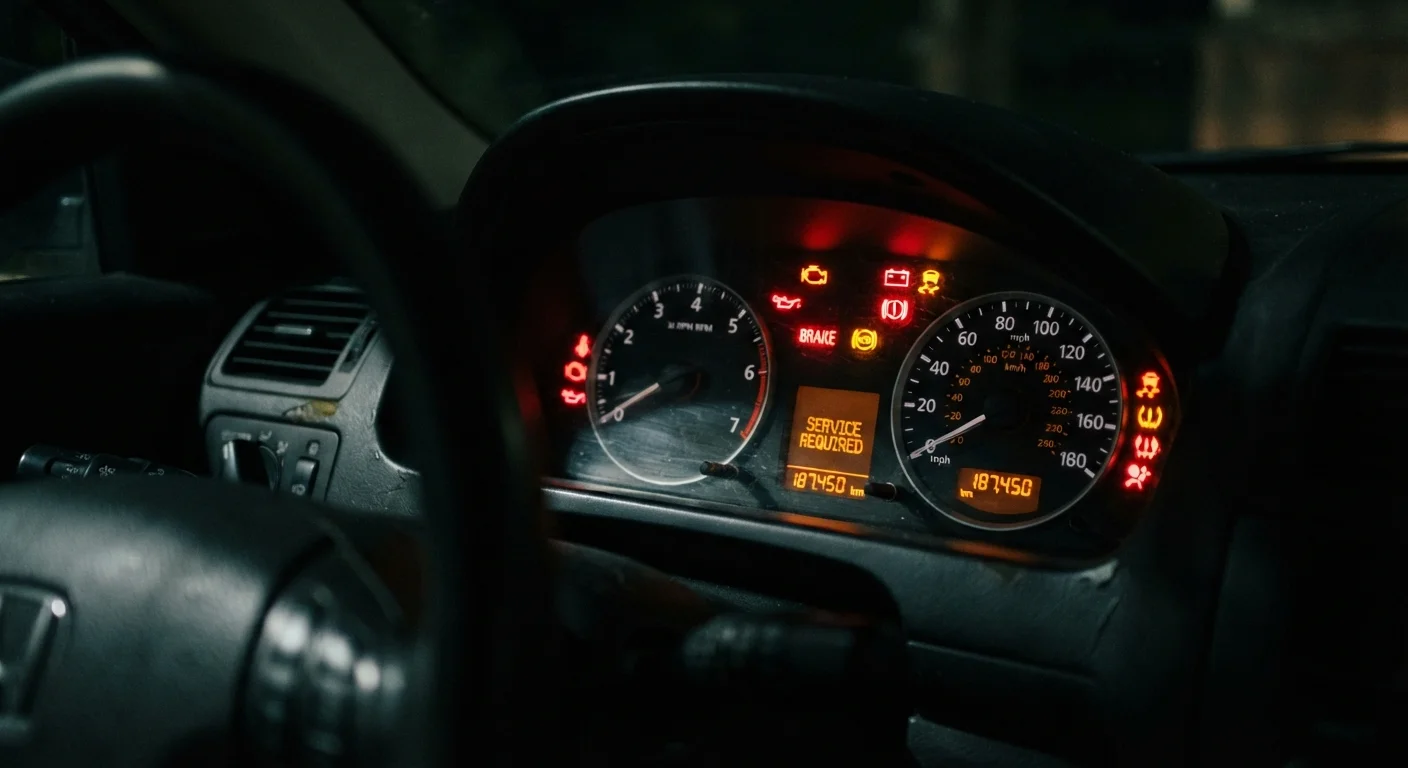
| Flashing check engine light | Active engine misfire — stop driving soon (NHTSA general guidance) |
| Oil pressure warning | Stop the car immediately — engine damage risk |
| Temperature warning | Engine overheating — pull over and let cool |
| Spongy brake pedal | Possible air in lines or master cylinder fault |
| Grinding on braking | Worn pads — reduced stopping effectiveness |
Dashboard Warnings You Should Never Ignore
A glowing dashboard light isn't always a crisis, but some warnings demand immediate attention. Knowing which ones to act on can prevent a minor issue from becoming a costly repair — or a roadside breakdown.
| Flashing check engine light | Active engine misfire — stop driving soon (NHTSA general guidance) |
| Oil pressure warning | Stop the car immediately — engine damage risk |
| Temperature warning | Engine overheating — pull over and let cool |
| Spongy brake pedal | Possible air in lines or master cylinder fault |
| Grinding on braking | Worn pads — reduced stopping effectiveness |
The check engine light covers a wide range of problems, from a loose gas cap to a failing catalytic converter. While a loose cap is an easy self-fix, a flashing check engine light indicates an active misfire that can damage the catalytic converter within miles — pull over safely and call a mechanic. The oil pressure warning (often an oil can icon) means the engine may not be getting adequate lubrication. Driving with this lit can cause severe engine damage in minutes. Stop the car as soon as it is safe to do so. The temperature warning signals the engine is overheating. Continuing to drive risks warping the cylinder head — an expensive repair. Pull over, turn off the engine, and let it cool before investigating coolant levels.
For a broader approach to keeping your vehicle in shape, see our long-term vehicle care guide.
Noises, Smells, and Handling Changes That Signal Trouble
Your senses are surprisingly effective diagnostic tools. Unusual sounds, odors, or changes in how your car drives often point to problems that a fluid top-up won't fix.
Catalytic converter
An emissions control device in the exhaust system that converts harmful pollutants into less harmful gases. Damage from misfires or sulfur buildup can be expensive to replace.
CV joint
Constant-velocity joint — a flexible coupling that transfers power from the transmission to the wheels while allowing steering movement. Worn CV joints often produce a clicking noise on turns.
Master cylinder
The hydraulic pump at the heart of your brake system that converts pedal pressure into braking force. A failing master cylinder can cause a spongy or sinking brake pedal.
Head gasket
A seal between the engine block and cylinder head that keeps coolant and oil separate from combustion. A failing head gasket can cause coolant loss, overheating, and significant engine damage.
Wheel bearing
A set of steel balls or rollers that allows the wheel hub to spin smoothly. A worn bearing produces a rumbling or humming sound and can affect vehicle stability at speed.
Sounds
- Grinding when braking: Worn brake pads contacting the rotor. This reduces stopping effectiveness and should be addressed promptly.
- Knocking or tapping from the engine: Can indicate low oil, worn bearings, or valve train problems. Not a DIY situation.
- Squealing on turns: Often points to a failing CV joint or power steering issue.
- Rumbling at highway speeds: Suspect a worn wheel bearing, which affects vehicle control.
Smells
- Burning rubber or plastic: Could be a slipping belt, overheating brakes, or an electrical fault.
- Rotten eggs: Often signals a failing catalytic converter or a sulfur-rich fuel issue.
- Sweet, syrupy scent: Coolant leaking — don't ignore this near the engine bay.
Handling Changes
If your car pulls to one side, the steering wheel vibrates, or braking feels spongy, these are mechanical symptoms — not alignment issues you can live with. Spongy brakes in particular may indicate air in the brake lines or a failing master cylinder, both of which affect your ability to stop safely. Visit our car maintenance hub for more upkeep guidance.
~35%
Of roadside breakdowns linked to ignored warning lights
Industry estimates from roadside assistance organizations suggest a substantial share of preventable breakdowns follow neglected dashboard alerts.
3–5x
Cost increase when brake issues are deferred
Replacing worn pads early is significantly cheaper than replacing rotors and pads together after metal-on-metal contact occurs.
When a Top-Up Genuinely Isn't Enough
Adding oil, coolant, or windshield washer fluid is routine owner maintenance. But those fluids disappear for a reason — and a recurring need to top up the same fluid is a symptom, not a solution.
Recurring Fluid Loss Is a Symptom
Needing to top up the same fluid repeatedly is your car telling you something is wrong. Coolant, oil, and brake fluid should not disappear under normal operation. If you're refilling more than once between scheduled services, have a mechanic inspect for leaks or internal wear before the underlying problem worsens.
If your oil level drops noticeably between changes, your engine may be burning oil (often visible as blue smoke from the exhaust) or leaking it (look for spots on your driveway). Either scenario warrants a mechanic's inspection. Similarly, if your coolant reservoir empties repeatedly with no visible leak, suspect an internal leak such as a failing head gasket — a repair that escalates in cost the longer it's deferred.
Transmission fluid that looks dark and smells burned, or brake fluid that has turned murky, signals contamination and potential system wear — not just a top-up situation. A qualified technician can test fluid condition and advise whether a flush or component replacement is needed.
If you're evaluating a used vehicle and wondering whether these problems are pre-existing, our pre-purchase inspection checklist covers exactly what to look for.
When in doubt, err toward professional inspection. Early diagnosis almost always costs less than deferred repair.