

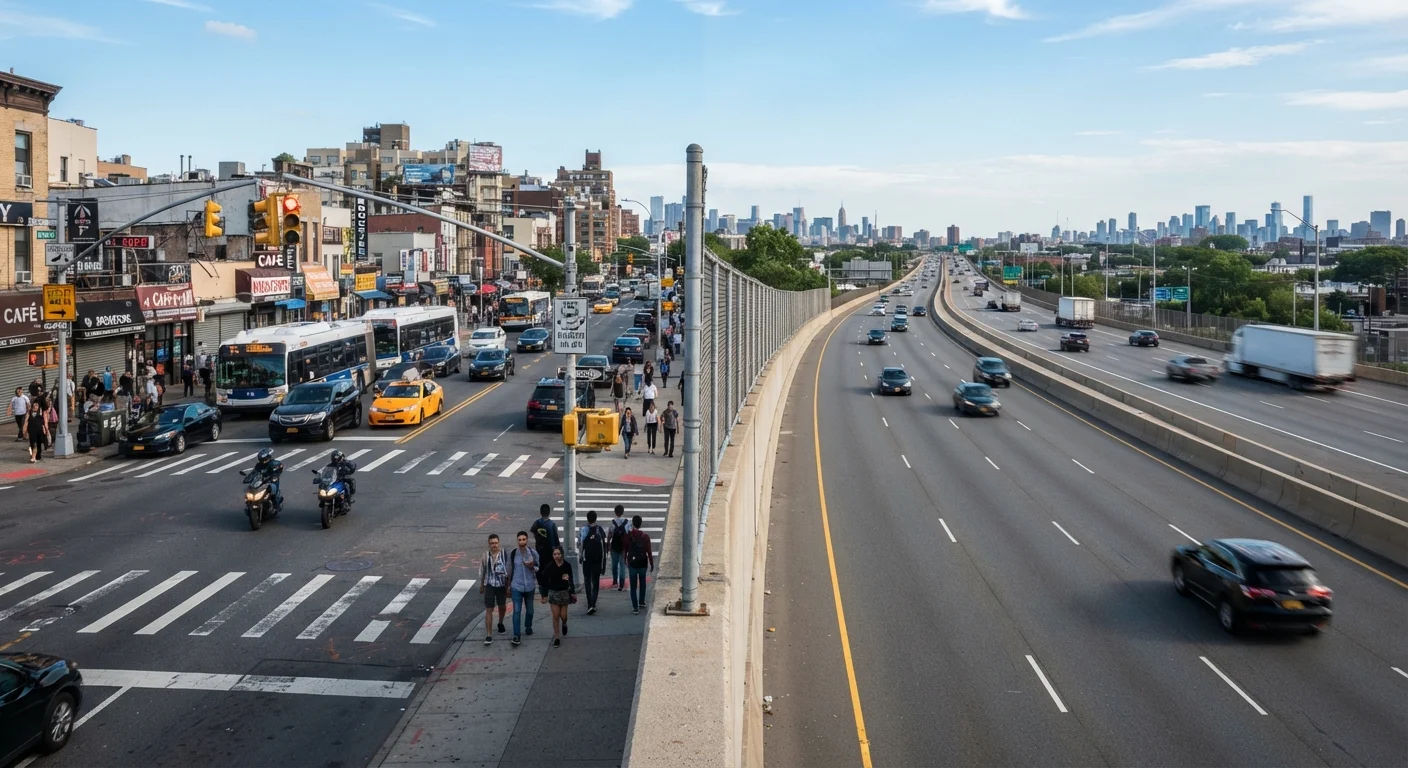
Key Takeaways
- Urban driving demands constant short-range awareness; motorway driving demands long-range planning and sustained focus.
- Switching between environments requires a deliberate mental reset, not just a change in speed.
- Following distance, mirror usage, and lane discipline all need to be recalibrated when you transition between road types.
- Fatigue is a far greater risk on motorways; urban roads present higher risk of low-speed collisions and pedestrian incidents.
- Both environments reward the same core habit: anticipating what happens next before it does.
Option A
Urban Roads
The high-stimulus, low-speed challenge.
Best for: Drivers navigating dense traffic, frequent stops, pedestrians, cyclists, and unpredictable intersections in city and suburban environments.
Option B
Motorways (Interstates & Highways)
The high-speed, sustained-focus environment.
Best for: Drivers covering long distances at sustained speeds with fewer interruptions but higher consequences for lapses in attention.
If you drive mostly in city centers or dense suburbs
Urban Roads focus
Sharpening short-range hazard detection, intersection awareness, and pedestrian anticipation will have the biggest impact on your daily safety.
If you regularly commute long distances or take road trips
Motorways (Interstates & Highways) focus
Building fatigue management habits, proper lane discipline, and high-speed merge confidence will serve you best on long stretches.
If you switch between both environments regularly
Both — with a deliberate transition mindset
Practicing a conscious mental reset each time you move from city to highway — and back — is the most effective skill you can develop.
The Core Difference: Attention Rhythm
On urban roads, your attention is reactive and rapid. Signals change, pedestrians step off curbs, cyclists appear from blind spots, and parked cars open doors without warning. You're processing a high volume of short-range information in quick bursts — constantly scanning within a 50–100 foot radius.
On a motorway, that rhythm shifts entirely. Hazards develop at a distance, and your eyes need to be working 10–15 seconds ahead — which at 65 mph means roughly 950 feet down the road. The danger isn't the volume of stimuli; it's the narrowing of your attention over time. Highway monotony can cause highway hypnosis, a state where your eyes are open but your brain is no longer actively processing what it sees.
Understanding this difference is the first step toward adapting. It's not just about speed — it's about where and how often you're directing your focus. For more on how anticipatory thinking shapes safety, see our guide to defensive driving principles.
| Criterion | Urban Roads | Motorways |
|---|---|---|
| Typical speed range | 15–45 mph | 55–75 mph |
| Primary attention zone | Short-range (50–150 ft) | Long-range (900+ ft ahead) |
| Main collision type | Rear-end, pedestrian, side-swipe | High-speed rear-end, lane change |
| Recommended following distance | 2+ seconds | 3–4+ seconds |
| Fatigue risk | Lower (frequent stimuli) | Higher (monotony over time) |
| Lane change frequency | Frequent and fluid | Deliberate, keep-right principle |
| Braking style | Frequent, moderate stops | Smooth, graduated, rare |
| Key skill to develop | Short-range hazard detection | Sustained long-range anticipation |
Following Distance, Speed, and Braking
The two-second following rule is a starting point in the city — but in practice, stop-and-go traffic compresses gaps constantly. Urban drivers learn to brake frequently and lightly, which actually keeps brake components in good working order through regular use. The challenge is avoiding tailgating when traffic bunches, which is among the most common causes of rear-end collisions in city driving.
On motorways, the guidance expands to a minimum three-to-four-second gap at highway speeds, and more in poor conditions. At 70 mph, your vehicle travels about 103 feet per second. A lapse of even one second in reaction time means your car has moved a third of a football field before you've begun to brake.
~40%
Of US crashes involve rear-end collisions
According to NHTSA data, rear-end crashes are among the most common collision types, with following distance a significant contributing factor.
103 ft/sec
Distance traveled at 70 mph per second
At highway speeds, even a one-second reaction delay translates to roughly a third of a football field before braking begins.
1 in 5
Fatal crashes involve drowsy driving
The AAA Foundation for Traffic Safety estimates drowsy driving plays a role in a significant share of fatal crashes, with highway driving a high-risk context.
Braking on highways should be smooth and graduated. Sudden hard braking at speed is far more likely to trigger a multi-vehicle chain reaction than the same action in city traffic moving at 25 mph. If wet conditions are a factor, your approach needs to change further — longer distances, gentler inputs.
Merging, Lane Use, and Positioning
Urban lane discipline tends to be fluid — drivers shift lanes frequently to navigate around buses, delivery vehicles, and turning traffic. This is normal, but it requires constant mirror-and-shoulder checking. The key habit to build: signal early, check twice, move once.
Motorway merging is where many drivers feel most anxious, and for good reason — it requires matching speed to fast-moving traffic, reading gaps accurately, and committing to a decision. The technique is straightforward in principle: use the full length of the on-ramp to accelerate to highway speed before merging, not after. Entering slow forces faster traffic to brake for you, which creates genuine risk.
Keep Right: Know Your State's Law
Many US states have 'keep right except to pass' laws that apply to multi-lane highways, though specific rules vary by state. Some require drivers to move right if a vehicle behind is attempting to pass; others apply only above certain speeds. Check your state's DMV guidelines to know exactly what applies where you drive most.
Once on the highway, keep right except to pass — a legal requirement in many US states and a courtesy that keeps traffic flowing predictably. Cruising in the left lane is one of the most frustrating and disruptive behaviors on motorways, even when it feels harmless. If you're planning a longer drive, good route planning can help you anticipate when you'll need to switch between road types and prepare accordingly.
Fatigue and Mental Load
Urban driving is mentally tiring in short, intense bursts. Most drivers naturally take breaks — red lights, parking, stop-and-go — that punctuate the stress without them realizing it. The high cognitive load keeps drivers alert even if it's exhausting.
Motorway driving is the opposite: low cognitive load over a long period. This is more dangerous than it sounds. Fatigue builds gradually without the stimulus spikes that would normally alert you. Many drivers feel fine right up until they're not. Practical countermeasures include stopping every 90–120 minutes on long drives, keeping the cabin temperature cooler than comfortable, and avoiding heavy meals before a long highway stretch.
Your vehicle's condition matters differently in each context too. City driving with frequent stops is hard on brakes and transmissions; highway driving is harder on tires and engine cooling. Staying current on routine car maintenance pays dividends in both environments, just for different reasons.