

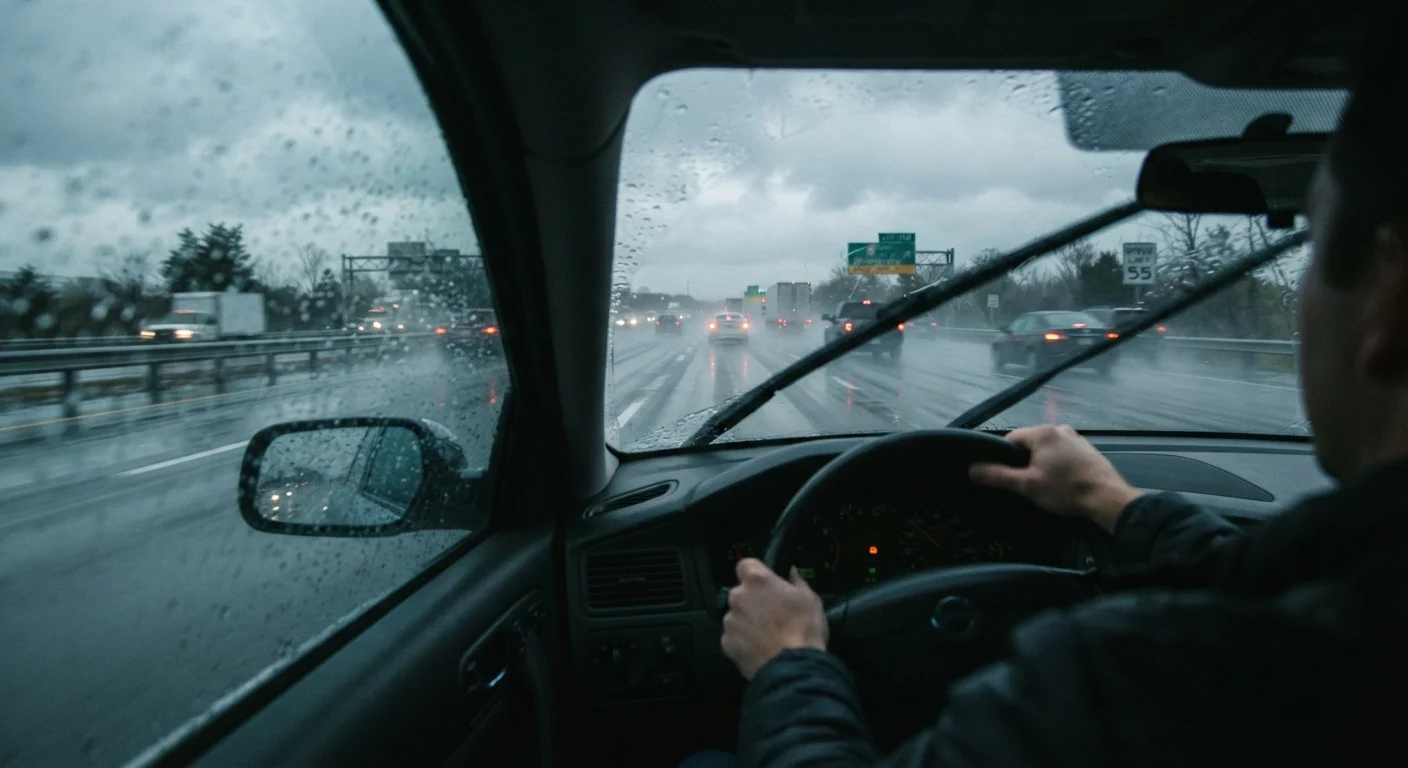
Key Takeaways
- Slow down and increase following distance — wet roads significantly extend stopping distances.
- Turn on headlights in rain, even during daylight, to stay visible to other drivers.
- Hydroplaning can occur at relatively low speeds on standing water — ease off the gas gently if it happens.
- Avoid sudden braking or sharp steering inputs, which are especially risky on wet surfaces.
- Your tires and wipers need to be in good condition before bad weather arrives.
What you will need
Why Rain Changes Everything on the Road
Rain doesn't just reduce visibility — it fundamentally changes how your vehicle interacts with the road surface. Water acts as a lubricant between your tires and the asphalt, reducing the grip (traction) your car relies on to accelerate, steer, and stop. On a wet road, stopping distances can be roughly double what they'd be on dry pavement at the same speed.
Beyond traction, heavy rain scatters light from headlights and streetlamps, makes lane markings harder to read, and can generate enough spray from other vehicles to temporarily blind you. The good news: these risks are manageable with the right habits. Confidence behind the wheel in rain isn't about being fearless — it's about understanding what's changed and responding deliberately.
For a broader look at keeping your car ready for any season, see our seasonal car maintenance checklist. And if you want to build the overall mindset that underpins safe driving, defensive driving principles are worth understanding before you hit challenging conditions.
What you will need
Step-by-Step: How to Drive Safely in Heavy Rain
Follow these steps in order — some apply before you leave, others once you're on the road. Each one directly reduces your risk in wet conditions.
Check your vehicle before you drive
Rain-readiness starts before you turn the key. Quickly confirm your wipers are working properly, your headlights and taillights are functional, and your tires look fully inflated. If you haven't checked tread depth recently, a simple method is the quarter test: insert a US quarter into a tread groove with Washington's head facing down — if you can see the top of his head, tread is getting low. See routine car maintenance basics for a fuller walkthrough.
Turn on your headlights
In most US states, law requires headlights when wipers are in use — but beyond legality, it's simply smart. Headlights in rain help other drivers see you, not just help you see the road. Use low beams; high beams reflect off rain and spray, actually reducing visibility in heavy downpours.
Reduce your speed
Posted speed limits are set for ideal conditions. In heavy rain, slowing down by 10–15 mph below the limit is a reasonable starting point, depending on visibility and standing water. The slower you go, the more time you have to react — and the more effectively your tires can channel water away from the contact patch.
Increase your following distance
On dry roads, a three-second following gap is the standard minimum. On wet roads, double it to at least six seconds. To measure: pick a fixed point (a sign, overpass) and count how long after the car ahead passes it before you do. This buffer gives you the stopping distance you've lost to reduced traction.
Steer and brake smoothly
Wet roads punish abrupt inputs. Brake gently and progressively rather than jabbing the pedal. Steer with measured, deliberate movements. If your vehicle has ABS (anti-lock braking system), apply firm, sustained pressure — don't pump the brakes. ABS prevents wheel lock-up automatically, helping you maintain steering control during hard stops.
Avoid standing water where possible
Puddles and flooded sections are unpredictable. Even a few inches of water can cause hydroplaning or — if deep enough — stall your engine and damage mechanical components. If you can't judge the depth, don't risk it. Find an alternate route. If you do drive through a shallow puddle, lightly apply the brakes afterward to dry out the rotors and restore braking feel.
Defogging Your Windshield Quickly
Heavy rain often causes your windshield to fog up from the inside due to humidity. Turn on the air conditioning with fresh-air mode (not recirculation) and direct vents at the windshield — AC systems dehumidify the air and clear fog faster than heat alone. Most modern vehicles have a dedicated defrost button that automates this.
What to Do If You Lose Control
Even prepared drivers can encounter hydroplaning — a situation where your tires ride on top of a film of water and lose contact with the road. You'll notice it as a sudden lightness in the steering or a feeling that the car is floating.
Never Brake Hard During Hydroplaning
Hard braking while hydroplaning can cause you to spin or skid in an uncontrolled direction. The instinct to stomp on the brakes is strong but counterproductive. Lift off the accelerator smoothly, hold the wheel steady, and let the car slow on its own until traction returns. Only then apply brakes gradually if needed.
In most vehicles, the right response is to ease gently off the accelerator (don't brake hard), keep the steering wheel pointed in the direction you want to go, and wait for traction to return. Once you feel grip restored, you can resume normal control. Jerking the wheel or stamping on the brakes can cause a spin.
Following distance matters here too. Tailgating is always risky, but on wet roads it's especially dangerous — our article on why tailgating is more dangerous than most drivers realise explains the physics clearly. Similarly, if you regularly drive both city streets and highways, adapting your driving style for each environment will help you apply these rain-driving habits in the right context.
Don't Pull Over on a Highway Shoulder in Heavy Rain
Stopping on a highway shoulder in low-visibility rain puts you in serious danger of being struck from behind. If you must stop, exit at the nearest off-ramp and find a well-lit, off-road location. If stopping on a shoulder is unavoidable, turn on your hazard lights and stay in the vehicle with your seatbelt fastened.