
Vertical Storage vs. Horizontal Storage: Choosing the Right Approach for Each Room

Key Takeaways
- Vertical storage frees up floor space by using wall height, making it ideal for small rooms.
- Horizontal storage keeps frequently used items within easy reach and suits wider, open layouts.
- Most rooms benefit from a deliberate combination of both approaches rather than one alone.
- Ceiling height, room function, and who uses the space all influence which method works better.
- Safety anchoring is essential for any tall freestanding unit, especially in homes with children.
Option A
Vertical Storage
The space-multiplying, wall-oriented approach.
Best for: Rooms with limited floor space where height can be used to hold more without crowding the layout.
Option B
Horizontal Storage
The grounded, accessible, furniture-integrated solution.
Best for: Spaces where ease of access, stability, and a lower visual profile matter most.
If you have limited floor space and high ceilings
Vertical Storage
Wall-mounted shelving and tall units claim unused airspace without shrinking your walkable area. This is especially effective in small bedrooms, narrow entryways, and compact home offices.
If you need frequent, easy access to stored items
Horizontal Storage
Low dressers, storage ottomans, and under-bed drawers put everyday items within comfortable reach — no stepstool required. Ideal for families, older adults, and children's rooms.
If you're organizing a kitchen or pantry
Vertical Storage
Stacked shelves and door-mounted organizers maximize pantry depth and wall surface, keeping more visible and reducing forgotten items at the back of deep cabinets.
If you want storage that also serves as furniture
Horizontal Storage
Benches with lift-up lids, storage coffee tables, and credenzas pull double duty — holding belongings while functioning as usable surfaces in living rooms and entryways.
If you're organizing a child's bedroom or playroom
Horizontal Storage
Low bins, cube shelving at floor level, and under-bed drawers keep toys and books accessible to kids independently, encouraging tidying habits without adult help.
What Sets These Two Approaches Apart
Vertical storage uses wall height — shelving units, pegboards, stacked cabinets, and wall-mounted racks that draw the eye upward and claim space that would otherwise go unused. Horizontal storage runs along the floor plane — dressers, storage benches, low cabinets, ottomans, and under-bed solutions that spread outward rather than upward.
Neither is universally superior. Each suits particular rooms, habits, and household compositions. The practical question isn't which is better in the abstract — it's which serves your specific space and the people using it.
| Criterion | Vertical Storage | Horizontal Storage |
|---|---|---|
| Space used | Wall height and airspace | Floor area and surface width |
| Accessibility | May require reaching or stepstool | Items within comfortable reach |
| Best room types | Kitchen, office, small bedrooms | Living room, children's rooms, entryway |
| Visual impact | Draws eye upward, can feel dramatic | Grounds the room, lower visual weight |
| Safety considerations | Must be wall-anchored to studs | Low tip risk; stable base |
| Doubles as furniture | Rarely | Often (bench, ottoman, credenza) |
Room-by-Room Breakdown: Where Each Approach Excels
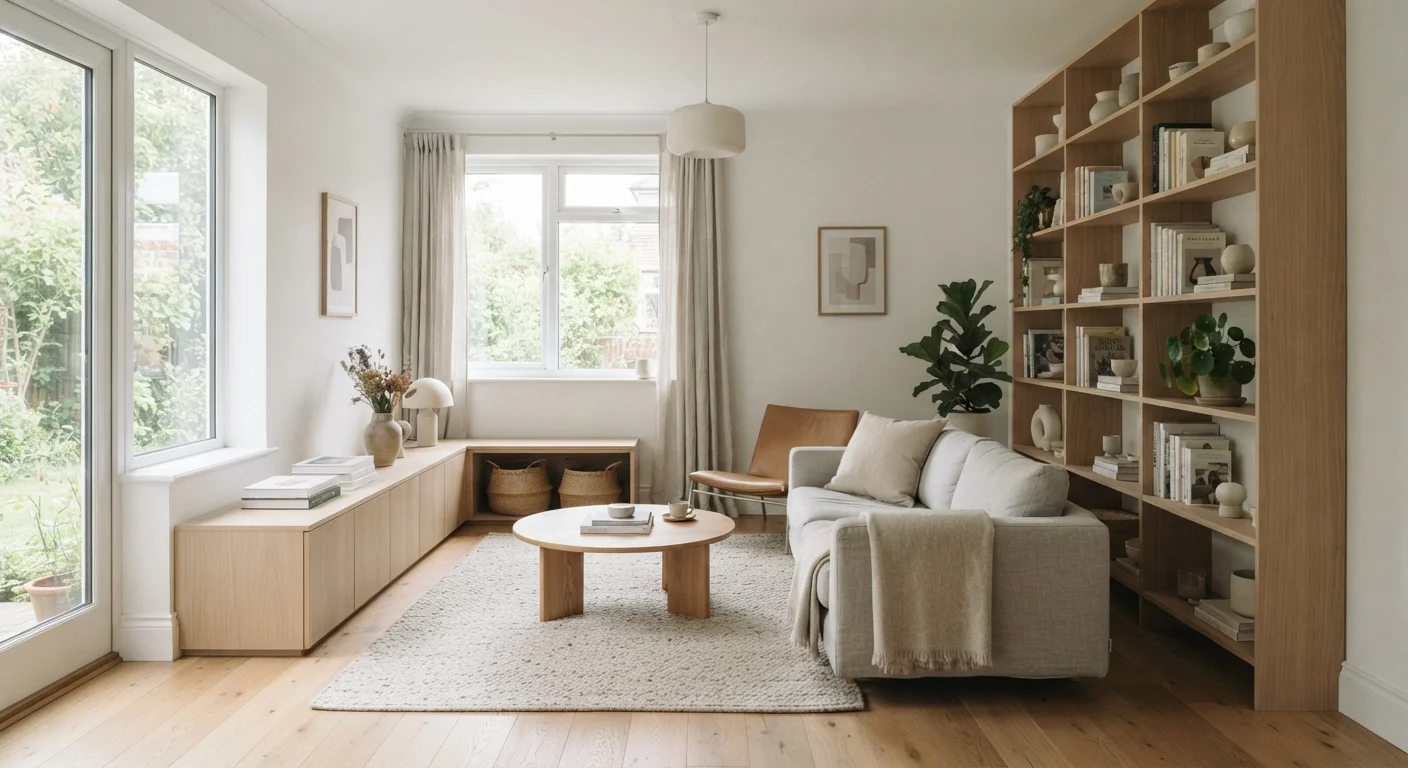
Living room: Horizontal storage — a media console, storage ottoman, or low credenza — keeps surfaces functional and the room visually grounded. A tall bookcase on a focal wall can complement this without overwhelming the space. Balance is the goal.
Kitchen and pantry: Vertical storage wins here. Wall-mounted magnetic strips, stacked open shelving, and cabinet risers allow more to be stored visibly. Deep, low cabinets often hide items and encourage waste.
Bedroom: A mix works well. Tall wardrobes and over-door organizers handle clothing volume; low nightstands and under-bed drawers keep daily essentials accessible. If ceiling height is generous, consider a lofted wardrobe with a pull-out step for upper storage.
Home office: Vertical shelving above a desk dramatically expands usable space without a larger desk footprint. Reference materials and rarely used files go high; active supplies stay low and within arm's reach.
Entryway: Wall hooks, pegboards, and narrow vertical shelving suit the typically slim footprint of an entryway. A low bench with storage beneath covers seating and horizontal storage simultaneously.
~68%
US homes report storage as a top pain point
According to a National Association of Home Builders survey, storage ranks consistently among homeowners' most-wanted features when renovating or buying.
30–40%
Additional capacity gained with vertical shelving
Home organization specialists commonly estimate that using wall height above 5 feet can increase usable storage volume by roughly this range in a standard room.
Practical Considerations Before You Commit
Ceiling height: Vertical storage only works proportionally if you have height to spare. In rooms with standard 8-foot ceilings, units taller than six feet can feel imposing. In rooms with 9- or 10-foot ceilings, tall shelving looks intentional and balanced.
Who's using the space: Young children, older adults, or anyone with mobility considerations benefit most from horizontal storage, where items don't require stretching or steptools. Vertical systems work well when the primary user is an able-bodied adult comfortable with occasional reaching.
Wall strength and anchoring: Freestanding vertical units must be wall-anchored to studs to prevent tipping — this is a non-negotiable safety step in any home. Wall-mounted shelves need appropriate hardware for the wall type (drywall anchors, masonry bolts, or stud screws depending on your construction). If you're unsure about wall composition or load capacity, consult a professional before mounting heavy units.
Anchoring Tall Units Is Non-Negotiable
Any freestanding shelving unit taller than four feet should be secured to wall studs with an anti-tip strap or L-bracket — regardless of how stable it feels when empty. Loaded shelves shift the center of gravity significantly. This is especially critical in homes with children or pets. When in doubt about your wall type or stud location, a hardware professional or handyman can help you anchor units safely.
Before beginning your storage overhaul, it helps to sort through what you actually need to store. See our guide to decluttering a room from start to finish before deciding on your storage approach — it's easier to plan when you know the exact volume and type of items you're keeping.
Making Both Work Together
The most functional rooms don't commit exclusively to one approach — they layer both deliberately. A common starting framework: use horizontal storage for your most-reached items (things you access daily), and vertical storage for less frequent items or display-worthy collections.
Visual balance matters too. A room full of tall vertical units can feel cave-like or overwhelming; one with only low horizontal storage may feel cluttered at eye level. Alternating between the two, or pairing a tall unit with open horizontal space beside it, creates breathing room.
For small homes especially, thinking in three dimensions — floor, mid-height, and near-ceiling — is the most efficient way to maximize capacity without adding square footage. Our guide to organising a small home without sacrificing comfort covers this layered approach in depth. You may also find hidden storage spots most households overlook useful for finding capacity you didn't know you had.
When in doubt, audit your space seasonally — what you store and how you access it shifts throughout the year. Our seasonal room-by-room audit checklist is a practical starting point for that reset.