

Key Takeaways
- Map how you actually use your yard before spending on furniture or landscaping.
- Dividing your backyard into defined zones — dining, relaxing, growing — prevents wasted space.
- Shade is the single upgrade most likely to increase how often you use your outdoor space.
- Mixing perennials and low-maintenance annuals gives seasonal color without constant replanting.
- Small seasonal adjustments can extend outdoor enjoyment well beyond peak summer months.
Start With How You Actually Use Outdoor Space
Most backyard redesigns stall because homeowners start shopping before they've answered a simpler question: what do we actually do outside? A household that grills on weekends and lets kids play has completely different needs from one that wants a quiet reading nook or a serious kitchen garden.
Before moving a single piece of furniture, spend a week observing. Note where you naturally drift when you step outside, what time of day you're out there, and what stops you from going out more often — heat, no seating, nowhere to set a drink. These friction points are your real design brief.
90%
Americans spending time outdoors at home
Survey data from the American Institute of Landscape Architects has consistently found that most homeowners want to use outdoor space more than they currently do.
2–3x
Increased outdoor use with added shade
Design research and practitioner experience suggest that effective shade can multiply the hours a patio or seating area is used during warm months.
It also helps to think about who shares the space. Pets, children, elderly relatives, or guests with mobility considerations all shape how paths, surfaces, and planting beds should be arranged. Jotting down a simple list of users and their needs takes ten minutes and prevents costly re-dos.
Define Your Zones Before You Buy Anything
Zoning is the backbone of any backyard that gets used. Think of your yard the way you'd think of rooms in a house — each area has a purpose, and the layout should make moving between them feel natural.
Common zones for residential backyards include:
- Dining or entertaining area — a level surface near the house with room for a table and chairs
- Relaxation zone — lounge chairs, a hammock, or a bench positioned to catch shade or a view
- Growing area — raised beds, in-ground beds, or containers for vegetables or flowers
- Play or open lawn — unobstructed grass or a safe surface for children or pets
- Storage or utility — a shed corner, compost bin, or tool area screened from sight
You don't need all five. A small yard might combine dining and relaxing, or skip lawn entirely. The goal is intentionality — every square foot doing something useful. If hidden storage is on your mind beyond the yard itself, see our guide to overlooked storage spots for ideas that carry indoors too.
Use Rope or Hose to Test Zone Layouts
Before committing to furniture placement or bed edges, lay garden hose or rope on the ground to outline each zone. Walk through the layout as if you were using it — sitting down to eat, moving to a lounge chair, tending a garden bed. This simple test reveals awkward traffic flow and undersized areas before anything is purchased or installed.
Solving Shade: Practical Options for Every Budget
Shade is the most underestimated factor in outdoor usability. A sun-baked patio empties out by mid-morning in summer; the same space with reliable shade becomes a true outdoor room.
Options span a wide range of permanence and cost:
- Shade sails and market umbrellas — portable, affordable, and easy to reposition as the sun shifts seasonally
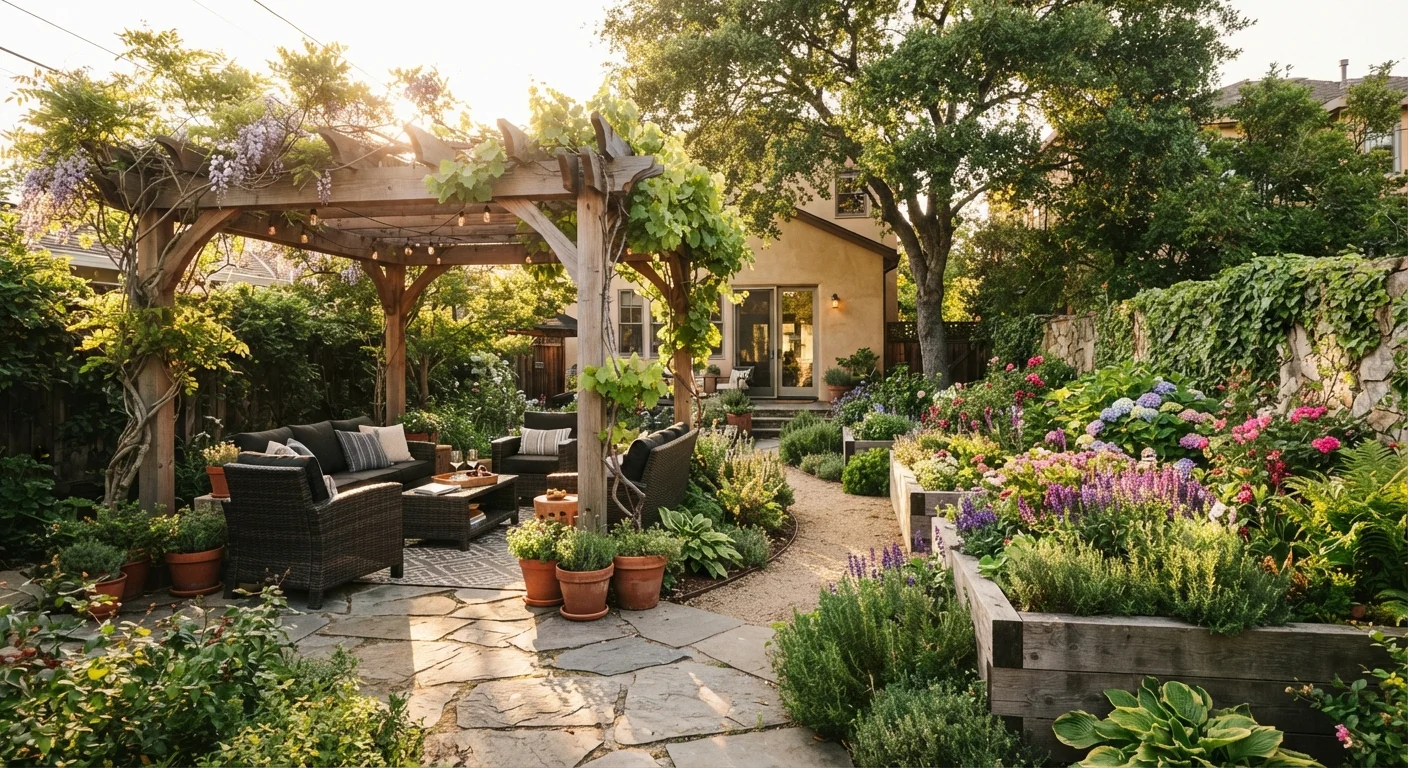
- Pergolas — a fixed overhead structure that can support climbing plants like wisteria or hops, adding shade that deepens over years; note that structural pergolas may require a permit depending on your municipality, so check local building codes before construction
- Trees — the longest-horizon investment, but deciduous trees provide summer shade and let winter sun through, a genuine seasonal advantage
- Shade cloth panels — inexpensive fabric stretched over a simple frame, effective for garden beds or work areas
Orient your main seating area toward the north or east side of your yard if possible — these positions receive shade in the afternoon when summer heat peaks.
Most homeowners use outdoor seating in the late afternoon and evening; positioning away from the western sun significantly reduces heat buildup during those hours.
Before installing any permanent overhead structure like a pergola or shade sail post, call 811 (the national dig-safe number in the US) to have underground utilities marked — it's free and required by law before digging.
Striking a buried utility line is a serious safety hazard and a common mistake in backyard DIY projects.
Position shade where you eat and relax first — those are the spots where heat most directly discourages use. A growing zone can tolerate more direct sun, and many vegetables actively need it.
Adding Plants Without Overwhelming Yourself
Plants are what transform a hard-surfaced backyard into a place people want to linger — but many homeowners plant too much, too fast, and end up with maintenance they can't sustain.
A practical starting approach: anchor each zone with one or two reliable perennials, then fill gaps with easy annuals that give seasonal color without demanding a replanting budget year after year. Our guide to annuals vs. perennials covers this trade-off in detail so you can plan a planting scheme that suits your time and budget.
If you're adding a dedicated growing bed, starting a vegetable garden from scratch is a practical entry point — it covers site selection, soil basics, and realistic expectations for first-season yields.
One often-overlooked step: mulch your beds from the start. A 2–3 inch layer suppresses weeds, retains moisture, and reduces how often you need to water. See what mulch actually does for your garden for a grounded explanation of why it matters.
Don't Plant Near Buried Utilities or Foundations
Tree roots and large shrubs can damage underground pipes and crack foundations over time. Before adding any woody plants, check your property's utility maps and leave generous clearance from the house, septic systems, and buried lines. When in doubt, choose smaller ornamental plants or raise beds away from structures.
Making the Space Work Year-Round
A backyard designed only for July gets used only in July. Small seasonal adjustments dramatically extend the window of enjoyment.
In spring and fall, a simple fire pit or chiminea can add an hour or two of comfortable use on cool evenings — no permanent installation required. Outdoor-rated string lights extend usable hours into evening without a major electrical project (battery-powered options require no wiring). In winter, even a covered bench with weatherproof cushions gives somewhere to step out for fresh air, which matters more than most people expect.
On the garden side, wrapping up properly each autumn protects your investment. Our seasonal yard wrap-up checklist walks through what to cut back, what to protect, and how to leave soil in good shape before the first frost.
If you've been composting kitchen and yard waste, autumn is an ideal time to work finished compost into beds before they go dormant — a simple habit that pays off in richer soil the following spring.
“The best garden is the one you actually maintain. Start with less than you think you need, get comfortable with it, and expand from there.”
— Garden Designer's Practitioner Maxim, Widely shared principle in residential landscape design practice
Common Mistakes and How to Sidestep Them
Even well-intentioned backyard projects can stall or disappoint. Here are the pitfalls that come up most often, and straightforward ways to avoid them:
- Furniture that's too small for the space
- Outdoor seating scales differently than indoor furniture. A bistro table that looks cozy indoors can feel lost in an open yard. Measure your intended area and use painter's tape to outline footprints before purchasing.
- Paving right up to the house without drainage
- Hard surfaces need to slope away from the foundation — typically a 1% to 2% grade — to direct rainwater away from the structure. If you're paving a significant area, consult a landscaper or contractor about grading and drainage to avoid water damage over time.
- Planting too close to structures or fences
- Shrubs and trees planted near walls or fences quickly outgrow the space, causing maintenance headaches and potential damage. Always check mature spread dimensions before planting.
- Skipping lighting entirely
- Outdoor lighting is one of the simplest ways to make a space feel finished and extend its usable hours. Solar path lights and plug-in string lights require no electrician and transform a yard after dark.
- Over-designing for aesthetics, under-designing for use
- The most photogenic backyard isn't necessarily the one you'll spend time in. Keep coming back to the question: does this decision make the space easier and more enjoyable to use, or just better looking in photos?
Permits May Apply to Structural Projects
Permanent structures — including pergolas, decks, retaining walls above a certain height, and outdoor electrical work — commonly require a building permit in US municipalities. Requirements vary significantly by location and structure size. Always check with your local building or planning department before starting construction; unpermitted work can create complications when selling your home.