

Key Takeaways
- Species-appropriate enclosure size and setup is the single most important preparation you can make.
- Locate an exotic or small-animal vet before your pet arrives — not all general practices see them.
- Diet staples should be stocked in advance; sudden food changes can upset a small pet's digestion.
- Many common household items and plants are toxic to small animals — a safety audit is essential.
- Social needs vary widely by species; some thrive in pairs while others prefer to live alone.
Summary
22 items · 45–90 minutes
Why Preparation Matters More for Small Pets
Small and non-traditional pets — rabbits, guinea pigs, hamsters, gerbils, rats, chinchillas, and similar animals — are often assumed to be low-maintenance starter pets. In reality, their care requirements are specific, their stress responses are acute, and their health can deteriorate quickly when something is off. Unlike dogs or cats, they rarely telegraph discomfort in obvious ways, which means getting the environment right before they arrive is far more important than improvising on the fly.
If you're also considering a dog or cat, our guides on preparing for your first dog and bringing a cat home for the first time cover parallel ground for those species. This checklist focuses specifically on the unique needs of smaller companions.
Work through the groups below in order — enclosure first, then diet, then vet contacts, and finally home safety. Ticking everything off before pickup day gives your new pet the best possible start.
Species care guide
A reputable, species-specific care reference (from a veterinary organization or animal welfare charity) to verify enclosure size, diet, and behavioral needs.
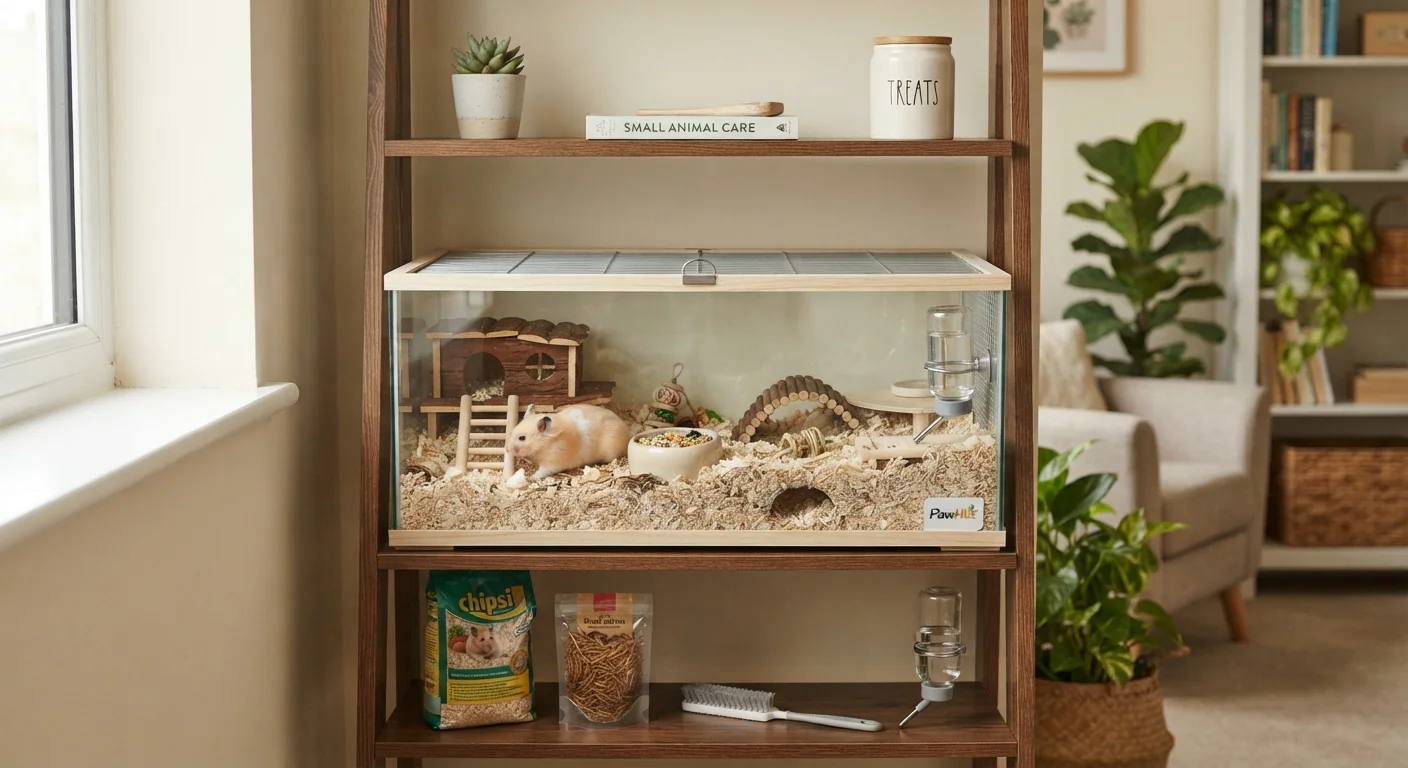
Appropriately sized enclosure
The primary habitat for your pet — must meet or exceed minimum space guidelines for your specific species.
Paper-based bedding
Safe, absorbent substrate for lining the enclosure floor; avoid cedar or pine shavings.
Sipper bottle or water bowl
Clean, species-appropriate hydration source to be installed and tested before arrival.
Hideaway or shelter
An enclosed space inside the enclosure where your pet can retreat to feel safe and reduce stress.
Enrichment items (wheels, tunnels, chews)
Species-appropriate toys and activities to support physical and mental well-being.
Pet-safe cleaning solution
A non-toxic cleaner for regular enclosure maintenance that won't harm your animal.
The Preparation Checklist
Use this checklist as a room-by-room, category-by-category audit. Items marked must are non-negotiable for basic welfare; should items are strongly recommended; nice to have items will meaningfully improve quality of life but can be added gradually.
Enclosure Setup
Food and Water Supplies
Veterinary Contacts
Home Safety Audit
Find Your Vet Before Day One
Many general veterinary practices do not treat rabbits, guinea pigs, chinchillas, or other small mammals. If you wait until your pet is unwell to search for a vet, you may lose critical time. Search specifically for an exotic animal vet or small mammal specialist in your area and confirm they see your species before your pet arrives home.
A Note on Social Needs and Species Research
One of the most commonly overlooked preparation steps is understanding whether your chosen species is social or solitary. Guinea pigs, for example, are social animals and generally do best in same-sex pairs or small groups. Syrian hamsters, by contrast, are territorial and must be housed alone. Getting this wrong doesn't just cause stress — it can cause injury or illness.
Our article on the social lives of small pets explores what behavioral science tells us about companionship needs across species. It's worth reading before you decide whether to bring home one animal or two.
Once you've worked through this checklist, revisit our companion piece on what to prepare for the first day for guidance on the actual arrival routine, handling basics, and helping your new pet settle in.
Avoid Cedar and Pine Bedding
Cedar and pine wood shavings are widely sold but contain aromatic compounds (phenols) that can cause respiratory irritation and liver stress in small mammals. Paper-based bedding, aspen shavings, or other tested alternatives are safer choices. If you're unsure what's appropriate for your species, ask your vet.
Diet Changes Should Be Gradual
Switching food abruptly — even to a higher-quality diet — can cause digestive upset, particularly in small herbivores like rabbits and guinea pigs whose gut flora is sensitive. Transition to any new food slowly over one to two weeks, mixing the old and new food together. If your pet stops eating or shows signs of digestive distress, contact your vet promptly.
This article provides general educational information about small pet care. It is not a substitute for guidance from a qualified veterinarian who knows your specific animal. If you have concerns about your pet's health or behavior, consult a vet experienced with your species.