

Key Takeaways
- Check tyre pressure monthly and before any long trip — always when tyres are cold.
- The legal minimum tread depth in most US states is 2/32", but 4/32" is a safer practical threshold.
- Uneven tread wear is often a sign of misalignment or suspension issues, not just tyre age.
- Don't rely solely on your TPMS light — it only alerts you after pressure drops significantly.
- Include the spare tyre in every inspection routine; a flat spare is useless in an emergency.
Summary
18 items · 15–30 minutes
Why Tyre Checks Matter More Than Most Drivers Realise
Tyres are the only part of your vehicle in contact with the road, yet routine tyre maintenance is one of the most commonly skipped tasks in everyday car ownership. Underinflated tyres reduce fuel economy, wear faster, and compromise handling. Worn tread extends stopping distances — especially on wet roads. Neither problem announces itself dramatically, which is exactly why they catch drivers off guard.
Your vehicle may have a TPMS light on the dashboard, but don't let it be your only safety net. TPMS and other warning lights typically activate only after pressure has dropped 25% or more below the recommended level — by which point you've already been driving on an underinflated tyre. A manual check with a gauge gives you accurate data before it becomes a problem.
This checklist covers every tyre inspection point worth doing regularly, including several that even experienced drivers tend to overlook. Work through it once a month and before any significant road trip.
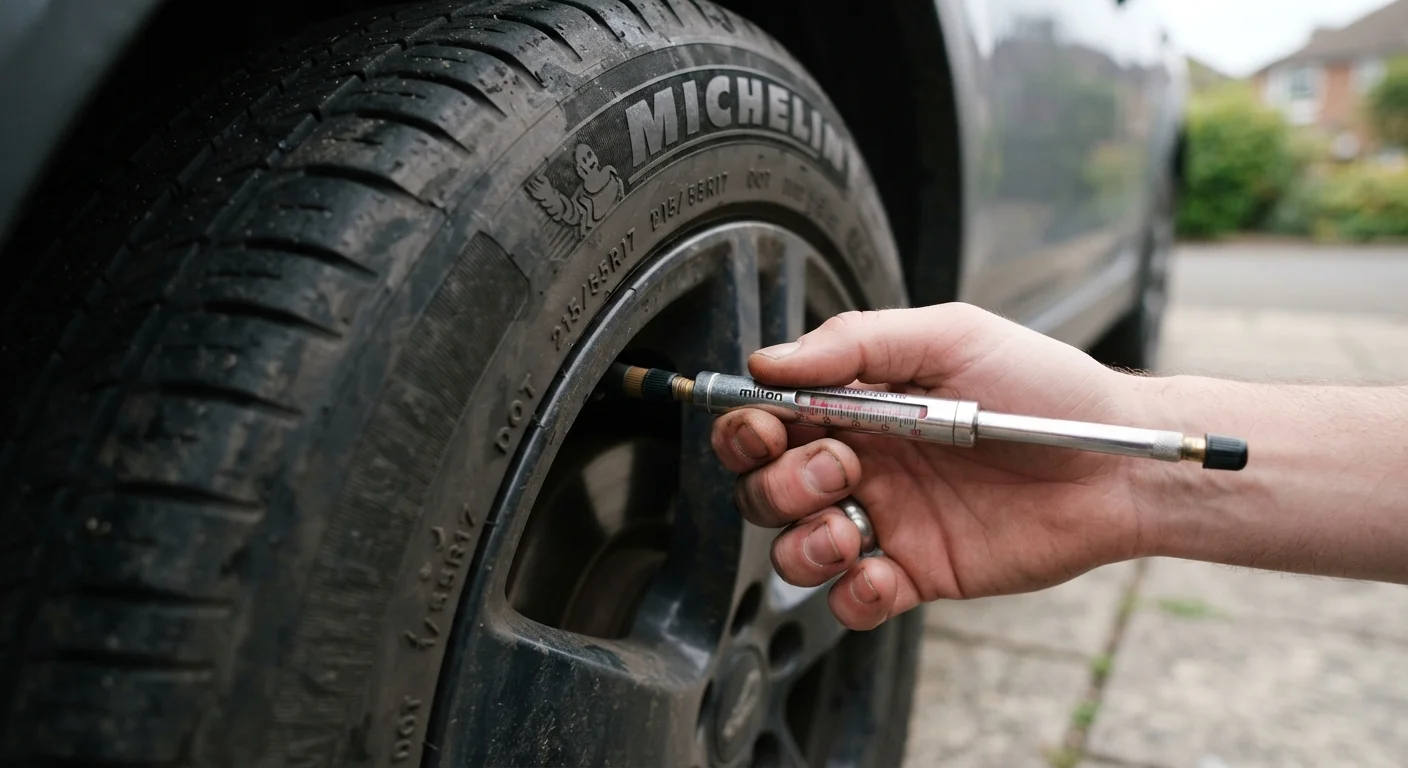
Digital or dial tyre pressure gauge
Measures tyre inflation accurately — more reliable than the gauges found on petrol station air hoses.
Tread depth gauge
Gives a precise measurement of remaining tread depth across the tyre width.
Portable tyre inflator
Allows you to add air at home without driving to a petrol station, useful for cold-tyre checks.
Torch or work light
Helps you inspect inner sidewalls and dark tread grooves for damage or embedded objects.
Owner's manual
Contains the manufacturer's recommended tyre pressures and spare tyre specifications for your vehicle.
The Complete Tyre Inspection Checklist
Use this checklist on all four tyres plus your spare. A full inspection on a vehicle you know well takes 15 to 30 minutes. If you find anything outside normal limits, address it before driving further — or consult a qualified tyre technician.
Tyre Pressure
Tread Depth
Visual Inspection
Spare Tyre and Documentation
A Bulge or Bubble Means Stop Driving
A bulge or bubble in a tyre sidewall indicates internal structural failure. Unlike a nail puncture, this cannot be repaired — the tyre must be replaced. Continuing to drive on a structurally compromised tyre risks a sudden blowout. If you spot one, switch to your spare and have the tyre replaced before driving further.
For a deeper look at what uneven wear patterns can reveal about your alignment and suspension, see our guide on reading tyre wear patterns.
Checks Most Drivers Skip — But Shouldn't
Beyond pressure and tread, a handful of less obvious checks are worth building into your routine.
The spare tyre
Most drivers discover their spare is flat or cracked at the worst possible moment. Pull it out periodically, check its pressure against the placard spec (often different from your main tyres), and inspect it for age-related cracking. Spare tyres — particularly compact "donut" spares — have a finite service life regardless of use.
Tyre age
Rubber degrades over time even when tread looks fine. Most tyre manufacturers recommend replacement after six years of use, regardless of appearance. You can find the manufacture date on the sidewall: look for a four-digit DOT code where the last four digits represent the week and year of manufacture (e.g., 2419 = 24th week of 2019).
Valve stems
Rubber valve stems crack over time and can cause slow leaks. Give each one a quick visual check for cracking or corrosion. When replacing tyres, have the valve stems replaced at the same time — it's a minor cost that prevents frustrating slow leaks.
Don't Trust the TPMS Light Alone
Your vehicle's tyre pressure monitoring system is a backup warning, not a substitute for regular checks. By the time the TPMS icon lights up, pressure has typically fallen 25% or more below the recommended level. A monthly manual check with a gauge catches pressure loss early — before it affects handling, fuel economy, or tyre lifespan.
Good tyre habits connect directly to broader car health. If you're building a maintenance routine from scratch, the guide on keeping a car roadworthy is a practical starting point. For long-term ownership, consistent tyre care is one of the factors covered in keeping a car running well for the long haul.