

Key Takeaways
- Coolant regulates engine temperature and prevents both overheating and freeze damage year-round.
- Low coolant is often symptomless until serious damage has already occurred inside the engine.
- Mixing incompatible coolant types can cause corrosion and reduce the fluid's protective lifespan.
- Most manufacturers recommend flushing and replacing coolant every two to five years.
- Checking coolant level is a simple visual task every driver can do safely at home.
What Coolant Actually Does
Engine coolant — also called antifreeze — is a mixture of water and a glycol-based compound that circulates through your engine and radiator to regulate temperature. Its job isn't just to prevent the water in your system from freezing on cold nights. It also raises the boiling point of the liquid so your engine can run safely in summer heat, and it contains corrosion inhibitors that protect metal components inside the cooling system from rust and scale buildup.
Without sufficient coolant at the right concentration, an engine can overheat within minutes of normal driving — and overheating is one of the fastest routes to serious, expensive damage, including warped cylinder heads and blown head gaskets. As part of broader fluid-check habits, coolant is one of the simplest things to monitor and one of the costliest to neglect.
~50%
Of roadside breakdowns linked to cooling system failures
Industry estimates from roadside assistance providers consistently identify cooling system issues as among the leading causes of non-collision breakdowns in the US.
2–5 years
Typical coolant flush interval recommended by manufacturers
Exact intervals vary by vehicle and coolant type; always confirm the schedule in your owner's manual rather than relying on general rules.
Common Coolant Mistakes and How to Avoid Them
Most coolant problems don't happen suddenly — they develop gradually from overlooked habits. The mistakes below are among the most common seen in everyday vehicle ownership, and each one is straightforward to prevent once you know what to watch for.
Only thinking about coolant in winter, assuming it's just antifreeze.
Why it happens: The word "antifreeze" is commonly used interchangeably with coolant, leading drivers to treat it as a cold-weather-only concern.
Topping off with plain water instead of the correct coolant mixture.
Why it happens: Water is convenient and feels like a harmless short-term fix in a pinch, especially when the car is far from a shop.
Mixing different types of coolant without checking compatibility.
Why it happens: Coolant comes in several formulations — OAT, HOAT, IAT, and others — and they are not universally interchangeable. Color coding varies by brand and is not standardized.
Ignoring the coolant reservoir and only checking the radiator directly.
Why it happens: Older vehicles had simpler systems, and the habit of checking the radiator cap directly carried forward even as reservoir-based systems became standard.
Skipping coolant checks because there are no visible warning lights.
Why it happens: Drivers reasonably assume the dashboard will alert them to a problem before damage occurs, but many vehicles only trigger a low-coolant light at a critically low level.
Never Open a Hot Radiator Cap
Coolant systems operate under high pressure. Opening the radiator cap or coolant reservoir cap on a warm or hot engine can cause scalding fluid to spray out forcefully, causing serious burns. Always wait until the engine is completely cool — typically at least 30 minutes after shutting off — before inspecting or topping off coolant.
Building Coolant Checks Into Your Routine
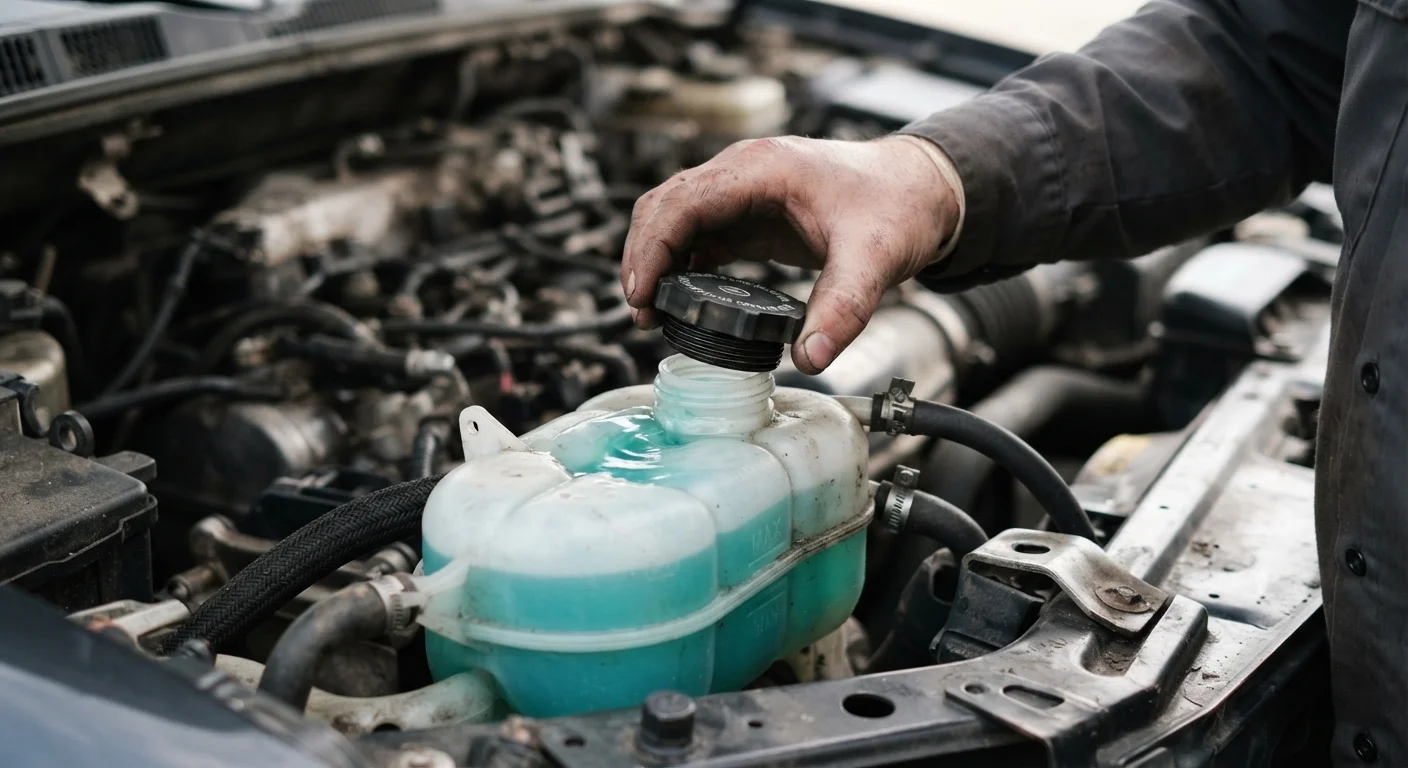
Checking your coolant level is genuinely simple. With the engine cold, locate the translucent plastic reservoir in the engine bay — your owner's manual will show you exactly where it is. The fluid level should fall between the MIN and MAX lines marked on the side. The coolant itself should appear relatively clear or uniformly colored; if it looks rusty, oily, or murky, that's a sign the system needs attention from a mechanic, not just a top-off.
Beyond level checks, coolant degrades over time. The corrosion inhibitors break down, which means old coolant can actually accelerate the very damage it's designed to prevent. Follow your manufacturer's recommended flush interval — typically every two to five years, though it varies by vehicle and coolant type. Your owner's manual is the authoritative source, not the generic advice on the bottle.
Coolant Is Toxic to Pets and Children
Ethylene glycol, the base compound in most conventional coolants, has a sweet taste that can attract animals and young children. Even a small ingestion can be life-threatening. Store coolant in sealed containers out of reach, and clean up any spills on garage floors immediately. Dispose of old coolant at a designated recycling facility — never pour it down a drain or on the ground.
Coolant maintenance fits naturally alongside other checks that keep your vehicle reliable over the long haul}. If you're building out a seasonal maintenance checklist, our seasonal car maintenance guide covers the key checks as conditions shift. And if you're curious about other overlooked items, see how tyre pressure and tread depth round out a complete pre-drive inspection routine.