

Key Takeaways
- Your owner's manual contains the definitive maintenance schedule for your specific vehicle — not generic guidelines.
- Maintenance intervals are usually expressed in miles or months, whichever comes first.
- Skipping services doesn't just cost money later — it can void powertrain warranties.
- Modern vehicles often have condition-based monitoring systems that flag when service is actually due.
- Severe driving conditions require more frequent servicing than standard intervals suggest.
Car Maintenance Schedule
A car maintenance schedule is a manufacturer-defined plan that tells you when to service specific parts and systems on your vehicle, typically organized by mileage intervals or time elapsed — whichever comes first. It covers everything from oil changes and filter replacements to brake inspections and transmission fluid. Following the schedule helps prevent breakdowns and keeps your vehicle running efficiently.
Schedules are often split into 'normal' and 'severe' service intervals. Severe conditions include frequent short trips, towing, dusty environments, or extreme temperatures — and require more frequent servicing.
What a Maintenance Schedule Actually Covers
A maintenance schedule isn't a single task — it's a layered system of checks and replacements grouped into intervals. Understanding what falls into each category helps you plan ahead and avoid surprises.
Frequent intervals (every 5,000–10,000 miles or 6–12 months): Oil and filter changes, tire rotations, and basic fluid level checks. These are the most recurring items and the ones most drivers are familiar with.
Mid-range intervals (every 15,000–30,000 miles): Air filter replacement, cabin air filter, brake inspection, battery condition check, and coolant inspection. These are easy to overlook but important for long-term reliability.
Long-range intervals (every 30,000–100,000 miles): Transmission fluid, spark plugs, timing belt or timing chain inspection, coolant flush, and differential fluid. These are the services that often catch drivers off guard because of their infrequency and higher cost.
See our guide to dashboard warning lights for help identifying when your car is flagging a maintenance-related issue between scheduled services.
Normal vs. Severe Service: Know Which Applies to You
Most owner's manuals include two maintenance tracks: normal and severe. Severe doesn't mean unusual — it includes frequent short trips, lots of idling, towing, or driving in dusty or very hot conditions. If any of these describe your regular driving, the severe-duty schedule likely applies to you. Check your manual's definition carefully.
How to Read Interval Notation
Most schedules list intervals as mileage or time — whichever comes first. This matters for drivers who don't put on many miles. If your owner's manual says to change the oil every 7,500 miles or 12 months, and you only drive 4,000 miles per year, you should still change the oil annually. Time-related degradation affects fluids and seals even when the car sits.
7,500–10,000 mi
Typical synthetic oil change interval for modern vehicles
Many automakers now specify extended oil change intervals for vehicles using full synthetic oil, compared to older 3,000-mile conventional wisdom.
~30%
Drivers who delay or skip recommended maintenance
Industry estimates suggest a significant share of vehicle owners defer at least one scheduled service item at any given time, often due to cost concerns or unawareness.
60,000–100,000 mi
Typical timing belt replacement interval
Timing belt intervals vary widely by manufacturer and engine type; always check your owner's manual since failure on interference engines can cause catastrophic damage.
Some newer vehicles use condition-based or "intelligent" maintenance monitoring systems. Sensors track driving patterns, oil temperature, and engine load to calculate when service is actually due — rather than relying on fixed mileage alone. If your car has this system, it doesn't replace the schedule entirely; it supplements it. Long-interval items like timing belts and transmission fluid still follow fixed manufacturer intervals regardless of what the dashboard monitor says.
What Actually Happens When You Skip Services
It's tempting to push past a service interval when the car seems to be running fine. But many maintenance items work preventively — the damage accumulates silently before symptoms appear.
Skipping an oil change, for example, allows oil to oxidize and thicken, reducing its ability to protect engine bearings and cylinder walls. Our article on what deferred maintenance does inside your engine breaks down exactly how that chain of consequences unfolds.
Neglecting brake inspections means worn pads can damage rotors — a $30 pad replacement turns into a $200+ rotor-and-pad job. Ignoring a timing belt interval on an interference engine can mean a snapped belt causes piston-and-valve contact, potentially destroying the engine entirely.
Set a Mileage Reminder Before You Need It
Don't wait until the service is due to think about it. When you finish a service, set a reminder on your phone or odometer for 500 miles before the next interval is due. This gives you time to schedule an appointment without rushing or going overdue. Many shop scheduling apps let you do this automatically.
For a deeper look at what oil change intervals actually mean, including how synthetic oil differs from conventional, that article covers the specifics in detail.
How to Stay on Top of Your Schedule
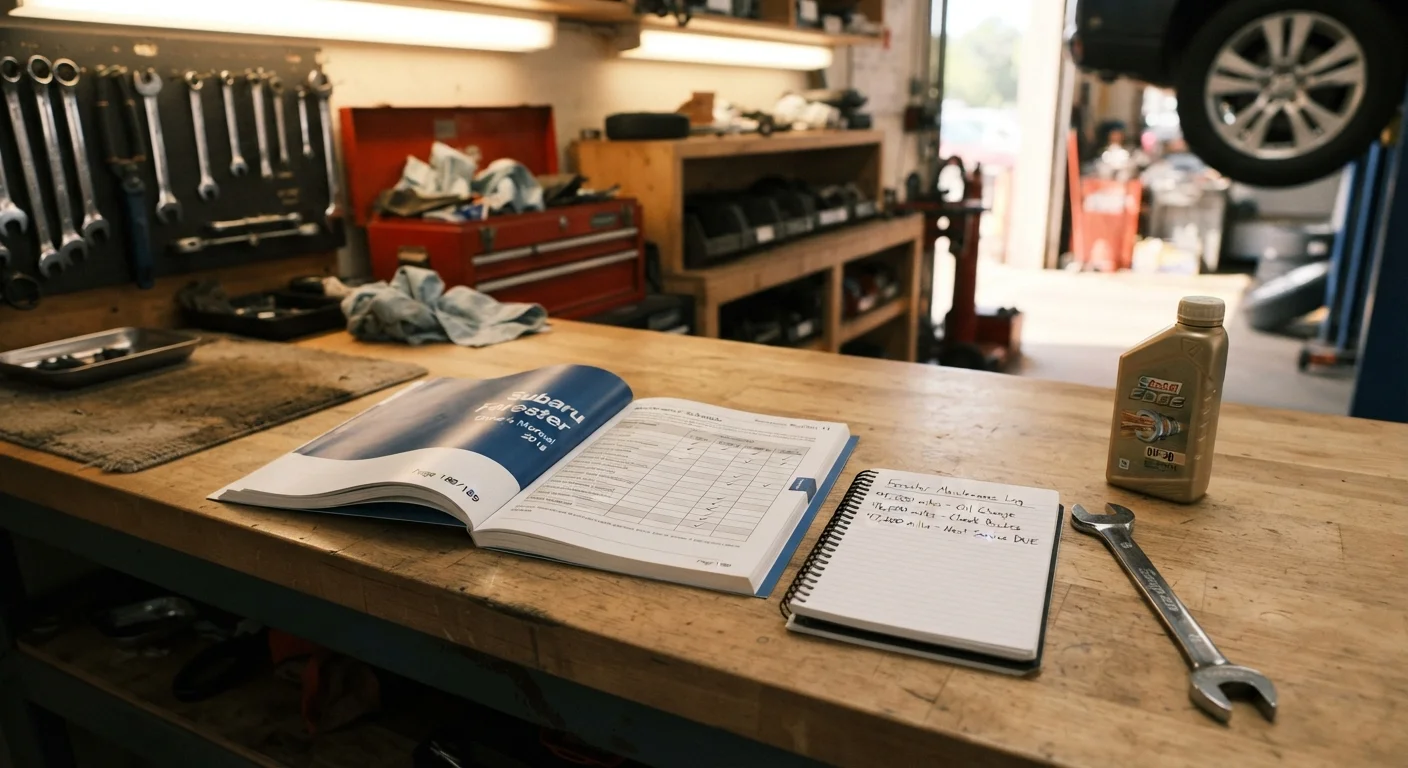
Keeping a simple log — whether in a notebook in your glove box, a spreadsheet, or a phone app — makes it easier to track what's been done and what's due. Record the mileage and date of each service, and keep any receipts. This documentation matters for warranty protection and for resale value.
If you drive under severe conditions — which covers more drivers than most realize — note that in your records and follow the severe-duty intervals in your manual. Seasonal maintenance checks are also worth layering on top of your regular schedule, since temperature extremes affect battery life, tire pressure, and fluid performance.
For drivers new to managing their own vehicle upkeep, our guide on what every new driver should know about keeping a car roadworthy is a practical starting point. And if you want to understand the long-term payoff of consistent servicing, keeping a car running well for the long haul covers the habits that genuinely extend a vehicle's life.